Tabnine's Next Chapter Is Quality Engineering
What the Tricentis deal means for buyers
By WhatAI Editorial ·
Tabnine's Next Chapter Is Quality Engineering
Tabnine has spent years arguing that enterprise AI coding is not merely a race for the smartest autocomplete. The harder problem is trust: where code travels, what the model remembers, which tools an agent may touch, how suggestions follow internal standards, and whether anyone can explain the context behind an automated change. On July 30, 2026, that argument acquired a new owner. Tabnine announced that it had been acquired by Tricentis, the software testing and quality engineering company. Existing customers will continue to receive support, while Tabnine's Enterprise Context Engine is set to become part of the Tricentis Agentic Quality Engineering Platform.
The deal makes strategic sense. AI coding tools can now produce code quickly enough that generation itself is becoming ordinary. Verification is the bottleneck. An agent that edits a service without understanding its dependencies, tests, deployment history, ownership boundaries, or architectural rules can create more work than it removes. Tricentis already lives downstream of code generation, where software has to be tested and trusted. Tabnine has been moving upstream from completion into agents, organizational context, code review, and governed automation. The acquisition joins those two halves of the problem.
For a buyer, however, the announcement creates practical questions. Is Tabnine still a coding assistant? Is it now a testing product? Which capabilities are available today, and which belong to a longer Tricentis integration story? The useful answer is that Tabnine remains an active AI coding platform with IDE completions, chat, agents, a terminal-native CLI, flexible model choice, and private deployment options. Its newer context technology is also available as a layer that can improve Tabnine or third-party agents. What happens next may be larger, but the current product should still be evaluated on the work it can safely complete now.
From Autocomplete to an Enterprise Control Plane
The old mental model for Tabnine was straightforward: install an extension and receive inline code suggestions. That capability remains. The Code Assistant plan includes current-line and multi-line completions, IDE chat, access to several model families, Jira context, governance, analytics, provenance controls, and deployment choices that range from SaaS to VPC, on-premises, and fully air-gapped environments. At $39 per user per month on an annual subscription, it is not positioned as a cheap individual copilot. It is positioned as enterprise development infrastructure.
The $59 per user per month Agentic Platform adds the more consequential layer. Agents can plan and execute multi-step work with optional human oversight. Coaching Guidelines steer them toward organizational practices. MCP connections let approved agents interact with code tools, testing frameworks, Jira, Confluence, databases, APIs, Docker, package managers, and CI/CD systems. The Tabnine CLI moves those workflows into terminals, remote sessions, and pipelines. The Enterprise Context Engine connects repositories and organizational systems so an agent can reason with more than the file currently open in an editor.
That combination is the product's real point of difference. Plenty of coding tools can generate a function. Tabnine wants to be the controlled environment around generation: model choice, context, permissions, approved tools, organizational rules, usage visibility, and deployment boundaries. The platform language can sound abstract, but the test is concrete. Can a developer take a Jira issue, ask an agent to inspect the relevant repositories, implement the change, run the right tests, explain its decisions, and create a reviewable pull request without violating the team's policies? If the answer is yes, Tabnine is doing more than accelerating typing.
Context Is Useful Only When It Is Governed
Coding agents need context, but context is also an access problem. A repository contains secrets, customer logic, security assumptions, unresolved vulnerabilities, and intellectual property. Jira and Confluence can expose product plans, incident reports, internal names, and commercial details. MCP can give an agent the ability to run commands or call services. More context may improve an answer while simultaneously increasing the blast radius of a mistake. The strongest part of Tabnine's current positioning is that it treats these concerns as product requirements rather than paperwork added after deployment.
Tabnine says customers can choose which context is used, control model access by user or team, govern MCP servers, inspect provenance, and deploy the platform in SaaS, private cloud, on-premises, or air-gapped environments. It also states zero code retention and says customer code is not used to train its proprietary models. Those are valuable claims, especially for regulated or security-conscious organizations, but they still need to be translated into the buyer's exact architecture. Zero retention does not answer every question about logs, telemetry, subprocessors, model providers, embeddings, connected repositories, or administrator access.
A serious security review should trace one request from the developer's editor to every component that processes it. Which code fragments leave the workstation? Which model receives them? Where does the Context Engine run? Does a self-hosted deployment still send operational telemetry? Which features stop working in a fully isolated environment? How are credentials for Jira, Git, MCP servers, and model endpoints stored and rotated? Can the organization prevent an agent from reaching a tool it has not approved? Tabnine provides deployment documentation and a Trust Center, but procurement should verify the configuration being purchased rather than relying on the broadest marketing statement.
The Context Engine Is Bigger Than Tabnine
The Enterprise Context Engine is now offered not only inside Tabnine's Agentic Platform but also as a standalone layer for other coding agents. Tabnine says it can work with Cursor, GitHub Copilot, Claude Code, internal agents, and Tabnine itself. Instead of limiting retrieval to semantically similar documents, the product describes a hybrid graph and vector model that maps entities, relationships, dependencies, architecture, tickets, APIs, and organizational standards. The goal is to help agents reason about consequences, not merely retrieve a nearby code snippet.
This is an ambitious category shift. A team that already standardized on Copilot or Cursor may not want another coding interface, but it may still need better enterprise context. A shared context layer could give several assistants a more consistent view of the organization while avoiding a forced editor migration. It could also centralize governance across a fragmented assistant estate. That is likely one reason the technology is attractive to Tricentis: test selection, impact analysis, root-cause investigation, and release risk all improve when an agent can understand dependencies across the wider system.
The difficult part is maintaining that model. Repositories change, services are renamed, ownership moves, documentation becomes stale, tickets contradict implementation, and implicit conventions are rarely written down. Buyers should ask how quickly the context model updates, how sources are prioritized when they disagree, how permissions flow from the source system, and how an incorrect relationship is corrected. A knowledge graph that looks impressive in a demonstration can become dangerous if developers assume it is authoritative after the organization has moved on.
The CLI Changes the Risk Profile
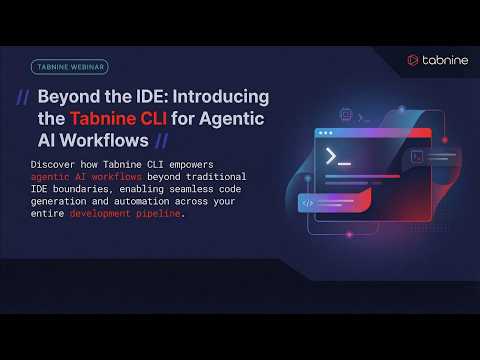
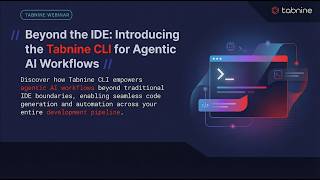
Tabnine's CLI is a terminal-native agent that can analyze repositories, modify files, run commands, create branches, and participate in CI pipelines. It supports guided use, where actions can be reviewed, and more autonomous operation. This is useful because serious development work already happens outside the editor. It also means the product can affect more than source text. A terminal agent may install packages, execute scripts, read environment variables, contact network services, or modify infrastructure definitions.
The right default is progressive trust. Begin with read-only analysis and narrow repositories. Require confirmation before file edits or command execution. Restrict network access and secrets. Use disposable branches or worktrees. Run tests in isolated environments. Define which MCP servers and shell commands are allowed. Preserve logs that show the prompt, context, tools, commands, files changed, and validation results. Only move to unattended or headless execution after the team has evidence that the agent behaves predictably on the actual codebase.
This is also where Coaching Guidelines need to be judged honestly. A written rule can steer an agent toward a framework, security pattern, naming convention, or testing requirement. It is not a hard security boundary unless the platform enforces it independently. If an agent is instructed to avoid direct database access, the team should test whether it obeys that rule under conflicting prompts and incomplete context. Important controls belong in branch protection, CI policies, code review, secret management, and runtime permissions as well as in agent instructions.
Pricing Needs a Full-Stack Calculation
Tabnine's public pricing is clearer than many enterprise AI products. Code Assistant is $39 per user per month and Agentic Platform is $59 per user per month, both on annual subscriptions. The pricing page says usage is unlimited when customers use their own LLM on-premises or their own cloud model endpoint. When using Tabnine-provided model access, customers pay for a reserved token quota based on provider pricing plus a 5 percent handling fee. Headless agents are an optional add-on. The standalone Enterprise Context Engine has separate pricing.
There is a small but important inconsistency worth confirming in a quote. Tabnine's platform and CLI pages use language about direct model billing without a markup, while the main pricing page currently specifies a 5 percent handling fee for Tabnine-provided access. The pricing page should be treated as the stronger source, but buyers should ask for the exact token mechanism, included quotas, overage rules, renewal terms, and whether any model or deployment choice changes the calculation.
Seat price is only the beginning. A private deployment brings infrastructure, upgrades, monitoring, backups, support boundaries, and administrative work. A context program brings connectors, permissions, source hygiene, and ongoing ownership. Agentic workflows consume model tokens, CI minutes, test environments, and reviewer attention. The useful financial comparison is not Tabnine versus an autocomplete subscription. It is Tabnine plus model and operating costs versus the engineering time, security controls, and verification work required to achieve the same governed workflow with separate tools.
A Pilot Should Measure More Than Accepted Code
Autocomplete tools often advertise acceptance rates or lines generated. Those measurements are easy to collect and easy to misread. A developer can accept a suggestion and later rewrite it. More generated code can increase review load. Faster implementation can push defects downstream. For an enterprise pilot, measure the complete flow: time from ticket to reviewed change, review iterations, escaped defects, test quality, security findings, developer interruption, model cost, and the amount of manual context gathering the agent removes.
Choose two or three representative workflows. One should be routine, such as writing tests for an established service. One should cross repository or system boundaries, where the Context Engine has a chance to prove its value. One should be adversarial: ambiguous requirements, stale documentation, a risky dependency, or a request that conflicts with a Coaching Guideline. Compare Tabnine's output with the team's current process and another assistant using the same task, environment, and review rubric.
Then assess operational fit. Developers should be able to understand why a suggestion was made and what context was used. Security should be able to prove where code and prompts travel. Platform teams should know who owns connectors and deployment updates. Engineering leaders should see adoption and outcomes without turning analytics into individual surveillance. Legal teams should review indemnification, provenance, model terms, and acquisition-related contract continuity. A successful demonstration is not enough; the pilot should leave behind an operating model the organization can sustain.
What the Tricentis Acquisition Really Signals
The acquisition does not instantly transform every Tabnine feature into a Tricentis testing workflow. Existing Tabnine customers are promised continued support, and the public plans remain active. The immediate signal is strategic. The market is moving from assistants that produce code toward systems that can understand, change, test, and verify software across a lifecycle. Tricentis gains an enterprise context layer and coding-agent technology. Tabnine gains a larger quality-engineering platform and customer base.
There are reasons to be optimistic. Testing provides a natural verification loop for agent-generated work. Impact analysis can direct agents toward the right tests. Context about dependencies can reduce blind changes. The combined platform may eventually connect requirement, implementation, test, risk, and release evidence in one governed chain. There are also integration risks. Product roadmaps can converge slowly, overlapping features can be rationalized, and pricing or packaging can change. New buyers should distinguish available functionality from future vision and put important support, deployment, and roadmap commitments in writing.
Where Tabnine Fits Now
Tabnine is strongest for larger development organizations that want AI assistance without surrendering control over deployment, models, context, and governance. It is particularly relevant where SaaS-only coding tools are difficult to approve, where repositories span legacy and modern stacks, or where several agents need a shared understanding of architecture and standards. The combination of IDE assistance, CLI workflows, agents, provenance, MCP controls, private deployment, and enterprise context creates a credible platform story.
It is less compelling for an individual developer seeking the lowest-cost assistant, a small team that does not need enterprise governance, or an organization unwilling to maintain the context and controls that make the platform distinctive. The $39 and $59 seat prices place Tabnine in a considered procurement category. Teams that use only autocomplete may pay for capabilities they never activate. Teams ready to connect repositories, policies, tools, and validation workflows have a better chance of receiving the full value.
The WhatAI Verdict
Tabnine should no longer be judged as the veteran autocomplete extension trying to keep pace with newer editors. Its current proposition is private, organization-aware agentic development, and the Tricentis acquisition makes software quality the clearest destination for that strategy. The product already offers enough to evaluate today: code completion and chat, terminal agents, organizational context, model choice, governance, provenance, MCP controls, and deployment from SaaS to air-gapped environments.
The decisive question is not whether Tabnine can write code. Almost every serious competitor can. The question is whether it can help an organization automate meaningful engineering work while preserving the context, control, evidence, and verification that enterprise software demands. The answer will depend less on a polished agent demo than on the buyer's repositories, permissions, standards, deployment architecture, and willingness to measure downstream quality. If Tabnine and Tricentis can close that loop, the acquisition may prove that the next major advantage in AI coding was never generation alone. It was knowing enough about the system to test whether the generated change deserves to ship.
Tabnine combines code completion, IDE chat, coding agents, a terminal CLI, organizational context, and enterprise governance. Its strongest differentiators are flexible deployment, model choice, zero-retention positioning, MCP controls, and support for private or air-gapped environments.
Pricing, Agents, Privacy, and Context
Public annual pricing is $39 per user per month for Code Assistant and $59 per user per month for the Agentic Platform. Model usage, headless agents, private infrastructure, and the standalone Enterprise Context Engine can add further cost.
Should Your Engineering Team Use Tabnine?
Tabnine fits larger teams that need governed AI development across IDEs, terminals, repositories, and internal systems. Its Tricentis acquisition strengthens the quality-engineering direction, but buyers should separate available functionality from future integration plans.
About Tabnine
Tabnine is a private, organization-aware AI coding platform for enterprise development teams. It provides inline code completion, IDE chat, code review, task-specific agents, a terminal-native CLI, and an Enterprise Context Engine that connects repositories, tickets, documentation, APIs, and organizational standards. Teams can choose among supported models, connect approved tools through MCP, and deploy through SaaS, private VPC, on-premises, or fully air-gapped environments. Tabnine announced its acquisition by Tricentis in July 2026, with existing product support continuing as its context technology joins the Tricentis quality engineering platform.
Use Cases
Key Features
- ✓ Current-line and multi-line code completion
- ✓ AI chat across the software development lifecycle
- ✓ Autonomous or guided coding agents
- ✓ Terminal-native Tabnine CLI
- ✓ Enterprise Context Engine for organizational knowledge
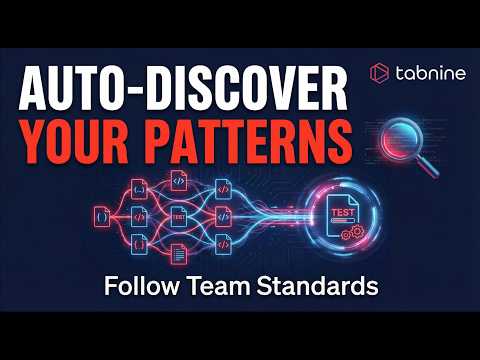
- ✓ Coaching Guidelines for team standards
- ✓ MCP connections with governance controls
- ✓ Code review, testing, documentation, and fix agents
- ✓ Model choice and private model endpoints
- ✓ SaaS, VPC, on-premises, and air-gapped deployment
- ✓ Zero code retention and no training on customer code
- ✓ Analytics, provenance, permissions, and auditability
Pricing
Free IDE Access
$0
- • Free installation in supported IDEs
- • Basic access for individual evaluation
- • Public pricing page does not list detailed limits
Code Assistant
$39/user/month
- • Annual subscription
- • Code completions and IDE chat
- • Jira integration
- • Flexible deployment
- • Governance and analytics
Agentic Platform
$59/user/month
- • Annual subscription
- • Autonomous and guided agents
- • Tabnine CLI
- • Enterprise Context Engine
- • MCP and Coaching Guidelines
Headless Agents
Optional add-on
- • Remote agent execution
- • CI/CD automation
- • Separate pricing
Enterprise Context Engine
Separate pricing
- • Standalone context layer
- • Works with Tabnine and third-party agents
- • Private deployment options
Pricing varies by plan and region — see current pricing.
Plan features change — last updated: 2026-08-24.
Details
Tags
Tabnine Community Discussions
Explore community discussions. Ask and answer questions on Tabnine to grow and learn together.
Tabnine Showcase
Tabnine — Frequently Asked Questions
What is Tabnine?
Tabnine is an enterprise AI coding platform with code completion, IDE chat, agents, a terminal CLI, code review, organizational context, model choice, and private deployment options.
How much does Tabnine cost?
Tabnine lists Code Assistant at $39 per user per month and Agentic Platform at $59 per user per month on annual subscriptions. Model usage, headless agents, and standalone context products may add cost.
Is Tabnine still available after the acquisition?
Yes. Tabnine announced that Tricentis acquired the company on July 30, 2026 and stated that existing customers will continue to receive support for their current products.
Does Tabnine train on customer code?
Tabnine states that its proprietary models are not trained on customer code and that it provides zero code retention. Buyers should confirm the exact data flow, model provider, telemetry, and deployment terms for their configuration.
Can Tabnine run on-premises or air-gapped?
Yes. Tabnine advertises SaaS, private VPC, on-premises, and fully air-gapped deployment options, although feature and infrastructure requirements can differ by plan and architecture.
What is the Tabnine CLI?
The Tabnine CLI is a terminal-native coding agent that can analyze repositories, edit files, run commands, refactor code, write tests, create branches, and participate in CI workflows with guided or autonomous operation.
What is the Enterprise Context Engine?
It is an organizational context layer that models code, architecture, dependencies, tickets, documents, APIs, and standards. It works with Tabnine and can also support agents such as Cursor, GitHub Copilot, and Claude Code.
Is Tabnine better than GitHub Copilot or Cursor?
Tabnine is particularly differentiated by private deployment, enterprise governance, model choice, air-gapped operation, and organizational context. Copilot or Cursor may suit teams prioritizing ecosystem convenience or an AI-native editor.
Sources & References
Try Tabnine
Visit the official website to get started with Tabnine today.
Visit Tabnine →