NEO Is Selling You the Robot and the Learning Curve
The hardware is startlingly ambitious. The first owners are also buying basic autonomy, scheduled human help, a privacy negotiation, and the hope that household usefulness arrives through updates.
By WhatAI Editorial Team ·
Your house is the test
The most important sentence on the NEO order page is not the one promising a 154-pound lift, four hours of battery life, or a robot quiet enough to disappear beneath the hum of a refrigerator. It is the smaller sentence beside the demonstrations: NEO arrives with basic autonomy for early owners.
That phrase changes the product. 1X is not selling a finished appliance that already understands every kitchen, drawer, laundry pile, pet, guest, and badly placed chair. It is selling unusually ambitious hardware, a developing intelligence stack, scheduled access to remote human assistance, and a belief that daily experience will turn the combination into a useful home robot.
For some buyers, that is the attraction. They are not waiting for the future; they want to live inside the development loop. For everyone else, it is the reason to read past the videos.
A home is harder than a factory
A warehouse can standardize the tote, mark the floor, control the lighting, separate the robot, and repeat the same motion ten thousand times. A home changes while the robot is looking at it. A child abandons a bag in the hallway. A dog moves the laundry. A cupboard door is left half open. A glass appears where a plastic cup was yesterday. The task description stays the same while the world underneath it shifts.
That is why home robotics has remained stubbornly unimpressive beside the rest of consumer technology. A robot vacuum succeeds partly because its job has been reduced to a flat surface and a simple interaction. A humanoid has to perceive the whole room, understand an instruction, navigate around people, choose the correct object, make contact without damage, recover from failure, and know when not to continue.
NEO is attempting all of those layers in a body that can walk through the same doors, reach the same shelves, and use objects made for human hands. The form is logical. The intelligence burden is enormous.
The product exists. The service is still becoming real.
NEO is not just a concept rendering. 1X has published a detailed product page, opened an order system, built a 58,000-square-foot factory in Hayward, manufactured thousands of motors, assembled robots, and moved production units into internal testing. The hardware specifications are far more concrete than the usual humanoid promise.
The consumer experience remains less certain. 1X says United States deliveries start in 2026. In its April factory update, the company said some customers would receive NEO during the year and others later. It also said robots leaving the line were being prioritized for employees and internal home testing while the product experience continued to improve.
As of August 16, 1X has not published clear first-party confirmation of broad consumer delivery. That does not mean the schedule has failed. It means scheduled delivery should not be rewritten as delivered. A refundable deposit buys a place in an evolving queue, not evidence that an ordinary customer is already waking up to folded laundry.
Ten thousand preorders is demand, not delivery
1X says the launch booked the factory's first-year production capacity of 10,000 NEOs in five days. That is remarkable demand for a product category with no mature consumer benchmark. The company responded by opening a vertically integrated factory, hiring more than 200 people, and building critical motors, batteries, tendons, structures, sensors, electronics, and soft goods in-house.
The factory has an initial annual capacity target of 10,000 robots. 1X plans to expand toward more than 100,000 units per year by the end of 2027. Capacity is not output, and output is not successful delivery. A home robot also needs final testing, packaging, installation, account provisioning, safe setup, customer education, replacement parts, repair capacity, support, software operations, and a way to handle the first failure in somebody's kitchen.
Production makes the preorder plausible. Field service will make it a product. The first 10,000 owners are not merely receiving machines; they are testing whether a robotics company can operate a consumer relationship at household scale.
Basic autonomy is the honest phrase
1X advertises chores such as folding laundry, organizing shelves, putting away dishes, opening doors, fetching items, tidying rooms, and turning off lights. NEO can take spoken instructions, maintain a chore schedule, navigate, converse, remember context, and return to its charger. The company says it works autonomously by default.
Default does not mean universal. Early owners are told that NEO arrives with basic autonomy and grows in capability. The practical skill list at delivery matters more than the total list used to explain the vision. Can it reliably identify the right towel under different lighting? Can it grasp a crumpled shirt without catching another garment? Can it place a dish without chipping it? Can it notice that a door is obstructed and stop?
A useful launch document would name every supported task, object requirement, room condition, expected completion time, known failure, and fallback. It would distinguish autonomous work from owner remote control and from 1X Expert Mode. Without that separation, a completed chore can look like AI progress when the intelligence was a human wearing a headset somewhere else.
Expert Mode changes the deal
Expert Mode is 1X's bridge across the autonomy gap. When NEO encounters a chore it does not know, the owner can schedule a 1X Expert to guide the robot remotely. The job gets done, the robot receives a demonstration, and the experience can contribute to future capability.
That is a pragmatic design. Remote operation can rescue an early product, collect valuable examples, and reveal the strange edge cases that no laboratory could invent. It also means the service is partly human. The right metric is not simply whether NEO completed the laundry. It is how many minutes were autonomous, how much operator time was needed, whether the task had to be rescheduled, and whether the same robot could repeat it independently later.
Expert Mode should never be hidden behind the phrase AI-powered. It is a feature with a real labor model and a real privacy boundary. Owners should know who the experts are, when they can connect, how a session is authorized, what sensors they can access, whether the session is recorded, how the robot signals that somebody is present, and what instantly ends control.
Privacy is not a settings page
NEO has stereo cameras, four microphones, memory, mobile monitoring, remote control, 5G, Wi-Fi, a conversational model, and the ability to move through private rooms. That is not comparable to placing one smart speaker on a kitchen bench. It is a mobile sensor and actuator platform with hands.
The privacy question begins before the owner taps an opt-out setting. Partners, children, visitors, cleaners, tradespeople, and guests may enter the field of view without opening a 1X account. A scheduled Expert Mode session could reveal family photographs, medication, documents, conversations, security layouts, or a person who never agreed to be observed.
A responsible household needs no-go rooms, visible session indicators, quiet hours, guest notification, retention rules, deletion controls, strong account security, device revocation, and a shared understanding of when remote access is permitted. The buyer should obtain direct answers about live processing, stored recordings, model training, operator logs, subcontractors, legal requests, cross-border access, and incident response.
Convenience may make these decisions easy to postpone. The robot should not enter the home until they are made.
Safety begins with being light
NEO stands 5 feet 6 inches but weighs only 66 pounds. Its internal structure is wrapped in a deformable lattice polymer. The knit suit and shoes are machine washable. Joints are enclosed so there are no externally accessible pinch points. Tendon drives use low inertia and high backdrivability, allowing the mechanism to yield when it meets resistance.
These are intelligent domestic choices. Traditional industrial robots become safe by staying away from people. A home robot cannot succeed behind a fence. Reducing mass, exposed mechanisms, sharp surfaces, noise, and stored energy gives the machine a better passive safety foundation.
Passive safety is not complete safety. Sixty-six pounds can still knock over a child, trap a pet, fall on a stair, damage furniture, spill a hot liquid, or drop a heavy object. Software can misidentify a person, choose the wrong object, or continue after the room has changed. Batteries and chargers bring their own hazards.
The product page lists a Head Injury Criterion below 250, but a single metric cannot validate every contact. Buyers need speed and force limits, fall behavior, emergency controls, hazard exclusions, safe states after power or network loss, and independent evidence across real household scenarios.
The strength numbers need context
1X lists a 154-pound lift, 55-pound carry capacity, and 18-pound arm payload. The headline is striking because the robot weighs less than half its claimed maximum lift. Tendon-driven actuation and careful use of whole-body mechanics may produce impressive force while keeping the structure light.
Those numbers do not mean NEO should pick up a person. They do not establish safe overhead lifting, carrying on stairs, long-reach manipulation, continuous duty, or stable movement with a shifting load. A lift performed in a favorable pose is different from an arm holding a pan at full extension. A carry specification is different from reliably grasping a soft grocery bag.
Homeowners should receive a task envelope, not only a maximum. It should explain object dimensions, grip requirements, center of mass, approved heights, speed, reach, duration, and prohibited uses. The first rule should be simple: NEO is not a caregiver, mobility aid, rescue device, babysitter, or substitute for a capable person.
The hands may matter more than the face
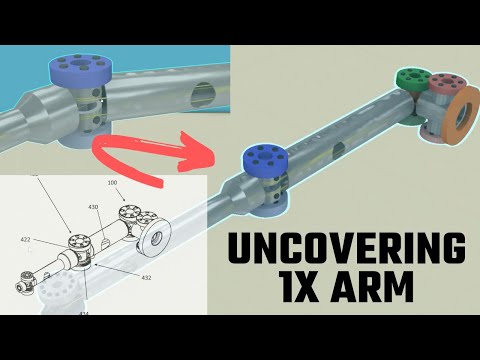
In July, 1X announced the hands intended to ship with every NEO. The system has 25 degrees of freedom when the wrist is included: 22 fully actuated degrees across the fingers and palm, plus three at the wrist. The tendons are force-controlled and backdrivable, and the outer skin is designed to provide tactile information.
This is some of the most ambitious hardware on the product. A household is a museum of objects designed for fingers: buttons, zips, handles, lids, cables, towels, plates, books, drawers, and tools. A gripper that can only pinch boxes would leave most of the home inaccessible.
Dexterity is still not usefulness. A hand may have human-like motion and fail on a wet glass, tangled garment, transparent container, delicate stem, loose lid, or unfamiliar texture. Tactile sensing must survive wear. Fingertips must stay clean. Calibration must remain stable. The robot must know when a grasp is unsafe and release without making the situation worse.
The hand removes one hardware ceiling. Reliable manipulation remains a system problem involving perception, planning, control, touch, object knowledge, and recovery.
World models are an ambitious shortcut
Redwood AI learns robot behavior from real-world demonstrations, including successful and failed attempts. The newer 1X World Model takes a different route. It uses video pretraining to imagine how a scene should evolve, then converts that predicted motion into actions grounded in NEO's body. The idea is to benefit from the enormous amount of physical knowledge already present in human video.
It is a compelling answer to the data problem. There will never be enough manually teleoperated examples for every mug, drawer, garment, and home layout. Video shows how people interact with millions of objects, even when it does not contain robot commands. A human-shaped machine may translate those priors more naturally than a very different body.
The difficulty is grounding. Generated video can look plausible while violating geometry, friction, joint limits, timing, or force. A beautiful predicted future is not necessarily an executable or safe one. 1X describes a multi-stage process that adapts video knowledge to NEO-specific sensor and motion data.
This research may accelerate new skills. It should be judged by repeatable task results, calibrated confidence, failure detection, and safe refusal. Zero-shot novelty is exciting only when the robot also knows when it is wrong.
Four hours sounds enough until a home interrupts
NEO uses an 842-watt-hour battery with a listed runtime of four hours. 1X says quick charging adds an hour of runtime in six minutes and that NEO manages charging itself by plugging in when needed.
Four productive hours could cover a great deal of household work. The real schedule includes walking, perception, conversation, retries, waiting for a person, Expert Mode, network delays, and travel back to the charger. A charger may be blocked by a shoe. A pet may sleep in front of it. A chore may strand the robot upstairs from its power source.
Owners should measure useful task time rather than powered-on time. The product also needs clear behavior for low battery, interrupted charging, power failure, an unreachable charger, degraded battery health, and a task that cannot be safely paused. Self-charging is not a decorative convenience. It is part of the autonomy claim.
Twenty-two decibels is equally promising and equally conditional. Motors may be quiet while footsteps, object contact, speakers, fans, or a dropped pan are not. A robot expected to move at night needs a household noise profile, not one laboratory number.
Twenty thousand dollars buys the front row
Early Access ownership costs $20,000. The package includes ownership, a three-year warranty, premium support, and priority delivery. A $200 deposit is due at order and is advertised as fully refundable. On paper, the price is transparent and remarkably low beside the engineering inside the machine.
The value question is not robot cost divided by years. It is useful autonomous work after supervision, Expert Mode, maintenance, charging, failed tasks, privacy management, and the owner's time. A buyer paying $20,000 may be purchasing a fascinating platform long before it saves $20,000 of labor.
Ownership also needs definition in a connected product. Which capabilities work if the service changes? Is Expert Mode included? Does the conversational model require a subscription? How long are security updates guaranteed? Can the robot function if 1X's cloud is unavailable? What happens after the warranty? Are parts, travel, pickup, and replacement labor covered?
The hardware can belong to the customer while the useful experience still depends on the company.
The subscription is the harder promise
The standard option is advertised at $499 per month with a starter productivity package and standard delivery. The original launch said subscription units would ship later than Early Access ownership. The current public order page does not show the old six-month minimum repeated on some third-party pages.
A subscription can fit experimental robotics better than ownership. 1X retains responsibility for an evolving machine, the customer avoids a large purchase, and hardware or service problems can be handled inside an ongoing relationship. It may also give the company a sustainable way to fund operators, software, replacement parts, and support.
The missing details matter: minimum term, delivery timing, setup, taxes, damage, included support, Expert Mode allowance, usage limits, cancellation, return freight, repairs, upgrades, insurance, data rights, and what happens when the robot cannot perform the starter tasks.
At $499 per month, NEO does not need to replace a full-time worker. It does need to create reliable value without turning the owner into an unpaid robot technician.
Cooking is not a launch feature
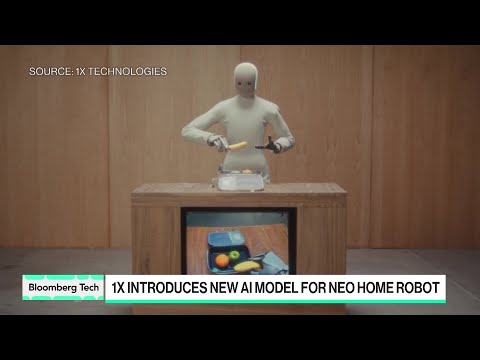
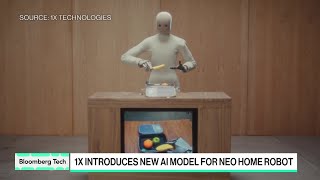
Humanoid demonstrations invite viewers to convert every successful video into an available feature. 1X has been more transparent than many companies about an earlier NEO Beta cooking collaboration. The robot completed much of a steak dinner with limited assistance, but the company explicitly said cooking would not be an immediate feature for first users. Hot surfaces, blades, liquids, flame, and food safety require more experience.
That caution should define the launch. Early tasks should be low risk and reversible: carry a soft basket, move unbreakable objects, operate a supported switch, fetch a towel, or organize a clear shelf. The robot should be allowed to fail without turning the failure into a fire, injury, flood, or broken heirloom.
Capability should expand one hazard at a time. A convincing home robot is not the one that attempts the most impressive task. It is the one that refuses the wrong task before the owner has to intervene.
Families need boundaries before routines
NEO's ideal customer is not simply somebody with $20,000. It is a household willing to create rules together. Which rooms are private? When may the robot move? Can it operate while children are asleep? What happens around pets? Who can schedule Expert Mode? How are guests told? Which objects are never touched? Who responds to an alert?
The family also needs an emergency plan. Everyone should know how to stop the robot, isolate the charger, revoke remote access, and report a problem. Children should not be asked to treat NEO as a toy, and older or disabled people should not depend on it for essential care unless an appropriate regulated use is specifically validated.
The best early household will be curious without becoming casual. Familiarity can reduce fear, but it can also lower attention before the system has earned trust. The robot should expand its freedom through measured performance, not through the family's boredom with supervision.
What an early adopter should demand
Before final payment, ask for the delivered hardware revision, software version, supported autonomous skill list, excluded tasks, setup requirements, Expert Mode terms, data controls, safety documentation, warranty process, repair turnaround, replacement policy, and confirmed delivery window. Ask whether the new 25-degree hand and published compute specification are included in the exact unit.
After delivery, keep a plain log. Record each chore, room, object, time, autonomous completion, owner remote control, Expert Mode minutes, retries, failures, cleanup, safety stops, charging, software version, and support contact. Count useful minutes saved, not moments when the robot looked futuristic.
Ask what every update changed in practice. Did the same laundry task become faster? Did human assistance fall? Did the robot recover from a moved chair? Did a new capability introduce new errors? A learning machine needs a learning owner, but the evidence should ultimately move in one direction: less supervision, more reliability, clearer limits.
The WhatAI view
NEO is the most serious consumer humanoid proposition because 1X has combined an orderable price, a purpose-built home design, unusually light and soft hardware, advanced hands, onboard compute, a manufacturing operation, a pragmatic human-assistance layer, and an AI research program aimed directly at household variety. The company is attempting the whole product, not only the walking body.
It is also an early-access bet. Customer delivery remains a schedule rather than a broadly documented fact. Autonomy is basic. Expert Mode means some chores may be performed by a remote person through the robot. Privacy is not peripheral. Safety claims need independent, task-specific evidence. Factory capacity does not establish field reliability, and research progress does not guarantee that a particular kitchen will behave.
The right buyer wants to participate in that unfinished story and can afford for the robot to be interesting before it is indispensable. The wrong buyer needs dependable cleaning, caregiving, childcare, cooking, or privacy without negotiation.
NEO may eventually make the home feel lighter. In 2026, it asks the first owners to carry part of the weight: supervision, consent, measurement, patience, and trust that must be earned one chore at a time.
1X NEO is a pre-order consumer humanoid designed for household chores, conversation, and mobile assistance. Early units are expected to combine basic autonomy with scheduled remote guidance from 1X Experts while the robot learns additional tasks.
NEO Price, Specifications, Expert Mode, and Delivery
NEO costs $20,000 for Early Access ownership or $499 per month under the advertised standard subscription, with a refundable $200 deposit. It is lightweight, soft-bodied, self-charging, and heavily instrumented, but first-party confirmation of broad consumer delivery is still pending.
Discuss 1X NEO
Share verified order updates, delivery experience, autonomous task results, Expert Mode observations, privacy controls, home setup requirements, maintenance, and support. Identify the hardware and software version, task, supervision mode, and measurement period so readers can separate demonstrations from repeatable home utility.
About 1X NEO
1X NEO is a pre-order home humanoid robot designed for household chores, conversation, mobile assistance, and continued learning. It stands 5 feet 6 inches, weighs 66 pounds, carries up to 55 pounds, uses low-inertia tendon drives, and is covered by a soft lattice body with enclosed joints. NEO combines Redwood AI, a video-pretrained 1X World Model, an onboard large language model, mobile and voice control, self-charging, and scheduled Expert Mode in which a 1X operator can remotely guide unfamiliar chores. Early Access ownership costs $20,000 with a three-year warranty, while the standard subscription is listed at $499 per month. A $200 refundable deposit secures an order. 1X says US deliveries start in 2026, but its latest detailed factory update still described customer shipments as forthcoming and prioritized internally deployed robots for home testing. Buyers should treat NEO as early-access hardware with basic autonomy, not a proven fully autonomous cleaner or caregiver.
Use Cases
Key Features
- ✓ Human-scale home humanoid design
- ✓ Basic autonomy for early owners
- ✓ Scheduled Expert Mode remote assistance
- ✓ Voice-based companion interface
- ✓ Mobile app scheduling and monitoring
- ✓ Owner remote control through app and VR
- ✓ Redwood generalist robot AI
- ✓ Video-pretrained 1X World Model
- ✓ Built-in large language model
- ✓ Self-charging behavior
- ✓ Soft custom lattice polymer body
- ✓ Covered joints with no external pinch points
- ✓ Low-inertia tendon-drive actuation
- ✓ Twenty-five-degree hand and wrist system
- ✓ Four-hour listed battery runtime
- ✓ Six-minute charge per hour of runtime
- ✓ Twenty-two-decibel listed audible noise
- ✓ NVIDIA Jetson Thor onboard compute
- ✓ Dual stereo fisheye cameras
- ✓ Wi-Fi, Bluetooth, and 5G connectivity
- ✓ Machine-washable suit and shoes
- ✓ Mobile speaker and status ear rings
Pricing
Standard Subscription
$499/mo
- • Monthly subscription
- • Starter productivity package
- • Standard delivery
Early Access Ownership
$20,000
- • Robot ownership
- • Three-year warranty
- • Premium support
- • Priority delivery
Preorder Deposit
$200 refundable
- • Due when ordering
- • Advertised as fully refundable
- • US deliveries scheduled from 2026
Pricing varies by plan and region — see current pricing.
Plan features change — last updated: 2026-08-16.
Details
Tags
1X NEO Community Discussions
Explore community discussions. Ask and answer questions on 1X NEO to grow and learn together.


1X NEO Showcase


1X NEO — Frequently Asked Questions
What is 1X NEO?
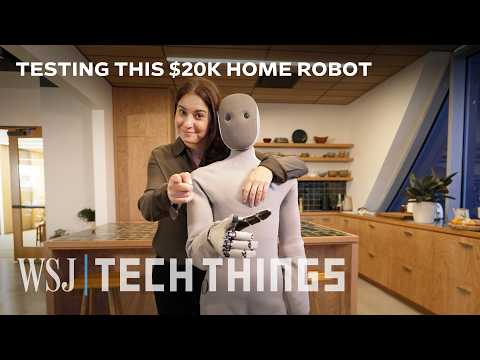
NEO is a human-scale home humanoid from 1X designed for household chores, mobile assistance, conversation, and learning. It combines a soft tendon-driven body, dexterous hands, cameras, microphones, onboard compute, Redwood AI, and a video-pretrained world model.
Can NEO complete chores autonomously?
1X says NEO will arrive with basic autonomy for early owners and gain capabilities over time. The company advertises autonomous navigation and supported chores, but unfamiliar or complex tasks may require scheduled Expert Mode. Buyers should not assume every advertised household task will work independently at delivery.
What is NEO Expert Mode?
Expert Mode lets an owner schedule a 1X operator to remotely guide NEO through a task it does not know. The session can complete the chore while generating experience for future learning. Buyers should review session authorization, camera and microphone access, operator controls, no-go areas, data handling, recording, and emergency-stop behavior before use.
How much does 1X NEO cost?
The order page lists Early Access ownership at $20,000 with a three-year warranty, premium support, and priority delivery. The standard subscription is listed at $499 per month. A $200 deposit is due when ordering and is advertised as fully refundable.
Has 1X started delivering NEO to customers?
1X says US deliveries start in 2026. Its April 2026 factory update said some customers would receive NEO during the year, but also said current factory units were being prioritized for internal home testing. As of August 16, 2026, 1X had not published clear first-party confirmation of broad consumer deliveries.
What are NEO's main specifications?
1X lists a height of 5 feet 6 inches, weight of 66 pounds, 154-pound lift, 55-pound carry capacity, 18-pound arm payload, four-hour runtime, 842-watt-hour battery, 22-decibel noise, IP68 hands, and an IP44 body. These are vendor specifications, not guarantees for every task or environment.
How dexterous are NEO's hands?
The current hand announcement describes 25 degrees of freedom including 22 fully actuated degrees across the fingers and palm plus three at the wrist. 1X says the tendon-driven system is force-controlled, backdrivable, and covered with tactile skin. Real household task reliability remains the practical test.
Is NEO safe around children, pets, or older people?
NEO is designed with a lightweight body, soft lattice covering, enclosed joints, and low-inertia tendon drives. These design choices may reduce harm, but they do not prove every task or unsupervised interaction is safe. NEO should not be treated as a certified caregiver, medical device, babysitter, or substitute for human supervision.
Does NEO record data inside the home?
NEO uses cameras, microphones, visual intelligence, memory, remote control, and Expert Mode, so household data governance is central to the product. 1X presents data-sharing choices in its FAQ and publishes a privacy policy, but buyers should obtain exact answers on processing, retention, training use, operator access, deletion, security, and legal requests before deployment.
Can NEO cook meals?
Cooking is not an appropriate launch assumption. In an earlier NEO Beta demonstration, 1X explicitly said cooking would not be an immediate feature for first users because sharp and hot objects require additional safety experience. Start with low-risk, reversible tasks and require version-specific support for anything involving heat or blades.
Sources & References
- Official NEO product page and specifications ↗
- Official NEO pricing and order page ↗
- NEO launch, pricing, and availability ↗
- NEO factory and 2026 delivery update ↗
- NEO hand and wrist engineering ↗
- Redwood AI technical overview ↗
- 1X World Model research overview ↗
- Redwood whole-body mobility controller ↗
- NEO Beta cooking limitations and disclosure ↗
- 1X privacy policy ↗
Try 1X NEO
Visit the official website to get started with 1X NEO today.
Visit 1X NEO →