Independent WhatAI creator guide
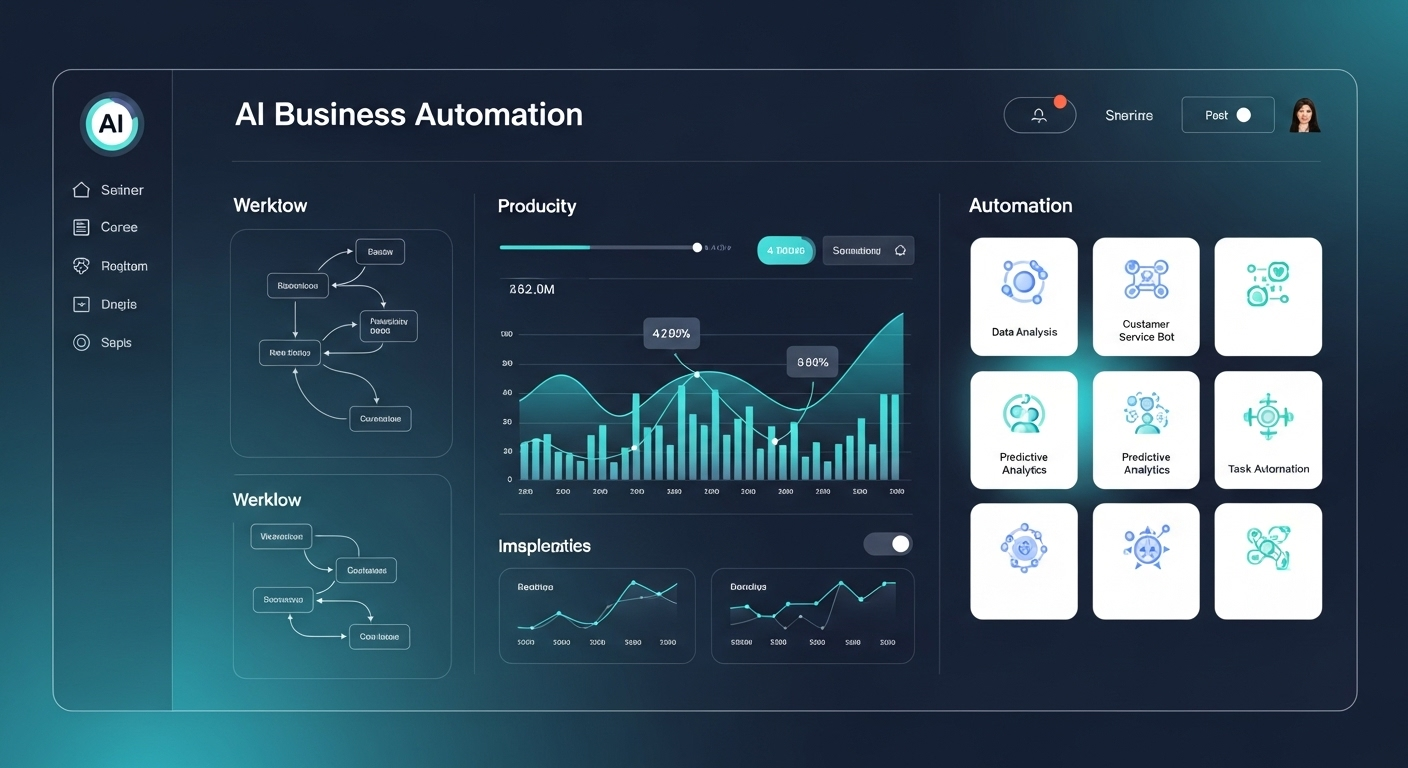
All About AI is one of the longer-running YouTube channels dedicated to automated artificial intelligence. The channel began exploring AutoGPT, autonomous agents, creative generation systems, and self-improving workflows before AI agents became a mainstream business category.
Its recent direction is more commercial and operational. Videos examine whether an AI automation experiment produced profit after thirty days, whether iOS applications can be generated and operated with AI, and why AI cybersecurity may become one of the most important technical career opportunities of 2026.
This combination makes the channel useful for WhatAI readers. It does not only show what a model can generate. It asks what happens when the system is connected to a real business process, market, application, or risk.
The strongest lesson is that automation value must be measured across the whole operation. A workflow may produce revenue while still losing money after advertising, software, refunds, support, developer fees, and maintenance. An AI-generated application may reach the App Store while remaining vulnerable to weak product validation or poor retention. A cybersecurity opportunity may be substantial while requiring deeper foundations than a short online tutorial.
This independent WhatAI guide examines All About AI's approach to agents, business experiments, app automation, and AI security. It also provides a practical framework for judging whether a demonstration is a useful prototype, a credible business, or an unsafe shortcut.
All About AI has not sponsored, approved, or reviewed this article. Revenue, profit, career, and productivity claims are not guaranteed outcomes. AI tools, pricing, platform rules, and security threats change quickly.
What is All About AI?
All About AI is a YouTube channel focused on automated artificial intelligence. Its official channel description says it explores AutoGPT, ChatGPT agents, AI agents, AutoSD, and related systems.
The channel has covered autonomous writing systems, coding agents, creative agents, local AI, automation experiments, business models, application development, and technical careers.
Unlike channels built only around weekly news, All About AI frequently constructs or tests a system. This gives viewers more insight into setup, failure, iteration, and operational complexity.
Visit the All About AI YouTube channel for the original tutorials and experiments.
Why the channel matters
All About AI began documenting autonomous systems when AutoGPT represented the leading public idea of an agent. This provides useful continuity. Viewers can see how the category moved from experimental prompt loops toward more structured agents, coding environments, applications, and business workflows.
The channel's strongest qualities include:
- Hands-on experimentation
- Longer-term business updates
- Attention to autonomous workflows
- Technical demonstrations
- Coverage of both opportunities and failures
- Connection between AI and real products
The limitation is that experiments may reflect one creator's skills, timing, audience, and risk tolerance. A profitable result cannot be copied automatically.
From AutoGPT to practical agents
Early AutoGPT systems demonstrated that a model could break a goal into tasks, use tools, inspect results, and continue. They were often unreliable and expensive, but they changed expectations.
Modern agent systems are more structured. They may include:
- A narrowly defined goal
- Persistent project context
- Approved tools
- Memory or stored state
- Evaluation
- Human approvals
- Logs and monitoring
The durable lesson from the channel's earlier experiments is that autonomy alone is not value. An agent becomes useful when it completes a repeated task with acceptable accuracy, cost, and risk.
A fixed automation may outperform an agent when the process is predictable. AI should be added where interpretation or flexible reasoning creates a measurable benefit.
Why public automation experiments are useful
Public experiments expose details that polished case studies often hide. A creator may show setup cost, failed attempts, time spent, revenue, and unexpected platform behaviour.
A strong experiment answers:
- What was the hypothesis?
- Which tools were used?
- How much time and money were invested?
- What happened during the test?
- Which result was measured?
- What would change in the next version?
The experiment becomes less useful when only the final revenue number is visible.
Viewers should treat results as evidence about one setup rather than proof of a universal business model.
Revenue versus profit in AI automation
All About AI's thirty-day automation update asks the right question: how much did the system actually profit?
Revenue is the money received. Profit requires subtracting the complete operating cost.
Relevant costs may include:
- Advertising
- Model or API usage
- Automation platforms
- App-store or payment fees
- Hosting
- Refunds
- Contractors
- Support time
- Creator labour
- Taxes
Labour should be counted even when the founder does not pay themselves immediately. A business that earns $1,000 while requiring eighty hours of skilled work may not be scalable.
A credible test also measures retention. One month can reveal demand, but recurring revenue depends on whether customers continue receiving value.
Automating iOS app creation
AI coding tools can reduce the time required to create an iOS application. They can help generate interface code, data models, onboarding, subscription screens, marketing copy, screenshots, and support material.
An automated workflow may identify an app concept, research competitors, generate the first version, test it, and prepare App Store assets.
This is a meaningful shift because app development previously required substantial technical expertise or capital.
AI does not remove Apple's rules, privacy requirements, testing, product judgement, or support. The developer remains responsible for the final application.
Related WhatAI pages:
Product validation before app generation
AI makes app creation cheaper, which can encourage founders to build before understanding demand.
Validation should begin with the user problem:
- Who experiences it?
- How often?
- Which workaround is used now?
- What is the cost of the problem?
- Will the user pay or change behaviour?
A landing page, waiting list, interview, manual service, or paid pilot can produce evidence before a complete application is generated.
Existing successful apps can reveal demand, but copying visible features does not recreate brand, distribution, reviews, and retention.
Operating an automated app business
Launching the application is only the beginning. The operator needs analytics, crash reporting, customer support, billing, privacy processes, updates, and marketing.
Automation can support:
- Review analysis
- Customer-support drafts
- Bug classification
- App-store keyword research
- Content generation
- Performance reporting
Important customer communication should be reviewed. An automated response can damage trust when it misunderstands a billing, privacy, or safety issue.
The business should also have a manual fallback when an AI service or API becomes unavailable.
Why AI cybersecurity is growing
AI expands both defensive capability and attack surface. Companies are connecting models to code, documents, databases, communication systems, and operational tools.
New risks include:
- Prompt injection
- Sensitive-data leakage
- Over-permissioned agents
- Malicious model inputs
- Unsafe generated code
- Supply-chain dependency
- Synthetic phishing
- Automated vulnerability discovery
Organisations need professionals who understand traditional security and how AI systems behave.
This does not mean every role will be labelled AI cybersecurity. Security engineers, application-security specialists, red teams, governance teams, and platform engineers may absorb these responsibilities.
A realistic AI cybersecurity career path
AI cybersecurity is a credible opportunity, but it requires foundations.
- Learn computing and networks. Understand operating systems, protocols, authentication, and cloud infrastructure.
- Learn security fundamentals. Study access control, threat modelling, application security, incident response, and secure development.
- Learn AI architecture. Understand models, context, tools, retrieval, agents, and evaluation.
- Build projects. Test prompt injection, secure an agent, review generated code, or design a permission model.
- Document evidence. Publish technical write-ups and clear risk analysis.
- Choose a speciality. Focus on AI red teaming, product security, governance, model safety, or agent security.
A short course may provide orientation. Employers will still value technical proof, judgement, and practical experience.
Securing AI agents
An agent should receive the minimum permission required for its task.
A secure design includes:
- Read-only access where possible
- Separate service accounts
- Approval for high-impact actions
- Credential isolation
- Input filtering
- Tool allowlists
- Complete logs
- Spending and rate limits
- A kill switch
Prompt instructions are not a complete security boundary. Technical permissions must prevent the agent from acting outside its role.
Testing should include malicious instructions hidden inside websites, emails, documents, and tool outputs.
How to evaluate an automation
A useful automation should be tested across normal, incomplete, conflicting, and malicious inputs.
Measure:
- Completion rate
- Accuracy
- False positives
- Human correction time
- Cost per task
- Failure recovery
- User satisfaction
- Business outcome
Time to first output is not enough. The relevant metric is time to a correct and usable result.
Evaluation should continue after launch because inputs, models, and platforms change.
Turning experiments into services
An automation experiment may become a service when another business values the outcome and the provider can reproduce it.
A credible service includes:
- Discovery
- Baseline measurement
- Pilot
- Security review
- Implementation
- Training
- Monitoring
- Support
The seller should not market a three-day experiment as a proven system without disclosing the limited evidence.
The strongest offer describes the result rather than the tool.
How to design a credible thirty-day experiment
Define the hypothesis, budget, time limit, customer, success metric, and stopping conditions before beginning. Record every software cost and founder hour. Keep a daily log of failures, manual interventions, and changes. At the end, publish the full calculation rather than only the strongest number.
A good experiment also compares the automated method with a baseline. The question is not only whether the system earned money. It is whether it performed better than a simpler manual or existing process.
Building an app portfolio without creating AI spam
Cheap application generation can encourage founders to publish many low-quality products. This may create platform rejection, poor reviews, and wasted support.
A stronger portfolio strategy uses shared infrastructure while giving each app a specific problem, original positioning, accurate content, and a clear reason to exist. Apps should be retired when they fail to attract or retain users.
Volume can support experimentation, but quality and user trust remain essential.
Build an AI security lab
Career learners can create a safe local environment containing an agent, sample documents, dummy credentials, and intentionally vulnerable workflows. Test prompt injection, excessive permissions, unsafe code generation, and data leakage without exposing real users.
Document the threat, exploit path, control, and remaining limitation. This creates stronger career evidence than repeating security terminology.
Maintain an automation portfolio
Businesses should list every active automation, owner, tools, credentials, monthly cost, business purpose, failure path, and last review date. Retire systems without a clear owner or measurable use.
This prevents forgotten workflows from continuing to send messages, access data, or incur charges after the original experiment ends.
Automation does not remove responsibility
The person or company deploying the system remains responsible for its claims, customer treatment, data access, financial actions, and platform compliance. Human ownership should be named explicitly before launch.
The metrics that reveal whether automation is working
Automation experiments often focus on the most visible number, such as revenue, downloads, generated assets, or completed tasks. A dependable system requires a wider scorecard.
For a business automation, track:
- Tasks attempted
- Tasks completed correctly
- Human corrections
- Average review time
- Cost per completed task
- Customer complaints
- System downtime
- Revenue or savings produced
For an app portfolio, track acquisition source, install-to-sign-up conversion, trial conversion, retention, refunds, crash rate, support requests, and lifetime value.
Metrics should be interpreted together. High output with low accuracy can increase total work. Strong downloads with weak retention may indicate that the marketing promise is better than the product.
The objective is not to prove that AI participated. It is to prove that the complete process improved.
Distribution remains harder than automated production
AI can help create applications, articles, images, advertisements, and outreach messages quickly. This increases supply and makes attention more difficult to earn.
An app business still needs a distribution advantage. Possible channels include:
- App Store optimisation
- Short-form demonstrations
- Search-focused content
- Creator partnerships
- Existing communities
- Paid advertising
- Cross-promotion between related products
The channel should fit the product. A visual consumer utility may perform well through TikTok demonstrations, while a business application may require targeted outreach and case studies.
Founders should test a distribution channel during the prototype stage. Waiting until the product is complete can reveal too late that the customer is expensive or impossible to reach.
App Store quality and compliance
Automated iOS development must operate within Apple's review and policy environment. Applications may be rejected for broken functionality, misleading subscriptions, duplicated content, privacy failures, or insufficient value.
Before submission, review:
- Account creation and deletion
- Subscription disclosures
- Restore-purchase behaviour
- Privacy labels
- Data collection
- Third-party model use
- Support and policy links
- Device compatibility
- Accessibility
- Content ownership
Generating many similar apps can trigger quality concerns and dilute developer reputation. Each product should solve a distinct problem and receive ongoing support.
The developer should also retain control of source code, signing credentials, analytics, and customer information rather than allowing an automated workflow to become the only operational record.
What AI cybersecurity professionals may actually do
The AI cybersecurity category includes several different forms of work.
AI application security
Protect applications that connect models to user data, tools, retrieval systems, and external APIs.
Agent security
Limit permissions, test tool use, monitor actions, and prevent prompt injection from external content.
Model and data security
Protect training data, model weights, evaluation sets, and sensitive inference systems.
AI red teaming
Attempt to cause unsafe behaviour, bypass controls, extract protected information, or manipulate agent decisions.
Governance and risk
Create policies, inventories, approval systems, and evidence for responsible organisational use.
AI-enabled defence
Use models to analyse alerts, investigate incidents, summarise threats, and support security teams.
These paths require different levels of software, security, policy, and machine-learning expertise. Learners should choose according to their strengths rather than treating AI cybersecurity as one job.
How to create a credible technical portfolio
A strong portfolio demonstrates judgement, not only that a tool was installed.
Projects could include:
- A secured research agent with restricted tools
- A prompt-injection test environment
- A review of an AI application's permission model
- An evaluation set for generated code
- A threat model for an autonomous workflow
- A monitoring dashboard for model actions
Each project should explain the problem, architecture, attack or failure scenario, mitigation, test result, and remaining risk.
Do not expose real credentials, customer data, or live vulnerable systems. Use local or authorised environments.
Clear technical writing can be as valuable as the code because security work depends on explaining risk to engineers and decision-makers.
Designing the human review layer
Human-in-the-loop is often mentioned without defining what the person actually does. A review layer needs a clear interface and decision.
The reviewer should receive:
- The proposed action
- The evidence used
- The model's uncertainty
- The possible consequence
- Options to approve, modify, reject, or escalate
Review should occur before the high-impact action, not after the damage is complete.
Too many approvals can make the system unusable. Too few can create unacceptable risk. The workflow should reserve human attention for ambiguous or consequential cases.
Review quality should also be measured. A person who automatically approves every suggestion is not providing meaningful control.
Model cost and automation economics
AI workflows can become expensive when they use long context, several agent loops, image generation, or premium models for every step.
Cost control techniques include:
- Use deterministic code for simple logic.
- Use smaller models for classification and extraction.
- Reserve frontier models for difficult reasoning.
- Cache repeated information.
- Limit retries and maximum steps.
- Track token and tool use by workflow.
- Stop failed processes early.
The cheapest model is not always the lowest-cost option if it produces more errors. Compare cost per accepted result rather than cost per request.
Pricing can change quickly, so business margins should include room for vendor increases.
Run public experiments responsibly
Public building creates useful transparency, but customers and users should not become unwilling test subjects.
Creators should disclose when a system is experimental, obtain appropriate consent, protect personal information, and avoid overstating the evidence.
Financial or security experiments require particular care. A trading result should not be framed as personalised advice, and a security demonstration should not provide unauthorised access to real systems.
Responsible reporting includes failures, complete costs, limitations, and the difference between a simulation and live operation.
What viewers should question
Thirty-day profitability
A short test may not reveal retention, market saturation, or maintenance.
Automated app claims
AI can accelerate production without creating demand or quality automatically.
Career superlatives
A growing field may still require substantial training and competition.
Agent autonomy
A successful demonstration does not prove safe performance across unusual inputs.
Hidden labour
Research, prompt design, testing, editing, and support should be included in the economics.
Platform risk
Apple rules, model pricing, and API availability can change the business quickly.
The WhatAI automation test
1. Problem
Does the system solve a clear recurring problem?
2. Evidence
Has real demand or internal value been demonstrated?
3. Process
Are the steps, data, and exceptions understood?
4. Reliability
Does the system work across varied inputs?
5. Security
Are permissions and sensitive data controlled?
6. Economics
Does profit remain after complete costs and labour?
7. Retention
Does the user continue receiving value?
8. Ownership
Who monitors and maintains the system?
9. Durability
Can the operation survive platform or model changes?
An experiment that passes all nine questions has a stronger chance of becoming a credible business or operational system.
Who should follow All About AI?
Agent builders
The channel provides historical and current autonomous-system experiments.
AI entrepreneurs
Business tests help viewers understand economics beyond a simple demo.
App founders
The iOS automation content explores the changing development barrier.
Cybersecurity learners
Recent career coverage identifies important emerging risks and skills.
Technical experimenters
The channel is useful for viewers who prefer building and testing over general commentary.
The best All About AI videos to start with
- For business economics: AI Automation 30 Day Update: How Much Did We Profit?.
- For AI careers: The Biggest Job Opportunity in Tech in 2026: AI Cybersecurity.
- For automated app businesses: How I Made Money Automating iOS Apps With AI in 3 Days.
- For agent history: explore the channel's AutoGPT and autonomous-agent playlist.
WhatAI verdict
All About AI is a strong channel for viewers who want to see automated systems tested in practice. Its history with AutoGPT and autonomous agents provides useful context for the current shift toward business agents, app automation, and AI security.
The channel is most valuable when viewers inspect the complete economics and operational burden behind each experiment. Fast results can reveal opportunity, but they do not prove durability.
The durable lesson is that AI reduces the cost of experimentation. A successful business or career still requires validation, security, technical foundations, measurement, and long-term ownership.