Viblo in 2026: Automation Helps After You Find a Format Worth Repeating
Viblo can compress scripting, clipping, narration, captions and vertical editing into one browser workflow. Its real value is not making content viral. It is reducing the cost of producing a format that already has a reason to exist.
By WhatAI Editorial ·
Viblo belongs to a fast-growing category of AI products built around one practical creator problem: short-form video takes too much repetitive work.
A YouTube Short may last thirty seconds, but producing it can involve finding an idea, writing a script, locating source footage, clipping it, recording narration, transcribing the audio, timing captions, reframing for vertical video, arranging multiple visuals and exporting for several platforms.
None of those jobs is individually difficult.
Together they create enough friction that creators stop publishing consistently.
Viblo tries to compress that workflow into one browser tool.
Its current product includes ranking videos, text stories, video stories, commentary, split-screen layouts, auto clipping, AI voiceovers, automatic captions, transcription, script generation, image generation, video generation and a manual project editor.
The result is not a replacement for Premiere, DaVinci Resolve or every specialist AI model.
It is a production system for short-form formats.
That distinction is where the WhatAI evaluation should begin.
Viblo is strongest when the format is repeatable
Many AI video products sell a dream of one prompt producing a finished creative asset.
Viblo is more interesting when the job is less glamorous.
Make this format again tomorrow.
And again the day after that.
Ranking videos are a good example.
The structure is predictable. The creator needs several clips, an order, commentary or labels, pacing, voice, captions and a vertical layout.
A conventional editor can absolutely do that.
The problem is that the same setup has to happen repeatedly.
If a creator publishes one ranking video per month, the automation advantage is small.
If they publish two per day across several channels, the time saved can become the entire reason the workflow is viable.
The same logic applies to faceless story videos, commentary and repurposing.
Viblo earns its place when repetition is the problem.
It does not earn its place merely because AI appears in the feature list.
The homepage claims should be treated as marketing evidence, not universal outcomes
Viblo currently promotes figures such as 100k+ users, 12k+ active creators and production that is 340 percent faster.
It also presents customer stories about channels growing, videos reaching thousands of views and creators managing several channels at once.
Those examples are useful for understanding who Viblo is selling to.
They are not performance guarantees.
Viblo's own Terms of Service make this explicit.
The company says it does not guarantee virality, views, engagement, income or business success.
That is the right legal distinction and a useful editorial one.
A video editor cannot make an audience care.
Automation can increase the number of experiments a creator runs.
It can reduce the cost of producing those experiments.
It can make consistent publishing easier.
But the format, idea, hook and audience fit still determine whether the output deserves attention.
That is why WhatAI would avoid phrases such as make viral videos with Viblo except when clearly describing the company's own marketing.
The better claim is simpler.
Viblo helps creators produce short-form formats faster.
Auto clipping solves a real repurposing bottleneck
Long-form creators already own a large amount of potentially useful short-form material.
A podcast can contain five good Shorts.
A tutorial may contain three useful explanations.
A livestream can contain a handful of high-energy moments.
The expensive part is often finding them.
Viblo's auto-clipping workflow scans footage, identifies candidate highlights and turns those moments into short-form edits.
Current product pages say it looks at signals such as pacing, audio intensity, visual activity and content density.
That is a useful first filter.
It is not editorial judgment.
A high-energy moment can still make no sense without the previous thirty seconds.
A quote can become misleading when removed from its original explanation.
A visually active segment may not contain the most useful idea.
The right workflow is therefore AI selection followed by human approval.
Let the model eliminate the hour of manual scrubbing.
Then ask whether the selected segment actually functions as a standalone piece of content.
That division of labor is where AI clipping is valuable.
Ranking videos create both value and risk
Viblo is closely associated with ranking and compilation Shorts.
Several tutorials and founder videos demonstrate the format because it can be produced efficiently and performs well in some entertainment niches.
The workflow is simple.
Collect several clips, order them, add titles or commentary, package them into a fast vertical edit and publish.
The risk is that efficiency can make creators forget what the content actually contains.
Using a TikTok, YouTube or Instagram import tool does not provide copyright permission.
A ranking structure by itself does not automatically make copied footage transformative.
And YouTube monetization rules can treat repetitive or minimally transformed content differently from genuinely original editorial work.
A creator using Viblo for ranking videos should therefore ask two questions.
Do I have the right to use this source?
And what am I adding that makes the finished work meaningfully mine?
Original commentary, criticism, explanation, comparison and substantial editing can all increase the creator's contribution.
Simply placing five other people's clips in an order is a weaker foundation.
Viblo makes the production easier.
It does not change the underlying rights.
The AI voice layer is useful because it removes another app
Current Viblo pricing includes more than thirty-five ElevenLabs voices.
The product also markets voice cloning or custom voice profiles.
That makes sense for faceless formats.
A creator can move from script to narration without recording audio, cleaning a microphone track or exporting speech from another tool.
The best use is consistency.
If a channel has a recognizable narration style, the same voice can be used across repeated formats.
The weak use is publishing the first synthetic reading without listening to it.
Voice models can still mispronounce names, flatten emphasis and pause unnaturally.
The problem becomes more obvious in a thirty-second video because every awkward second consumes a larger percentage of the runtime.
The correct quality-control step is simple.
Listen to the whole video before export.
If the voice makes the content feel cheaper, edit the speech or record it yourself.
Automation is not valuable when it lowers credibility.
Captions are infrastructure for short-form video
Automatic captions may be one of the least exciting features on Viblo's pricing page.
They are also one of the most practically useful.
Short-form platforms are frequently consumed without full audio attention.
Captions improve accessibility and comprehension, and they give the editor another pacing tool.
Viblo automates transcription and timing, then lets the user refine the result.
This is the right model.
Automatic captions are excellent at removing the initial manual work.
They are not accurate enough to skip review completely.
Names, numbers, slang and technical terms are common failure points.
A spelling mistake in a large animated caption is more visible than the same mistake hidden in a transcript.
Use automation for timing.
Use human review for meaning.
The script tools are useful when they are treated as structure
Viblo includes an ideation generator and script enhancer.
Its script pages promote short-form hooks, pacing and scene structure.
That can help a creator move from blank page to workable draft.
The problem is the same one found across AI writing.
Generic prompts create generic scripts.
If thousands of users ask a model to generate a viral script about the same topic, the outputs converge toward familiar phrases, predictable hooks and empty intensity.
The advantage is not having AI write the creator's opinion.
It is using AI to structure material that already has a point.
Give it the actual argument.
Give it the evidence.
Give it the product details.
Give it the source quote.
Then ask the model to compress that material into a thirty- or sixty-second structure.
That preserves the speed without outsourcing the reason the video exists.
Viblo's manual timeline matters more than pure one-click generation
One of the better product decisions is keeping a project editor after the automated pass.
A fully automatic workflow sounds attractive until the AI chooses a bad cut.
Short-form pacing is sensitive.
Half a second too much dead air can make the opening feel slow.
A caption can obscure the subject.
A reaction layout can show the wrong visual at the moment the line lands.
The timeline gives the creator somewhere to intervene.
This is important because useful automation should be reversible.
Let AI make the first decision.
Keep manual control available when the decision is wrong.
That approach is more durable than a black-box generator where the only editing tool is regenerate.
Pricing is simple at first glance and more layered in practice
Viblo's current main pricing page lists three paid tiers.
Starter is $25 per month.
Creator is $49.
Business is $99.
The annual prices are currently $150, $294 and $594.
That means the annual plans are materially cheaper than paying the monthly list price for twelve months.
Each tier also has two different usage ideas: video limits and credits.
Starter includes thirty short videos and two hundred credits.
Creator includes ninety videos and five hundred credits.
Business includes two hundred videos and twelve hundred credits.
Unlimited exports does not mean unlimited AI generation.
A user can export without an extra export cap while still being constrained by video and credit allowances.
That distinction should be clear on a WhatAI page because unlimited is an easy word to overread.
There is another pricing issue.
Some current Viblo comparison pages still state that Starter begins at $19 per month.
The main pricing page says $25.
WhatAI should use the main current pricing page as the source of truth and treat the $19 references as stale marketing copy until Viblo updates them.
The seven-day trial deserves explicit explanation
Viblo advertises a seven-day free trial throughout the site.
Some marketing surfaces also use language such as no credit card required around free signup.
The legal documents are more specific.
The Terms say a free trial may automatically convert to a paid subscription if it is not cancelled before the trial ends.
The Refund Policy says that when a user enters payment details and starts a free trial, they authorize the payment method to be charged automatically at the end of the trial unless cancellation occurs first.
That is not unusual subscription behavior.
It is important because current customer reviews repeatedly mention the trial-to-paid transition.
Anyone testing Viblo should look at the exact signup screen they are using.
If payment details are required, treat the trial as an auto-renewing subscription trial.
Set a reminder before the billing date.
Then decide whether the product earned the next month.
Cancellation is the most consistent negative review theme
The main viblo.ai Trustpilot profile is currently much more positive than it was earlier in the product's life.
At the time of this review, it shows a score around 4.2 from roughly seventy-four to seventy-five reviews.
Many recent reviews praise support, including users who say accidental renewals or refund requests were handled quickly.
There is still a recurring negative pattern.
Several reviewers say they had difficulty finding or using the cancellation process.
Some describe being charged after intending to cancel a trial.
Others say support ultimately refunded them.
This mixed pattern matters more than either extreme.
The evidence does not justify calling Viblo a scam.
It also does not justify pretending cancellation friction is imaginary.
The current legal terms say users can cancel and the current refund policy provides a thirty-day initial money-back guarantee.
The practical recommendation is to keep evidence.
Save the signup terms.
Record the renewal date.
Keep the cancellation confirmation.
If there is a billing issue, contact support promptly.
There is also a separate Trustpilot profile for app.viblo.ai with only nine reviews and a much lower score.
Most of those reviews are older, concentrated in late 2025 and early 2026, and include complaints about rendering, downloads and cancellation.
It is useful historical evidence that the product had reliability issues.
It should not be blended mechanically with the newer claimed viblo.ai profile as though both samples represent the same current product state equally.
The main 2026 profile is larger and more recent.
The older app profile still tells buyers what to test: rendering, project persistence, downloads and subscription management.
Privacy deserves more attention than most creator reviews give it
Viblo's Privacy Policy says the platform processes videos, images, audio files, scripts and transcripts uploaded to or created within the service.
The stated purposes include providing the creation features and improving the service.
The policy says this material can be shared with service providers for hosting and AI processing.
Viblo says it does not sell or rent personal data.
It also tells users not to upload special categories of personal data such as health data, biometric information, political opinions or other sensitive categories covered by GDPR Article 9.
This matters because creators often upload interviews, customer footage and private source recordings to AI editing systems without thinking of them as data processors.
A podcast episode may contain personal information.
A company video can contain confidential information in the background.
A client testimonial can contain a person's face and voice.
Business users processing end-user personal data can request a DPA from Viblo according to its Terms.
That is the right conversation for a company using the platform systematically.
Your content remains yours, but rights still matter
Viblo's Terms say users retain ownership of User Content.
The company does not claim ownership of uploaded or created material.
Users grant Viblo a worldwide, non-exclusive, royalty-free and sublicensable license to host, store, reproduce, technically modify and display that material for operating, providing and improving the service.
That license continues while the content is stored.
The Terms also make the user responsible for having the rights and permissions needed for anything uploaded.
That is the key limitation.
The platform can say you own your output.
It cannot grant you rights to a source clip you did not have permission to use.
The same applies to voices and likenesses.
Voice cloning capability is technical capability.
Permission to clone and publish someone's voice is a separate issue.
Viblo versus Viewmax
Viblo has published a direct Viewmax alternative page.
The positioning is predictable.
Viblo argues that it covers the complete workflow around scripting, clipping, voice, captions and editing rather than only a narrower short-form generation job.
That comparison can be useful, but it is vendor material.
WhatAI should compare both with the same source project.
Create one ranking video.
Create one story video.
Create one repurposed clip.
Measure setup time, failed generations, edit control, output quality and final cost.
The tool that creates the better approved video faster is the better fit.
Feature tables rarely reveal how much repair a generated project needs.
Viblo versus OpusClip
OpusClip is a stronger comparison when the main job is repurposing existing long-form content.
OpusClip has built a mature identity around finding highlights and converting them into social clips.
Viblo spans a broader mix of faceless and template-based creation, including ranking, stories, commentary and generated voice workflows.
A podcaster primarily clipping interviews may prefer the specialist.
A faceless creator switching between ranking, script-based and repurposed formats may value Viblo's broader workflow.
Again, the right choice depends on the job.
Viblo versus CapCut
CapCut provides far deeper general-purpose editing and a huge creator ecosystem.
Viblo's edge is reducing the number of manual steps for specific short-form formats.
If a creator enjoys editing and wants fine control, CapCut may remain the better tool.
If the problem is repeatedly building the same ranking, commentary or faceless structure, Viblo can save more time.
These tools can also coexist.
Generate the first structure in Viblo.
Finish the important pieces in CapCut.
Know what is available. Use only what earns a place in your workflow.
The best stack does not need ideological purity.
The founder-content relationship should be disclosed
One of the more useful current Viblo resources comes from co-founder Kellan Henneberry.
His YouTube channel teaches faceless YouTube Shorts workflows and links viewers to Viblo.
The videos can be genuinely useful because they show the content format the product was designed around.
They also contain very large revenue claims.
Those claims belong to the creator's own channels and methods.
They should not be interpreted as expected Viblo outcomes.
This is also why WhatAI should disclose the relationship when recommending one of those videos.
A founder can be the best person to explain the intended workflow.
A founder is not an independent reviewer of the product.
Both facts can be true.
A practical Viblo test
Start with the seven-day trial only after understanding the renewal terms.
Choose one format you actually intend to publish.
Do not spend the trial making random demos.
If you run a podcast, select one episode.
If you want a ranking channel, choose one ranking idea and source only clips you have permission to use.
If you want a faceless story channel, write one real script rather than asking the AI to invent the entire concept.
Build the first version.
Track the time.
Then review the project carefully.
How many clips did the AI choose correctly?
How many captions needed edits?
Did the voice sound publishable?
Did the timeline give enough control to repair problems?
Did the export work reliably?
How much of the final video was genuinely useful without manual rebuilding?
Then make the same video in your current workflow.
That comparison tells you whether Viblo saves time.
Publish the result and measure audience behavior.
Do not use a template label such as viral as evidence.
Look at actual swipe-away rate, average view duration, completion, comments and repeat viewers.
If the content underperforms, diagnose the format before scaling production.
Automation can help a good format compound.
It can also help a weak format fail faster.
Both outcomes are useful if you measure them.
Who should shortlist Viblo
Faceless Shorts creators are the clearest fit.
Ranking, commentary, story and gameplay channels can benefit because their production steps repeat.
Creators with long-form libraries can use auto clipping to turn existing videos into social inventory.
Small brands without an editor may value the combination of scripts, voices, captions and platform formatting in one browser.
Multi-channel operators may benefit from Business features such as bulk creation, team access, brand kits and performance tracking.
Who should probably use something else
A filmmaker looking for color grading, audio mixing, advanced compositing and detailed keyframing should use a professional editor.
A creator publishing two videos per month may not need a specialized automation subscription.
A company handling sensitive client recordings should evaluate privacy and DPA requirements before treating a creator tool as an enterprise media system.
And anyone expecting software to make a weak idea viral should fix the content strategy first.
The WhatAI view
Viblo's value is not that it makes viral videos.
Its value is that it makes certain types of short-form video easier to repeat.
That is a much more useful promise.
Creators often fail to publish because the production process asks them to perform the same low-value tasks over and over: find clips, trim clips, caption speech, resize footage, record narration, rebuild layouts and export again.
Viblo automates many of those steps while leaving a timeline available for correction.
The trade-off is that more automation creates more places where the user needs to verify rights, context, transcription, voice quality and billing rules.
Know what is available. Use only what earns a place in your workflow.
For Viblo, prove the format first. Then use the automation to make a format worth repeating easier to repeat.
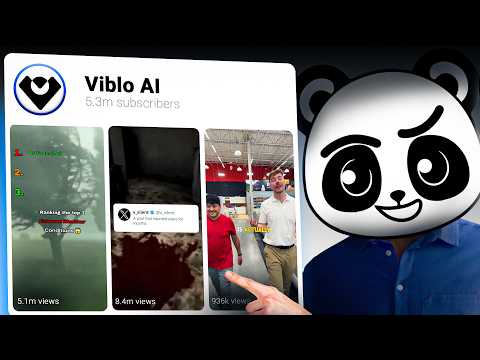
Viblo AI is a browser-based short-form video editor built around repeatable YouTube Shorts, TikTok and Reels workflows. It combines clipping, captions, AI voice, scripts, faceless formats, timeline editing and multi-platform export.
Where Viblo Earns Its Place
Viblo is strongest for creators who publish repeatable short-form formats at volume. Ranking videos, commentary, story videos and long-form repurposing benefit more from its automation than one-off cinematic projects do.
The Subscription and Quality-Control Trade-Off
The workflow can remove repetitive editing, but users still need to verify clips, captions, rights and platform compliance. Current review history also makes trial conversion and cancellation worth understanding before entering payment details.
About Viblo AI
Viblo AI is a browser-based short-form video creation and editing platform built for TikTok, Instagram Reels, YouTube Shorts and Facebook. It combines script generation, faceless and story formats, video commentary, ranking videos, split-screen layouts, auto clipping, AI captions, transcription, AI voiceovers, voice cloning, image and video generation, timeline editing and multi-platform publishing. The product is designed around creator volume and repeatable short-form workflows rather than deep cinematic post-production.
Use Cases
Key Features
- ✓ AI Shorts Creator
- ✓ Text Story videos
- ✓ Video Story videos
- ✓ Video Commentary
- ✓ Video Ranking
- ✓ Split Screen layouts
- ✓ Auto Clipping
- ✓ AI highlight detection
- ✓ AI script generation
- ✓ Script enhancer
- ✓ AI ideation generator
- ✓ AI voiceovers
- ✓ 35+ ElevenLabs voices on current plans
- ✓ Voice cloning and custom voice profiles
- ✓ Automatic captions and subtitles
- ✓ Video transcription
- ✓ AI image generation
- ✓ AI video generation
- ✓ Text-to-video workflows
- ✓ Faceless video creation
- ✓ Gameplay Shorts formats
- ✓ Story-based Shorts
- ✓ Commentary formats
- ✓ Niche-specific templates
- ✓ Short-form templates
- ✓ Project timeline editor
- ✓ Manual trim and reorder controls
- ✓ 9:16 vertical formatting
- ✓ 1080x1920 Shorts export on current product pages
- ✓ Import from uploaded footage
- ✓ Import from YouTube
- ✓ Import from TikTok
- ✓ Import from Instagram
- ✓ Auto reframing
- ✓ Caption styling
- ✓ Brand Kits
- ✓ Advanced Brand Kits on Business
- ✓ Bulk video creation
- ✓ Priority rendering
- ✓ Unlimited exports
- ✓ Multi-platform publishing
- ✓ YouTube channel integration
- ✓ Analytics and performance tracking on Business
- ✓ Commercial usage rights on Business
- ✓ Team access on Business
- ✓ Fast Mode
- ✓ Pro Mode
- ✓ Cinematic Mode
- ✓ Credit-based AI generation
Pricing
7-Day Trial
Free trial
- • Seven-day trial advertised across current Viblo pages
- • Trial scope depends on signup flow
- • Terms say eligible trials can auto-convert to paid subscriptions unless cancelled
- • Refund policy says payment details entered for a trial authorize the post-trial charge
Starter
$25/month or $150/year
- • 30 short videos per month
- • 200 credits per month
- • Fast Mode up to 60 seconds
- • 35+ ElevenLabs AI voices
- • AI Shorts Creator
- • Auto captions and subtitles
- • Niche-specific templates
- • YouTube Shorts, Reels and TikTok formats
- • Story and script-based Shorts
- • Unlimited exports
Creator
$49/month or $294/year
- • 90 short videos per month
- • 500 credits per month
- • Fast, Pro and Cinematic modes
- • 35+ ElevenLabs AI voices
- • AI Shorts Creator
- • Short-form templates
- • Auto captions and subtitles
- • Brand Kits
- • Priority exports and faster rendering
- • Multi-platform publishing
- • Story, commentary and gameplay Shorts
- • Unlimited exports
Business
$99/month or $594/year
- • 200 short videos per month
- • 1,200 credits per month
- • All video modes unlocked
- • 35+ ElevenLabs AI voices
- • AI Shorts Creator
- • Short-form templates
- • Team access
- • Commercial usage rights
- • Priority rendering queue
- • Advanced Brand Kits
- • Bulk video creation
- • Analytics and performance tracking
- • Unlimited exports
30-Day Money-Back Guarantee
Initial paid subscription only
- • Current refund policy offers a 30-day money-back guarantee from the initial paid purchase
- • Refund requests are handled through support
- • No partial or pro-rata refunds after the initial refund window
Pricing varies by plan and region — see current pricing.
Plan features change — last updated: 2026-09-05.
Details
Tags
Viblo AI — Frequently Asked Questions
What is Viblo AI?
Viblo AI is a browser-based short-form video creation and editing platform. It combines script generation, auto clipping, captions, AI voiceovers, faceless formats, ranking videos, split-screen layouts, transcription, AI generation and timeline editing.
How much does Viblo AI cost in 2026?
Viblo's current main pricing page lists Starter at $25 per month, Creator at $49 per month and Business at $99 per month. Annual prices are currently $150, $294 and $594 respectively.
Does Viblo have a free trial?
Yes. Current Viblo pages advertise a seven-day trial. The Terms say eligible trials may automatically convert into paid subscriptions unless cancelled before the trial ends, and the Refund Policy explains that entering payment details authorizes the post-trial charge.
Does Viblo offer refunds?
Viblo's current Refund Policy offers a 30-day money-back guarantee from the initial paid subscription purchase. The policy says users can request a refund through support@viblo.ai within that initial window.
Can Viblo make faceless YouTube Shorts?
Yes. Viblo is specifically positioned around faceless and script-based short-form content, including ranking videos, story formats, commentary, gameplay Shorts, AI voiceovers, generated visuals and captions.
Can Viblo repurpose long videos into Shorts?
Yes. Viblo's Auto Clipping and Auto Highlights workflows are designed to find short-form segments in longer video, then add captions, voiceover, vertical formatting and timeline edits.
Can Viblo import YouTube, TikTok and Instagram videos?
Current Viblo product pages advertise importing or downloading source content from YouTube, TikTok and Instagram. Users remain responsible for having rights to reuse or transform the source material.
Does Viblo include AI voiceovers?
Yes. Current pricing includes 35+ ElevenLabs voices, and product pages also advertise voice cloning or custom voice profiles for creator narration.
Do I own videos created with Viblo?
Viblo's Terms say users retain ownership of User Content and Viblo does not claim ownership of content they create or upload. Users grant Viblo a service-operation license while the content remains stored on the platform.
Does Viblo guarantee viral videos or creator income?
No. Viblo's current Terms explicitly say the company does not guarantee virality, views, engagement, income or business success. Creator and founder earnings examples should be treated as individual marketing examples rather than expected outcomes.
What do current Viblo reviews say?
Trustpilot's claimed viblo.ai profile currently shows a 4.2 score across roughly 74 to 75 reviews, with frequent praise for support and ease of use but recurring complaints about trial charges and cancellation. A separate older app.viblo.ai profile has only 9 reviews and a much lower score, largely from late 2025 and early 2026.
Does Viblo have an affiliate program?
WhatAI did not find a clearly documented public Viblo affiliate signup page or current commission schedule on viblo.ai. Some creator videos link to Viblo and may financially benefit their publishers, but that is not enough to publish a Viblo affiliate percentage.
Sources & References
- Viblo AI official short-form video platform ↗
- Viblo AI current pricing and plan limits ↗
- Viblo AI short-form video creator workflow ↗
- Viblo YouTube Shorts editor features and workflow ↗
- Viblo auto clipping and highlight-detection workflow ↗
- Viblo AI script generation and commentary workflow ↗
- Viblo AI YouTube Shorts generator and export specifications ↗
- Viblo AI March 2026 Terms of Service ↗
- Viblo AI March 2026 Privacy Policy ↗
- Viblo AI refund and trial billing policy ↗
- Viblo AI Acceptable Use Policy ↗
- Viblo guide to creating YouTube video without appearing on camera ↗
- Viblo guide to AI tools for faceless YouTube workflows ↗
- Trustpilot current Viblo AI main-domain customer reviews ↗
- Trustpilot older App Viblo customer review sample ↗
- Artificial Quotient Viblo AI faceless Shorts full walkthrough ↗
- How to Easy Viblo AI tutorial for beginners 2026 ↗
- Kellan Henneberry 2026 faceless Shorts workflow using Viblo ↗
- Kellan Henneberry AI Shorts workflow featuring Viblo ↗
Try Viblo AI
Visit the official website to get started with Viblo AI today.
Visit Viblo AI →