Alli AI is moving from SEO automation into AI crawler infrastructure
The Visibility Engine, LLM Mode and WordPress plugin extend its deployment layer to AI-facing HTML, while crawler access remains different from earning citations.
By WhatAI Editorial ·
Alli AI is moving from SEO automation into AI crawler infrastructure
Alli AI has spent years solving a practical problem in search marketing: SEO teams can identify hundreds or thousands of on-page changes faster than developers can implement them.
A crawler finds missing title tags. A strategist wants new schema. An agency wants to update internal links across a portfolio. The recommendations are not necessarily difficult. The bottleneck is getting them onto the live website.
Alli AI built its reputation around that implementation layer.
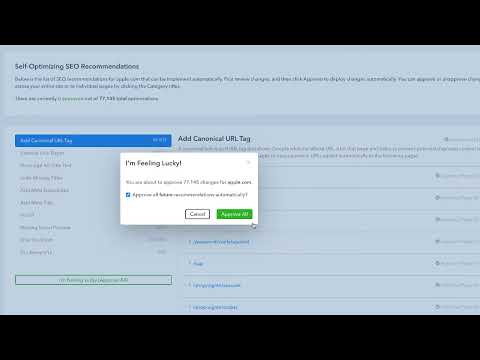
The current product can generate and deploy title tags, meta descriptions, schema, internal links, image alt text, canonical tags, hreflang, Open Graph metadata and other on-page changes through a rule-based system. Instead of editing each CMS manually, a team installs Alli AI and applies changes across matching pages.
In 2026, that same execution architecture is being repurposed for a newer problem.
Alli AI now leads with AI search visibility and crawler accessibility.
The company is no longer only asking whether Google can index a page or whether a title can be improved. It is asking what GPTBot, ClaudeBot, PerplexityBot and other AI crawlers receive when they request the site, especially when the human-facing experience depends heavily on client-side JavaScript.
That shift makes Alli AI more interesting than another SEO recommendation dashboard.
It also makes the buying decision more technical.
The product is increasingly sitting between the website, crawlers and the marketing team.
The core 2026 product is really two engines
Alli AI's current positioning describes two connected systems.
The SEO Automation Engine handles large-scale on-page deployment.
The AI Search Visibility Engine handles crawler accessibility and pre-rendering.
The same installation can therefore affect both conventional SEO execution and the version of a page served to selected AI crawlers.
That is a coherent strategy because the two problems are related.
A marketing team may already know that a product page needs structured data, clearer metadata and better internal linking. If the page is also rendered in a way that leaves important content absent from the initial HTML, an AI crawler may not receive the complete information even after the content strategy is improved.
Alli AI tries to solve both layers.
The platform crawls and renders the site, identifies changes, lets the team create rules, previews the result and deploys changes without modifying the underlying repository or CMS database.
The current AI Search Visibility Engine can also serve pre-rendered HTML to more than 50 recognized AI crawlers and related systems.
For agencies managing many websites on different stacks, this is the central attraction.
The team does not need one SEO deployment process for WordPress, another for Shopify, another for Webflow and another for a custom React application.
Alli AI's overlay and edge architecture attempts to give marketing one operational layer across them.
Accessibility is not the same as citation
This is the most important distinction on the current product page.
Alli AI uses the phrase AI search visibility.
Much of what the product actually controls is AI crawler accessibility.
Those concepts overlap, but they are not identical.
If a crawler receives an empty application shell rather than the article, product description, FAQ or structured data visible to a human browser, fixing that delivery problem is meaningful. A system cannot reliably use information it never receives.
Serving complete, structured HTML can therefore improve the technical conditions for indexing, extraction and understanding.
It does not guarantee that ChatGPT, Claude, Gemini, Perplexity or another system will cite or recommend the site.
Citation decisions can depend on many other factors, including relevance, authority, freshness, source selection, retrieval architecture, model behavior, query wording and the platform's own policies.
This matters because AI visibility software is becoming crowded with products that measure prompts, citations and share of voice.
Alli AI is different.
Its strongest 2026 feature is not primarily a prompt-monitoring dashboard.
It is an implementation and infrastructure layer that helps crawlers reach content and lets the website owner see crawler activity.
That should be evaluated on those terms.
The Visibility Engine Dashboard makes crawler traffic observable
In March 2026, Alli AI launched the Visibility Engine Dashboard.
The dashboard separates incoming traffic into humans, generic bots, conventional search crawlers and AI or LLM-related crawlers.
That is useful because AI crawler requests are often buried inside a generic bot category.
Alli AI's public live monitor currently identifies signatures associated with systems including OpenAI, Anthropic, Perplexity, Meta, Apple, Amazon and others.
The company says its classification library covers more than 50 known AI crawler signatures and is updated over time.
This creates a useful operational feedback loop.
A team can see whether a crawler is reaching the site, how frequently it is visiting and what requests are being classified as AI traffic.
The public monitor itself is careful about one point that the broader marketing copy sometimes makes less obvious: the displayed traffic proportions come from the monitored production site and are not extrapolated to the entire internet.
That distinction should carry through to customer interpretation.
A high proportion of AI crawler traffic does not mean AI search has suddenly become the site's largest customer-acquisition channel.
Crawler requests are infrastructure activity.
Referral sessions, citations, leads and revenue are separate outcomes.
The dashboard is valuable because it reveals access behavior, not because every crawler request has direct commercial value.
LLM Mode gives teams a different QA surface
Another current feature is LLM Mode.
Alli AI describes it as a way to inspect the version of a site that an AI crawler receives rather than the fully rendered human experience.
The company's April 2026 article makes a broader argument that websites now have two relevant presentations: the visual experience for humans and a structured information layer for crawlers and machines.
That is a useful mental model even if some of the marketing language is aggressive.
A product team can inspect whether important text exists without JavaScript execution, whether heading hierarchy remains understandable, whether navigation becomes noisy or duplicated, whether links retain useful context and whether information communicated visually has a meaningful textual equivalent.
This is not only an AI search concern.
Clear server-delivered content, semantic structure and descriptive links are generally useful qualities for crawling, accessibility, resilience and machine interpretation.
The potential mistake is designing an entirely separate marketing reality for crawlers.
The content served to AI systems should remain accurate and consistent with the underlying page.
Crawler optimization should improve accessibility to the real information, not become a route for presenting claims or structure that users never encounter.
The WordPress plugin reduces installation friction
In June 2026, Alli AI added a WordPress plugin for the AI Visibility Engine.
The help-center documentation describes a workflow in which the site is approved for the Visibility Engine, the plugin is downloaded and installed, a verification key and access token are entered, and the feature is enabled.
That gives WordPress customers a cleaner path than manually wiring infrastructure.
For other stacks, Alli AI continues to support several integration routes, including a JavaScript snippet, tag-manager-style deployment and more involved AI Visibility Engine configurations.
The broader product pages name WordPress, Shopify, Webflow, HubSpot, Adobe Experience Manager, React, Vue, Next.js, Angular and custom builds among supported environments.
The platform-agnostic approach is one of the product's strongest agency advantages.
It is also why implementation testing matters.
A tool that operates outside the CMS can solve organizational bottlenecks, but it adds another layer between the source application and the final response.
Every customer should verify how Googlebot, AI crawlers and normal browsers actually receive important pages after installation.
The overlay architecture is both the advantage and the lock-in
Alli AI is explicit that its SEO deployment model does not modify source code.
Changes are applied through the Alli AI layer and can be rolled back quickly.
That is excellent for speed.
It is also the most important switching-cost consideration.
Alli AI's own Visual SEO Editor page says that optimizations and edits implemented through the Live Editor revert when the service is cancelled.
The company's public response to customer criticism has also explained that users can export a recommendations report and recreate the changes permanently in their own code before leaving.
This means a buyer should understand what is being purchased.
Alli AI is not necessarily renovating the underlying CMS or repository.
It is operating a live optimization layer.
That can be preferable for agencies that need changes deployed immediately across many heterogeneous sites.
A company that wants every optimization committed permanently into its application code will need an off-boarding or migration process.
That process should be considered before adoption, not only at cancellation.
The AI Visibility Engine has an additional off-boarding requirement.
Alli AI's help center provides separate instructions for full and easy integrations and warns that incorrect off-boarding can cause downtime.
That is reasonable for infrastructure involving DNS or traffic routing, but it means the product should not be treated like a dashboard that can simply be abandoned after the subscription ends.
Technical ownership remains important even when the sales pitch emphasizes no engineering tickets.
The Fortune 100 research strengthens the product story, but it remains vendor research
Alli AI has invested heavily in original research during 2026.
Its May media kit describes a Fortune 100 AI Accessibility project covering 275,571 pages across 387 enterprise domains.
The company reports a mean content gap of 27.8 percent per page and says 45.9 percent of critical-tier domains in the sample had severe accessibility problems.
This is useful evidence that crawler-facing HTML can differ materially from the rendered experience.
It should still be described correctly.
The methodology and dataset come from Alli AI, a company selling the solution to the problem being measured.
That does not make the findings false.
It means the numbers should be attributed to Alli AI's research rather than presented as a neutral industry benchmark.
The same applies to homepage claims about AI-search traffic growth and customer performance.
A directory should distinguish product mechanics, which can be verified from documentation, from market forecasts, customer outcomes and vendor studies.
The strongest reason to consider Alli AI does not require believing every headline statistic.
The implementation problem is real enough on its own.
Pricing assumes multiple sites
Alli AI's current self-serve pricing begins at a level that makes much more sense for agencies and multi-site teams than for a small publisher.
Business costs $299 per month on monthly billing or $249 per month when billed annually at $2,990 per year.
It includes five sites, five team members, 500 keywords and 1,250 pages.
Agency costs $599 per month monthly or $499 per month when billed annually at $5,990.
It includes 15 sites, 15 team members, 2,000 keywords and 5,000 pages, plus API access and white-label snippet hosting.
Enterprise uses custom pricing and currently shows a base allowance of 50 sites, 50 team members, 5,000 keywords and 20,000 pages along with the full white-label dashboard.
Every plan currently includes a 10-day free trial.
There is no permanent free plan listed on the pricing page.
Extra sites, keyword capacity and pages are sold as add-ons at plan-specific rates.
This pricing structure is one reason single-site businesses should compare alternatives carefully.
A company with one 100-page website may be paying for capacity it cannot use.
An agency with twelve client websites can distribute the same subscription across a portfolio and may find the economics much more reasonable.
The platform should therefore be judged partly on deployment volume.
The more manual CMS work Alli AI replaces, the easier the price becomes to defend.
The feature list is broader than crawler accessibility
It would be a mistake to reduce Alli AI to pre-rendering.
The current platform still includes its established on-page automation stack.
Users can create bulk optimization rules, use the visual editor, automate internal linking, generate schema, track keywords, optimize site speed and run SEO A/B testing.
The Site Speed Optimizer adds another infrastructure-style feature by applying performance improvements without requiring a full rebuild.
The Agency plan adds API access and white-label snippet hosting.
Enterprise adds deeper white-labeling and larger portfolio limits.
What Alli AI does not appear to be trying to become is a full content-production suite.
A July 2026 Trustpilot reviewer specifically praised the current AEO and SEO execution but said they still use another tool for content creation.
That observation fits the product design.
Alli AI is strongest as an implementation layer around an existing SEO strategy and content operation.
It does not eliminate the need to decide what content should exist or why a page deserves to rank.
Security claims need precise wording
Alli AI's enterprise technical architecture describes TLS 1.3, AES-256 and AWS infrastructure with SOC 2 compliance.
Those are meaningful technical controls.
The wording should not be converted into a claim that Alli AI itself holds a specific SOC 2 Type II attestation unless that company-level certification is separately verified.
This distinction matters for procurement.
Using compliant cloud infrastructure is not the same as completing an independent audit of the SaaS company and its operational controls.
Enterprise buyers should request the current security package, data-processing terms and any audit reports required by their own policy.
The affiliate program is unusually clear
Alli AI runs a public affiliate program.
The standard terms currently advertise 20 percent recurring commission for 12 months with a 90-day referral cookie.
The company is also running a limited higher-tier recruitment offer on the affiliate page, but the standing program is stated clearly as 20 percent recurring for 12 months.
For WhatAI, that makes Alli AI commercially relevant.
The affiliate link should still remain empty until a WhatAI-owned tracking URL has been issued and verified.
Editorial evaluation should also remain separate from the commercial opportunity.
The product has a strong affiliate offer precisely because the company wants SEO creators, agencies and publishers to promote the AI-search story.
WhatAI's view
Alli AI has become more interesting in 2026 because its original strength maps naturally onto the new AI-search problem.
The company was already built around implementation rather than recommendation.
Now it is applying that same philosophy to crawler accessibility.
That creates a coherent product for agencies and enterprises with many sites, mixed CMS environments and persistent engineering bottlenecks.
The strongest use case is not a small blogger looking for keyword ideas.
It is a marketing or SEO team that already knows what needs to change and cannot get those changes shipped consistently across a portfolio.
The AI Search Visibility Engine adds a second reason to consider it when important content depends on client-side rendering or when the organization wants direct visibility into AI crawler activity.
The main cautions are just as clear.
Pre-rendering can improve access but cannot guarantee citations.
Vendor research should remain attributed.
Overlay-based changes create switching and off-boarding work.
The pricing assumes meaningful scale.
Infrastructure features deserve technical review even when installation is simple.
The best trial is therefore operational.
Pick one site where the team already has a backlog of real SEO changes.
Install Alli AI.
Use LLM Mode and the visibility tools to inspect what crawlers receive.
Deploy a limited set of title, schema and internal-link changes.
Verify the resulting HTML with external tools.
Track crawl activity.
Measure the time saved.
Then export the recommendations and understand exactly what would have to happen if the company later removed Alli AI.
If the product eliminates weeks of implementation delay across many sites, it solves an expensive problem.
If the team only needs research, content ideas or occasional single-site edits, a cheaper SEO platform may be easier to justify.
The important 2026 shift is that Alli AI is no longer only automating SEO tasks.
It is trying to become the delivery layer between marketing intent and the machine-readable website.
Alli AI has evolved from on-page SEO automation into a broader AI-search infrastructure product. Its 2026 platform can deploy SEO rules across many websites, serve pre-rendered HTML to more than 50 AI crawlers and show teams what those crawlers are requesting.
What makes Alli AI different from a normal SEO dashboard
The product is built around implementation. Instead of only reporting missing schema, metadata or internal links, Alli AI can deploy approved rules across matching pages without requiring a developer to edit every CMS. Its Visibility Engine extends that approach to crawler-facing HTML for supported AI systems.
The most important limitation to understand
Alli AI can improve crawler accessibility, but accessibility is not a guarantee of citation or ranking. Its overlay-based SEO edits also revert when the service is removed unless the customer separately implements those changes into the underlying website.
About Alli AI
Alli AI is an SEO automation and AI crawler accessibility platform for agencies, marketing teams, ecommerce businesses and enterprises. It deploys on-page SEO changes through rules and an overlay layer without requiring teams to edit each CMS manually, while its AI Search Visibility Engine serves pre-rendered HTML to more than 50 recognized AI crawlers. The platform also includes crawler monitoring, LLM Mode, schema automation, internal linking, keyword tracking, site-speed optimization, a visual editor and SEO A/B testing.
Use Cases
Key Features
- ✓ AI Search Visibility Engine with pre-rendered HTML for 50+ AI crawlers
- ✓ AI Bot Traffic Live Monitor
- ✓ LLM Mode for inspecting crawler-facing page content
- ✓ Bulk on-page SEO automation rules
- ✓ AI-generated title tags and meta descriptions
- ✓ AI schema markup generation and deployment
- ✓ Automated internal linking
- ✓ Image alt-text automation
- ✓ Canonical, hreflang and Open Graph deployment
- ✓ Visual SEO Editor
- ✓ Preview-before-publish workflow
- ✓ One-click rollback
- ✓ Site Speed Optimizer
- ✓ SEO A/B testing
- ✓ Keyword rank tracking
- ✓ Weekly site crawls and recommendations
- ✓ Multi-site portfolio management
- ✓ API access on Agency and higher plans
- ✓ White-label snippet hosting on Agency
- ✓ Full white-label dashboard on Enterprise
- ✓ WordPress AI Visibility Engine plugin
- ✓ JavaScript snippet, tag-manager and infrastructure integration routes
Pricing
Business
$299/month or $249/month billed annually
- • 10-day free trial
- • 5 sites
- • 5 team members
- • 500 keywords
- • 1,250 pages
- • AI Search Visibility Engine
- • Pre-rendering for 50+ AI crawlers
- • AI Bot Traffic Live Monitor
- • LLM Mode
- • Keyword tracking
- • Site Speed Optimizer
- • Link Builder
- • Standard reports
- • Weekly crawl and recommendations
- • Extra sites, keywords and pages available as paid add-ons
Agency
$599/month or $499/month billed annually
- • 10-day free trial
- • 15 sites
- • 15 team members
- • 2,000 keywords
- • 5,000 pages
- • Everything in Business
- • API access
- • White-label snippet hosting
- • Lower per-unit add-on pricing than Business
Enterprise
Custom
- • Demo-led custom pricing
- • 50 sites shown as the current base allowance
- • 50 team members
- • 5,000 keywords
- • 20,000 pages
- • Everything in Agency
- • Full white-label dashboard
- • Enterprise integration and larger portfolio options
Pricing varies by plan and region — see current pricing.
Plan features change — last updated: 2026-08-26.
Details
Tags
WhatAI verdict on Alli AI
Alli AI — Frequently Asked Questions
What is Alli AI?
Alli AI is an SEO automation and AI crawler accessibility platform. It deploys on-page SEO changes across websites and can serve pre-rendered HTML to more than 50 recognized AI crawlers.
How much does Alli AI cost?
As of August 26, 2026, Business costs $299 per month monthly or $249 per month billed annually. Agency costs $599 monthly or $499 billed annually. Enterprise pricing is custom.
Does Alli AI have a free plan?
No permanent free plan is listed on the current pricing page. All main plans currently include a 10-day free trial.
What is the Alli AI Search Visibility Engine?
It detects supported AI crawler requests and serves pre-rendered HTML so content that depends on client-side rendering can be made available to those crawlers.
Does Alli AI guarantee that ChatGPT will cite my website?
No. Crawler accessibility can improve the technical conditions for retrieval and understanding, but citation and recommendation decisions depend on many factors outside Alli AI's control.
What is LLM Mode?
LLM Mode is designed to let users inspect the machine-facing version of a page and identify information that may be missing or poorly structured for AI crawlers.
Does Alli AI modify my source code?
The current product says its optimization rules operate as an overlay and do not modify the repository, CMS database or source files.
What happens to Alli AI optimizations if I cancel?
Alli AI states that Live Editor optimizations revert when the service is cancelled. Customers that want those changes permanently in their own code should export the relevant recommendations and implement them separately before off-boarding.
Can Alli AI work with React, Next.js and custom sites?
Yes. Alli AI currently positions the platform as CMS and framework agnostic and names React, Vue, Next.js, Angular and custom builds alongside WordPress, Shopify, Webflow and other systems.
Does Alli AI have an API?
Yes. API access is currently included on the Agency plan and above.
Does Alli AI have an affiliate program?
Yes. The standard public affiliate program currently advertises 20 percent recurring commission for 12 months with a 90-day referral cookie.
Is Alli AI best for a single small website?
It can be used for smaller sites, but the current Business plan includes five sites and starts at $249 per month on annual billing. The economics generally become stronger when several sites or many pages are being managed.
Sources & References
- Official Alli AI platform overview ↗
- Official Alli AI pricing ↗
- Official Alli AI features ↗
- Official Alli AI SEO automation overview ↗
- Official bulk SEO automation documentation ↗
- Official Visual SEO Editor and cancellation behavior ↗
- Official AI crawler enablement platform ↗
- Official AI Bot Traffic Live Monitor and methodology ↗
- Official March 2026 Visibility Engine Dashboard launch ↗
- Official April 2026 LLM Mode and crawler-facing content article ↗
- Official AI Visibility Engine WordPress plugin ↗
- Official WordPress Visibility Engine integration guide ↗
- Official AI Visibility Engine full off-boarding guide ↗
- Official AI Visibility Engine easy off-boarding guide ↗
- Official Alli AI cancellation guide ↗
- Official Alli AI technical architecture ↗
- Official Alli AI 2026 media kit and research summary ↗
- Official AI Search Visibility Engine launch ↗
- Official Alli AI affiliate program ↗
- Official Alli AI privacy policy ↗
- Official Alli AI Terms of Service ↗
- Capterra Alli AI product and verified review profile ↗
- Trustpilot Alli AI customer reviews ↗
- Independent 2026 Alli AI review ↗
- Official Alli AI SEO automation demo ↗
- Elegant Themes AI SEO tools comparison featuring Alli AI ↗
- Independent Alli AI walkthrough and review ↗
- Earlier Alli AI SEO automation demo ↗
Try Alli AI
Visit the official website to get started with Alli AI today.
Visit Alli AI →