Search Atlas is turning SEO software into an execution layer
OTTO, Atlas Agent, LLM Visibility and Smart Ads now make the buying decision as much about automation governance as SEO data.
By WhatAI Editorial ·
Search Atlas is trying to move beyond the SEO dashboard
Search Atlas still looks familiar if you approach it as an SEO platform. It has keyword research, rank tracking, site auditing, backlink analysis, content tools, local SEO and reporting. What has changed is the role those tools now play inside the product. By August 2026, Search Atlas is positioning the platform less as a collection of SEO utilities and more as an agentic marketing system that can research a problem, decide what work is needed, publish changes and continue monitoring the result.
That distinction matters because most established SEO software still begins with analysis. It can tell a marketer that a page has weak internal links, that a competitor owns a topic cluster or that a title tag is poorly aligned with search intent. Search Atlas is increasingly built around the next step: execution. OTTO SEO can deploy technical and on-page changes, Content Genius can prepare and publish content, Atlas Agent can coordinate broader campaigns, and Smart Ads extends the same idea into paid search.
The result is a more ambitious product than the Search Atlas of a few years ago, but also one that deserves to be evaluated differently. A buyer is not only choosing a data platform. They are deciding how much marketing execution they are willing to delegate.
The agent layer is the real product shift
Atlas Agent is now the clearest expression of where Search Atlas is heading. The company describes it as a conversational agent that can move across SEO, content, local search, authority building, reporting, paid media and AI visibility. Instead of opening a separate module for every task, the user can define a goal and let the agent plan and coordinate the work.
That sounds similar to the agent language now used across many software categories, so the useful question is what the agent can actually reach. Search Atlas has an advantage here because the agent sits on top of a fairly broad native marketing stack. It can draw from site audits, keyword data, content plans, backlinks, Google Search Console, analytics, local listings and other connected systems rather than operating as a generic chatbot with no execution layer.
For agencies and in-house teams, that can reduce handoffs between research, content, implementation and reporting. The benefit is strongest when the same team already uses several Search Atlas modules and wants them to behave more like one operating system. A team that only needs keyword research or a conventional rank tracker may find that much of the platform is unnecessary overhead.
OTTO matters because it can change the live site
OTTO SEO remains the most important differentiator in the Search Atlas stack because it does not stop at recommendations. Search Atlas currently documents several deployment paths for live SEO changes: Cloudflare at the edge, native CMS connections, and code-pipeline options including GitHub, Vercel and Netlify. Native CMS destinations listed by Search Atlas include WordPress, HubSpot, Webflow, Shopify, Contentful and Duda.
That is materially different from a crawler that hands a technical team a spreadsheet of issues. OTTO can identify title, metadata, schema, internal-linking, content and other on-page problems, then move approved changes toward production. Search Atlas also supports an autopilot-style workflow for teams that want more automation and an approval mode for teams that prefer review before publishing.
The attraction is obvious. Technical SEO often fails because the recommendation is correct but never gets implemented. Search Atlas is designed to close that implementation gap.
The tradeoff is equally important. A tool that can publish changes deserves more governance than a tool that only produces a report. Teams should define who can approve edits, which page types are protected, how changes are rolled back, and whether AI-generated content or metadata can go live without editorial review. Automation reduces the cost of making a change. It does not reduce the cost of making the wrong change.
Deployment method deserves more attention than the headline
Search Atlas supports several ways to get OTTO onto a site, and the method matters. A WordPress or other CMS connection writes into a publishing system. A Cloudflare Worker can apply changes at the edge. Code-pipeline integrations can move work into a development workflow. Search Atlas also continues to document OTTO installation methods for a wider range of website builders and custom setups.
Prospective buyers should test the route they intend to use rather than assuming every implementation behaves identically. Search engines, AI crawlers, analytics tools and website visitors do not all process JavaScript and edge-rendered changes in the same way. The safest evaluation is to inspect the final HTML seen by the systems that matter to the business, confirm that canonical tags, metadata, schema and links are present where expected, and verify that changes survive the publishing path.
This is especially relevant now that Search Atlas is also selling AI-search visibility. The platform may help a company optimize for both conventional search and answer engines, but the deployment architecture still determines what different crawlers can actually observe.
AI visibility is becoming part of the core SEO decision
LLM Visibility is one of the clearest signs that Search Atlas sees search as broader than Google rankings. The product tracks brand mentions, sentiment, share of voice and visibility across AI answer systems. The current pricing page says ChatGPT, Gemini and Google AI Mode are available across the paid LLM Visibility tiers, while Perplexity and Copilot are available on Pro and higher plans. The same pricing page states that AI visibility starts on the Growth plan rather than the $99 Starter tier.
That is an important plan boundary. Search Atlas promotes itself heavily around AI search, but a buyer choosing the entry plan should not assume the complete AI-visibility product is included.
The more interesting question is what the user can do after seeing the data. Search Atlas is trying to connect visibility measurement to content, authority and site changes within the same platform. That is potentially more useful than a standalone dashboard that only says a brand is absent from certain prompts. It also makes attribution harder. A rise in AI mentions can coincide with content changes, link building, brand activity, traditional SEO and external market events. Visibility metrics should be treated as directional evidence, not proof that one automated action created a business outcome.
Pricing now reflects a platform, not a point tool
Search Atlas currently lists four main self-serve plans: Starter at $99 per month, Growth at $199, Pro at $399 and Agency at $999. Each has a seven-day trial. The plans scale user seats, OTTO projects, content quotas, rank-tracking capacity, local SEO capacity, AI visibility and other platform limits.
The platform also uses several quota systems. The main pricing page lists Universal Credits as a shared operating budget across parts of the platform, alongside more specific quotas for AI SEO, content generation and other features. Starter includes 50,000 Universal Credits, Growth 120,000, Pro 400,000 and Agency at least 1,000,000. OTTO project allowances rise from one on Starter to ten on Agency.
Those numbers are useful, but they also make the product harder to price from the headline alone. Search Atlas can replace several subscriptions for the right team, but a realistic cost comparison needs to use expected sites, users, content volume, AI visibility queries, rank tracking and additional OTTO activations. Extra OTTO sites and top-up credits can add to the base plan.
There is no permanent free plan on the current pricing page. The seven-day trial is the entry point. Search Atlas also states that onboarding is available during the trial.
Smart Ads widens the commitment
Search Atlas is no longer limiting its automation story to organic search. Smart Ads is designed to build and manage Google Ads campaigns, including keyword discovery, campaign creation, negative keyword work, reporting and budget optimization. Search Atlas describes approval controls for teams that do not want the system making every change automatically.
This makes the platform more interesting for agencies that already manage both SEO and paid search, because the same account can hold research, content, site optimization and advertising workflows. It also raises the stakes. Changes to metadata and internal links can affect organic performance over time. Changes to bids, targeting and budgets can spend money immediately.
Any team using Smart Ads should begin with constrained accounts, explicit spending limits and approval rules. Vendor case studies and performance percentages should not be treated as expected returns. Paid media results depend on the offer, conversion tracking, landing pages, market, competition and account history as much as the automation layer.
Agencies get the clearest value proposition
The product is unusually agency-oriented. Higher plans add more websites, more users, white-label capabilities, client dashboards, reporting capacity and larger quotas. Search Atlas also combines local SEO, content production, technical work, authority building and advertising in a way that can reduce the number of separate systems an agency has to manage.
That does not automatically make it cheaper. A small agency with two highly specialized workflows may still be better served by dedicated tools. Search Atlas becomes more compelling as the overlap increases: several client sites, repeated audits, content production, local profiles, reporting and implementation work.
The platform's affiliate programme is another sign of its agency and creator distribution model. Search Atlas currently advertises up to 30 percent monthly recurring commission for approved affiliates. That is commercially attractive, but it is also a reason to distinguish independent evaluation from affiliate promotion when researching the product. The WhatAI record therefore keeps the public affiliate programme documented while leaving the affiliate link empty until a WhatAI-owned tracking link is verified.
The legal and billing details deserve a read
Search Atlas's public terms and refund documentation are stricter than the seven-day trial headline might suggest. The current refund policy says most payments are not refundable and describes a narrow review window, including a 48-hour request condition and a requirement that account usage remain below stated thresholds. The Terms of Use also contains separate wording for some annual-subscription refund circumstances.
That difference is worth checking before purchase because official pages are not perfectly uniform in how they describe refund treatment. Buyers should read the live policy that applies to the exact subscription and billing cycle rather than relying on a sales conversation or an older review.
On data handling, Search Atlas says connected first-party data such as Google Search Console and Google Analytics data is used to provide the service and its data agreement states that such data is not to be aggregated for outside distribution. Its privacy policy also states that Google Workspace API data is not used to develop, improve or train generalized AI or machine-learning models. Teams connecting advertising accounts, CMS access and analytics should still review the current privacy and security documents for their own compliance requirements.
Automation increases the cost of weak governance
The strongest version of Search Atlas is also the version that needs the most discipline. If Atlas Agent can plan work, OTTO can ship site changes, Content Genius can publish pages and Smart Ads can modify campaigns, then the platform is participating directly in production marketing operations.
That can be valuable when the organization already has a sound strategy, clean analytics, clear brand rules and defined approvals. It can amplify mistakes when those foundations are weak. An automated internal-linking recommendation can be structurally sensible while sending users to the wrong commercial page. An AI article can be well optimized while adding little original value. A campaign can be technically efficient while optimizing toward a poorly defined conversion.
Search Atlas therefore makes the most sense when automation is treated as execution infrastructure rather than outsourced judgment.
WhatAI's view
Search Atlas is one of the more complete examples of the shift from SEO software toward agentic marketing software. Its strongest idea is not any individual keyword database or content generator. It is the attempt to connect research, diagnosis, creation, deployment and measurement in one system.
For an agency or marketing team that currently moves between an SEO suite, content optimizer, local platform, reporting tool and manual implementation queue, that consolidation is worth testing. The trial should be used on a real site with a defined workflow: run the audit, inspect the recommendations, deploy a small set of reversible changes, compare the final rendered output, create one piece of content, and measure whether the platform actually removes handoffs.
For a small business that only wants occasional keyword research, or for a technical SEO team that prefers every change to move through an existing engineering process, the $99 entry price and broad feature surface may be more than necessary.
The central buying question is therefore not whether Search Atlas has more SEO features than a competitor. It is whether your team wants software that increasingly moves from telling you what to do toward doing part of the work itself. If the answer is yes, Search Atlas belongs on the shortlist. If the answer is no, a narrower research-first platform may be easier to govern and easier to justify.
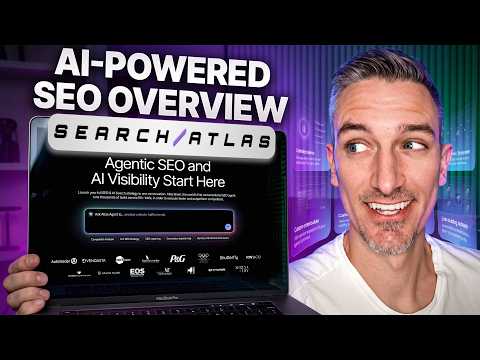
Search Atlas combines SEO research with an increasingly agentic execution layer. OTTO SEO can move approved website changes toward production, while Atlas Agent, Content Genius, LLM Visibility, local SEO, rank tracking, and Smart Ads connect more of the marketing workflow inside one platform.
What makes Search Atlas different from conventional SEO tools
The main difference is the distance between diagnosis and action. Search Atlas can research a problem, recommend a change, prepare content, publish through supported CMS or deployment routes, and continue tracking performance. That can remove handoffs for agencies and marketing teams, but it also means permissions and approval controls deserve more attention than they would in a read-only analytics product.
Where Search Atlas can be a poor fit
Search Atlas may be excessive for users who only need occasional keyword research, a simple rank tracker, or a specialist content optimizer. The $99 monthly entry price, multiple quota systems, live deployment options, and broad feature surface make the platform easier to justify when a team will actively use several modules rather than one.
About Search Atlas
Search Atlas is an AI-powered marketing and SEO platform that combines research, technical auditing, content optimization, rank tracking, local SEO, backlink analysis, AI-search visibility, paid-search automation, and live website deployment. Its central differentiator is execution: OTTO SEO can move approved technical and on-page changes toward production through CMS, edge, or code-pipeline integrations, while Atlas Agent coordinates broader marketing workflows. The platform is particularly suited to agencies and teams managing multiple sites, but its growing use of agents, quotas, and live publishing means buyers should evaluate permissions, deployment method, credit usage, and approval controls rather than treating it as a conventional read-only SEO dashboard.
Use Cases
Key Features
- ✓ Atlas Agent for conversational multi-step marketing execution
- ✓ OTTO SEO for technical and on-page SEO automation
- ✓ Cloudflare, CMS, and code-pipeline deployment options for OTTO changes
- ✓ Content Genius for SERP research, content drafting, optimization, and publishing
- ✓ Site Explorer for organic, paid, backlink, competitor, and AI-visibility research
- ✓ Site Auditor with JavaScript rendering and live crawl logs
- ✓ Keyword research, keyword gap analysis, and rank tracking
- ✓ LLM Visibility for brand mentions, sentiment, share of voice, and AI-search tracking
- ✓ Smart Ads for Google Ads generation, auditing, negative keywords, reporting, and optimization
- ✓ GBP Galactic and local SEO tools for Google Business Profile workflows
- ✓ Topical Maps and Domain Knowledge Network for content planning
- ✓ Authority-building, digital PR, outreach, and backlink workflows
- ✓ Website Studio and landing-page generation
- ✓ White-label dashboards and reporting on higher plans
- ✓ Search Atlas API for projects, account management, and supported platform services
Pricing
Starter
$99 per month
- • Seven-day free trial
- • One user seat
- • One OTTO SEO project
- • 50,000 Universal Credits
- • 500 AI SEO credits
- • 40 content pages and 30 AI article credits
- • Atlas Agent, Website Studio, Smart Ads, Universal CMS Publishing, and GBP Audit
- • AI visibility is not included at the full paid-project level on the current pricing table
Growth
$199 per month
- • Seven-day free trial
- • Three user seats
- • Two OTTO SEO projects
- • 120,000 Universal Credits
- • 1,000 AI SEO credits
- • 100 content pages and 60 AI article credits
- • LLM Visibility projects and higher research, rank-tracking, and local quotas
- • Smart Ads automation
Pro
$399 per month
- • Seven-day free trial
- • Five user seats
- • Four OTTO SEO projects
- • 400,000 Universal Credits
- • 2,000 AI SEO credits
- • 200 content pages and 90 AI article credits
- • Expanded LLM platform coverage including Perplexity and Copilot
- • Enhanced authority-building allowances and white-label capabilities
Agency
$999 per month
- • Up to ten OTTO SEO projects on the current pricing table
- • Agency-oriented user, reporting, local, rank-tracking, and client-management capacity
- • At least 1,000,000 Universal Credits
- • 10,000 AI SEO credits
- • 500 content pages and 300 AI article credits
- • White-label reporting, client dashboards, priority support, and maximum self-serve quotas
Enterprise
Custom
- • Custom pricing and quotas
- • API access and tailored usage limits
- • Personalized onboarding and dedicated support
- • Designed for larger organizations with complex multi-site requirements
Pricing varies by plan and region — see current pricing.
Plan features change — last updated: 2026-08-26.
Details
Tags
WhatAI verdict on Search Atlas
Search Atlas — Frequently Asked Questions
What is Search Atlas?
Search Atlas is an AI-powered SEO and marketing platform that combines research, technical auditing, content optimization, rank tracking, backlinks, local SEO, AI-search visibility, paid-search automation, reporting, and agent-driven execution.
What is OTTO SEO?
OTTO SEO is Search Atlas's SEO automation system. It audits websites, recommends technical and on-page changes, and can deploy approved work through supported CMS, edge, or code-pipeline routes.
How much does Search Atlas cost?
As of August 26, 2026, Search Atlas lists Starter at $99 per month, Growth at $199, Pro at $399, and Agency at $999. Enterprise pricing is custom.
Does Search Atlas have a free plan?
The current pricing page does not list a permanent free plan. It offers a seven-day free trial across the main self-serve plans.
Does the $99 Starter plan include LLM Visibility?
The current pricing page states that AI visibility starts on Growth. Buyers should not assume the full paid LLM Visibility project allowance is included in Starter.
Which AI systems can Search Atlas track for LLM visibility?
The current pricing table lists ChatGPT, Gemini, and Google AI Mode on the paid LLM Visibility tiers, with Perplexity and Copilot available on Pro and higher plans.
Can Search Atlas publish changes directly to a website?
Yes. Search Atlas documents deployment through Cloudflare, supported CMS integrations including WordPress, HubSpot, Webflow, Shopify, Contentful and Duda, and code routes including GitHub, Vercel and Netlify.
Does Search Atlas have an API?
Yes. Search Atlas publishes API documentation for core platform services and supported product functions. Access and quotas can depend on plan.
Is Search Atlas mainly for agencies?
Agencies are a major target because higher plans expand websites, users, client dashboards, white-label reporting and quotas. In-house teams and consultants can also use the platform, but the broadest value appears when several modules are used together.
Can Search Atlas replace Semrush or Ahrefs?
It overlaps with both on keyword, competitor, backlink, audit and rank-tracking workflows, while adding a stronger execution layer through OTTO and agent features. Whether it can replace either tool depends on the specific data, reporting, workflow and integration requirements of the team.
Does Search Atlas offer an affiliate program?
Yes. Search Atlas currently advertises an official affiliate program paying up to 30 percent monthly recurring commission. WhatAI has not added an affiliate tracking link to this record because a WhatAI-owned link has not been verified.
What should I test during the Search Atlas trial?
Use a real site. Run the audit, review a small set of OTTO recommendations, deploy only reversible changes, inspect the final rendered output, test one content workflow, check quota consumption, and measure whether the platform actually removes work from your existing process.
Sources & References
- Official Search Atlas platform overview ↗
- Official Search Atlas pricing ↗
- Official Search Atlas features ↗
- Official OTTO SEO overview and deployment options ↗
- Official Atlas Agent overview ↗
- Official Content Genius overview ↗
- Official Site Explorer overview ↗
- Official LLM Visibility overview ↗
- Official Smart Ads overview ↗
- Official Search Atlas company and product positioning ↗
- Official Search Atlas API documentation ↗
- Official Search Atlas privacy policy ↗
- Official Search Atlas data privacy agreement ↗
- Official Search Atlas terms of use ↗
- Official Search Atlas refund policy ↗
- Official Search Atlas affiliate program ↗
- Search Atlas 2026 product review and feature overview ↗
- Independent Search Atlas review with documented 2026 pricing research ↗
- Independent OTTO SEO deployment and buyer review ↗
- WhatAI Recommended Watch: Search Atlas OTTO setup tutorial ↗
Try Search Atlas
Visit the official website to get started with Search Atlas today.
Visit Search Atlas →