Figure 03 Has Crossed the Manufacturing Barrier. Deployment Evidence Has to Catch Up
Figure has produced hundreds of humanoids, accelerated BotQ to a one-hour build cycle, and returned to BMW with Helix 02. The next test is whether autonomy, reliability, safety, service, and economics can scale together.
By WhatAI Editorial Team ·
Figure has built something most humanoid companies still promise
The most important Figure 03 video may not be the robot making a bed or unloading a dishwasher. It may be the production floor at BotQ. In April 2026, Figure said it had delivered more than 350 third-generation humanoid robots and increased its demonstrated build cycle from one robot per day to one robot per hour. The company reported more than 50 in-process inspection points, over 80 end-of-line functional tests, more than 9,000 actuators produced, and an end-of-line first-pass yield above 80 percent and improving.
Those numbers change the Figure conversation. Humanoid robotics has spent years in the prototype economy, where one beautiful machine can support a large claim. A fleet creates different problems. Parts vary. Assembly errors repeat. Batteries need traceability. Software versions diverge. Service requests arrive. A design that works on a carefully maintained prototype may expose weak cables, hot joints, inconsistent calibration, or awkward repairs when hundreds of copies start moving. Figure has begun to encounter the operational layer where a robot becomes a manufactured system.
That does not make Figure 03 a mass-market product. It makes it a production-stage platform with a real fleet, selected commercial relationships, and an increasingly serious manufacturing foundation. The gap between those two descriptions is where buyers should focus. Figure has shown that it can build robots at a meaningful cadence. It must now show that those robots can create dependable value for customers at a similarly repeatable rate.
Three hundred and fifty robots changes the conversation
A fleet of more than 350 units gives Figure something more valuable than a milestone photo. It creates simultaneous hardware and software experiments. Some robots can collect household data. Some can support commercial-use development. Some can run reliability tests. Others can expose the long tail of failures that never appears when the same small engineering fleet is repeatedly tuned by the people who built it.
Figure says this scale has driven custom diagnostics, fallback ladders, fleet health tracking, field-service systems, recall processes, and over-the-air updates. These are not glamorous features, but they are evidence that the company understands the operational problem. A humanoid that can move beautifully and cannot be diagnosed quickly is a demonstration. A robot fleet needs to know which unit is where, what version it runs, why it stopped, whether it is safe to continue, and who owns the recovery.
The fleet also improves Helix. Every new robot can generate visual, tactile, proprioceptive, task, and failure data. That relationship between physical volume and model development may become Figure's strongest advantage. It also creates a responsibility to disclose what the fleet is actually doing. Units produced, units shipped, units active at customer sites, productive hours, research hours, interventions, and repairs are different measures. The April production milestone establishes scale. It does not yet tell us the commercial composition of that scale.
The price is still missing
The old Figure 03 narrative often settled around a consumer price near twenty thousand dollars or a monthly robot-service estimate. Figure has not published either as a current offer. There is no consumer preorder, list price, lease, online checkout, standard enterprise package, public warranty, or home delivery date. Figure has enterprise relationships, but their commercial terms are private.
This is not a minor omission because price is inseparable from the deployment model. A robot sold as hardware carries different risk from a robot leased with service, provided through a managed automation contract, or priced around an outcome. The buyer needs to know whether hands, charging hardware, Helix access, fleet software, installation, site mapping, training, support, spare parts, updates, repairs, and data services are included. A future low manufacturing cost does not reveal the cost of keeping a humanoid productive in the field.
WhatAI therefore treats Figure 03 pricing as custom for selected enterprise deployments and unannounced for the home. A public target can be useful context when Figure confirms one, but it should not become a pricing tier until a buyer can act on it. Manufacturing hundreds of robots makes an eventual price more credible. It does not create a price by itself.
The home story is convincing in design, early in proof
Figure 03 is unusually serious about the physical details of a home robot. It is covered in washable, tool-free replaceable soft goods. Multi-density foam protects areas around pinch points. It is lighter and less bulky than Figure 02. The battery includes layered protections and has achieved UN38.3 certification. Charging coils in the feet allow the robot to step onto a 2 kW wireless stand. The audio system has been redesigned for speech, and the robot can transfer large datasets over a 10 Gbps mmWave connection while docked.
These features show that Figure is not simply moving a factory prototype into a kitchen. Homes require quieter contact, softer surfaces, autonomous charging, cleanable materials, understandable communication, and a body that can move through doors and around furniture. Design choices do not prove that the robot is ready for unsupervised household work, but they reveal that the engineering team is asking the right class of questions.
The proof is still narrow. Figure has shown Helix 02 unloading and loading a dishwasher, tidying living areas, and coordinating two robots to reset a bedroom. The demonstrations combine locomotion, touch, object handling, deformable materials, and longer sequences. They are meaningful. A home product must go further: hours rather than minutes, unfamiliar layouts rather than selected rooms, repeated success rather than one disclosed run, recovery from everyday mess, safe behavior around children and pets, privacy controls, service visits, and an acceptable response when the robot cannot complete a task.
The honest position is neither that Figure 03 is already a home helper nor that the demonstrations are empty. Figure has built hardware and autonomy around genuine household constraints. Consumer readiness remains a future claim because the selling, support, safety, and long-duration evidence is absent.
Helix 02 is strongest when viewed as a system
Helix 02 matters because it tries to remove the seams between reasoning, manipulation, and movement. Figure describes three layers. System 2 interprets scenes, language, and longer task goals. System 1 connects cameras, tactile sensors, proprioception, and other onboard information to targets for the complete body. System 0 executes balance, contact, and coordination at high frequency. Together they allow a task to continue across walking, reaching, grasping, carrying, and recovering posture rather than stopping at each boundary.
That architecture addresses a central weakness in many robotics demonstrations. A machine can look capable when locomotion and manipulation are prepared as separate islands: walk to a marked point, stop, establish balance, execute a fixed reach, then transition again. Real work is coupled. A heavy cart changes stance. A bowl carried across a room changes balance. A cabinet occludes the main camera. A sheet folds and shifts the grip. Figure's use of palm cameras, tactile fingertips, and whole-body control is designed for those interactions.
The January 2026 Helix 02 demonstration was a four-minute autonomous dishwasher task with 61 locomotion and manipulation actions, according to Figure, with no resets or human intervention. The company also demonstrated tasks such as opening a bottle, extracting a pill, dispensing a measured syringe volume, and selecting small metal parts from clutter. These examples show breadth across force, touch, vision, and bimanual coordination.
They should still be read as demonstrations. Figure does not publish the number of failed trials around each result, the intervention rate across a representative week, or how the policy behaves when objects, lighting, appliance geometry, floors, and people change beyond the training distribution. Helix 02 is an important systems advance. Its commercial value will be measured by repeatability and recovery, not by the maximum complexity of one sequence.
The BMW lesson is more useful than the demo
Figure's BMW history provides unusually concrete humanoid field evidence, but the generations must not be mixed. Figure says Figure 02 completed an 11-month program at BMW Group Plant Spartanburg, ran 10-hour weekday shifts during deployment, loaded more than 90,000 parts, accumulated over 1,250 runtime hours, and contributed to production of more than 30,000 vehicles. It also disclosed a forearm subsystem as a leading hardware failure point and explained how that lesson changed Figure 03's wrist electronics.
That is valuable because it includes work, time, and failure learning, not just a capability statement. It shows why production experience matters. A factory task with a strict cycle time and placement tolerance exposed hardware weaknesses that a laboratory may never find. Figure then removed components and dynamic cabling in the next design. The loop from customer floor to product architecture is exactly what a new robotics category needs.
Figure 03 returned to BMW in June 2026 for a more complex sequencing workflow. Figure showed it selecting thin-walled parts, positioning them, adjusting its feet and body, and pulling a heavy wheeled cart. Helix 02 handled the relationship between forceful whole-body movement and precise placement. This is a strong demonstration of the newer platform in a real industrial setting.
It is not yet a Figure 03 equivalent of the Figure 02 deployment record. We do not have a published multi-month runtime total, intervention history, shift success rate, maintenance burden, or production contribution for Figure 03. The correct account gives Figure credit for returning to BMW with a harder task while reserving the mature metrics for the robot that actually earned them.
A one-hour build rate is not a one-hour deployment
Figure says BotQ demonstrated the cycle time needed to build one Figure 03 per hour. That is a remarkable improvement from one per day. It should not be translated into twenty-four customer-ready robots every day without qualification. A demonstrated station cycle, a sustained factory rate, completed units, passed units, shipped units, installed units, and productive units are separate stages. Yield, supplier readiness, testing, rework, software configuration, customer acceptance, and service capacity can constrain each stage differently.
The April data illustrates the work still underway. End-of-line first-pass yield was above 80 percent and improving. That is meaningful progress and also evidence of a ramp. A system with thousands of parts, more than 80 functional tests, and whole-body burn-in will uncover issues. The goal is not to hide them. It is to make failure visible early enough that bad subassemblies do not become field problems.
For potential customers, production throughput matters because it affects delivery, replacement capacity, spare parts, and vendor stability. It is not the main economic result. A robot that takes one hour to assemble and spends weeks being integrated or frequently stopped by task exceptions can still be costly. The deployment system has to scale beside the factory: site assessment, task data, safety, charging, network, worker training, support, updates, and repair.
Five hours is meaningful, but not a shift
Figure lists a five-hour runtime from a 2.3 kWh battery and supports 2 kW wireless charging through the feet. This is a thoughtful operating model. The robot does not need to work continuously until empty and then wait for a manual battery swap. It can return to a dock during breaks, idle windows, or natural gaps in a workflow, offload data, and add energy. Figure describes near-continuous operation when the use case allows those charging opportunities.
The phrase when the use case allows is essential. Five hours is not automatically five hours of productive manipulation. Motion, load, onboard inference, standing, wireless transfer, temperature, battery age, and charging losses all affect the schedule. A robot assigned to a continuous station may have fewer natural charging windows than one moving intermittently through logistics tasks. Multiple robots may compete for docks. A failed docking attempt can become downtime.
A serious pilot should measure productive cycles per charge, energy per task, safe reserve, time to dock, successful docking rate, recovery from misalignment, queueing, charge rate, thermal behavior, and capacity loss over months. Wireless charging can make a five-hour battery compatible with longer operations. The economics depend on the rhythm of the work, not the headline runtime alone.
Hands are now sensors, not just grippers
Figure 03's hands may be its most distinctive hardware. Each has a palm camera for close-range vision when the head cameras are blocked. Softer fingertips increase contact area. Figure's tactile sensors can detect forces as small as three grams, allowing the controller to sense contact and slip with far more detail than vision alone. Helix 02 connects those signals to individual finger control and whole-body movement.
This is a major shift from treating the hand as an endpoint that opens and closes. When a robot reaches into a cabinet, carries a bowl while walking, turns a cap, handles cloth, or pulls a part from clutter, the contact itself becomes information. The robot needs to know whether an object is secure, moving, trapped, deforming, or about to fall. Palm vision and touch reduce the blindness created by the robot's own arm and the object in its grasp.
Sensitivity is not durability. Industrial hands meet sharp edges, grit, oils, impacts, repeated friction, and awkward contact. Home hands meet water, food residue, fabric, glass, and objects people care about. Buyers need lifecycle data for fingertips, calibration stability, replacement time, cleaning, ingress protection, maximum forces, grasp damage, and behavior after sensor degradation. A paperclip-level measurement is impressive. A useful hand must remain trustworthy after thousands of imperfect touches.
Safety cannot be covered by textiles
Soft materials and foam are sensible improvements. They can reduce some contact severity, hide pinch geometry, make the robot easier to clean, and help it feel less industrial in a shared space. Figure also reports battery protections and UN38.3 certification. None of these facts creates a complete safety case for a 61 kg moving machine that can carry up to 20 kg.
Humanoid risk includes falling, crushing, pinching, colliding, dropping objects, blocking exits, unexpected recovery motion, battery events, software faults, sensor occlusion, network loss, and cybersecurity. Learned behavior adds change. A policy update can improve one skill while altering motion, timing, or recovery somewhere else. Safe deployment requires operating limits, validated stopping, speed and force control, exclusion or separation where needed, supervision, incident response, maintenance, software change control, and task-specific assessment.
Homes raise the bar because people cannot be expected to behave like trained factory operators. A child may approach during a task. A pet may move between the feet. A visitor may not understand a warning. The robot may see and hear private life. Before consumer launch, Figure will need to make safety and privacy part of the product experience, not only part of the engineering story.
Data is the product behind the product
Figure 03 can offload data at up to 10 Gbps over mmWave, and Figure has built fleet systems to manage health, software, location, and updates. This reveals the deeper operating model. The physical robot performs work, but the fleet creates the data that improves Helix, reveals failure, and helps Figure refine the next hardware revision. BotQ makes more data collectors. Helix makes the collectors more capable. Better capability opens more environments, which creates more data.
That flywheel may be powerful, especially because Figure has relationships spanning factories, logistics, commercial real estate, and household data collection. It also needs governance. Cameras, microphones, tactile signals, task logs, location, worker interactions, and correction data can reveal more than a failed grasp. They can capture faces, conversations, routines, performance, mistakes, and the layout of private or secure spaces.
Enterprise buyers should define purpose, minimization, ownership, access, retention, encryption, cross-border transfer, model-training rights, deletion, audit, and incident response before deployment. Workers need clear information and meaningful consultation. Home users will need understandable controls. Fast data offload is a technical feature. Trust depends on deciding what should not be uploaded.
The enterprise path is becoming visible
Figure's near-term commercial path is clearer than its consumer path. Figure 03 has returned to BMW. Figure has announced an agreement with Catalyst Brands to deploy humanoids in distribution and logistics, beginning at a Reno facility. Brookfield has connected Figure to potential data and deployment environments across a broad property portfolio. These relationships provide controlled workflows, large sites, repetitive tasks, and partners able to absorb integration work.
Enterprise deployment is still not ordinary purchasing. A customer is likely buying a program around a selected use case, not a box that arrives with general labor inside. The work includes site preparation, data, task engineering, charging, fleet management, safety, employee consultation, support, and continued model development. Commercial terms are private, and results from one environment do not guarantee another.
This is the right stage for carefully bounded pilots. Choose one workflow with a measurable baseline. Define success, cycle time, interventions, recovery, uptime, damage, safety, maintenance, worker impact, and total cost. Put data and software-update rights in the contract. Expand only after the robot performs across real variation for long enough that novelty has worn off and operating cost is visible.
The WhatAI verdict
Figure 03 is one of the most credible production-stage humanoid programs in 2026. Figure has not only redesigned a robot for manufacturing. It has produced hundreds of units, built inspection and fleet infrastructure, disclosed real production metrics, connected Helix 02 to the complete body, returned to BMW with the new platform, and signed another commercial agreement. The combination of hardware volume, tactile dexterity, whole-body autonomy, and operational learning is unusually strong.
The record still needs restraint. Figure 03 has no public list price, consumer preorder, home delivery date, standard enterprise package, developer SDK, or complete public safety case. A demonstrated one-hour build cycle is not a sustained shipment rate. Figure 02's impressive BMW results are not Figure 03 results. Household videos are not consumer availability. Five hours of listed runtime is not five productive hours in every task.
The central Figure question has moved forward. It is no longer whether the company can build a convincing humanoid prototype. BotQ has answered that. The question is whether Figure can make autonomy, reliability, safety, service, data governance, and customer economics mature as quickly as manufacturing. If it can, Figure 03 may become one of the first humanoids to feel like an operating platform rather than a robotics exhibition.
For enterprises, that makes Figure worth a serious conversation when the task is clear and the evidence gates are strict. For consumers, it makes Figure worth watching, not budgeting for. The robots are real. The public home product is not here yet.
Figure 03 is a production-stage humanoid built around Figure's Helix 02 autonomy system. It combines five-fingered tactile hands, palm cameras, whole-body control, five-hour listed runtime, wireless charging, fleet data offload, and hardware redesigned for higher-volume manufacturing at BotQ.
Can You Buy Figure 03 in 2026?
Figure 03 is not available through public retail. Figure has announced commercial work with BMW and Catalyst Brands and says more than 350 third-generation robots had been produced by April 2026. However, it has not released a list price, home preorder, consumer delivery date, developer SDK, standard enterprise package, warranty, or public service terms.
What Makes Figure 03 Important?
Figure has moved beyond a single prototype by manufacturing a fleet, operating BotQ production lines, building fleet diagnostics and OTA infrastructure, and connecting Helix 02 to the complete robot body. Its central question is no longer whether the hardware can be built. It is whether autonomy, reliability, safety, support, and economics can mature at the same pace.
About Figure 03
Figure 03 is Figure's third-generation general-purpose humanoid robot, designed for Helix 02 autonomy, commercial work, eventual home assistance, and high-volume manufacturing at BotQ. It is 5 feet 8 inches tall, weighs 61 kg, carries up to 20 kg, runs for a listed five hours, moves at up to 1.2 m/s, and uses five-fingered hands with palm cameras and tactile sensors. Figure says BotQ had produced more than 350 units by April 2026 and demonstrated a one-robot-per-hour build cycle. Figure 03 has been demonstrated at BMW and is connected to a commercial agreement with Catalyst Brands, but it is not available through public retail. Figure has not published a list price, consumer preorder, home delivery date, developer SDK, or standard enterprise package.
Use Cases
Key Features
- ✓ Helix 02 vision-language-action autonomy
- ✓ Unified whole-body locomotion and manipulation control
- ✓ Five-fingered hands with palm cameras
- ✓ Tactile fingertips that detect forces as small as three grams
- ✓ Head cameras, proprioception, and in-hand visual feedback
- ✓ Height of 5 feet 8 inches and weight of 61 kg
- ✓ Listed payload of 20 kg
- ✓ Listed runtime of five hours
- ✓ Maximum listed speed of 1.2 m/s
- ✓ 2.3 kWh battery with 2 kW wireless inductive charging
- ✓ 10 Gbps mmWave fleet data offload
- ✓ Soft textiles and multi-density foam around pinch points
- ✓ Washable and tool-free replaceable soft goods
- ✓ OTA updates and custom fleet-management infrastructure
- ✓ Manufactured at Figure's BotQ facility
- ✓ More than 350 units produced by April 2026
- ✓ Demonstrated one-robot-per-hour production cycle
Pricing
Enterprise deployment
Custom
- • Available through selected agreements
- • Task and site integration required
- • No standard public package
- • No public per-robot price
Home access
Not announced
- • No public preorder
- • No consumer delivery date
- • Home demonstrations are not retail access
Consumer price
Not announced
- • No verified $20,000 offer
- • No purchase or lease terms
- • Service costs remain unknown
Pricing varies by plan and region — see current pricing.
Plan features change — last updated: 2026-08-16.
Details
Tags
Figure 03 Community Discussions
Explore community discussions. Ask and answer questions on Figure 03 to grow and learn together.
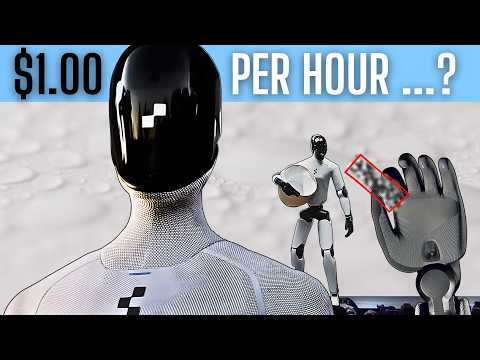
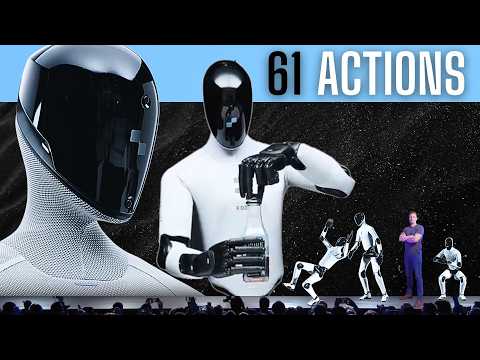
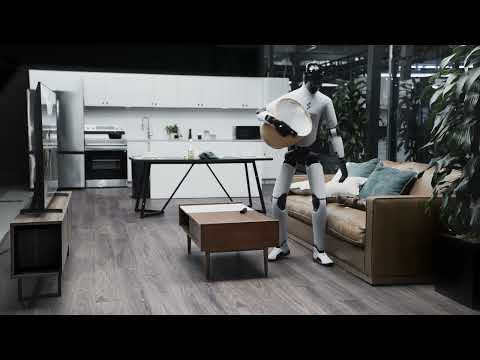
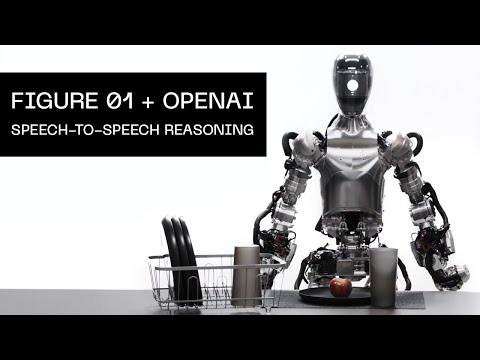
Figure 03 Showcase
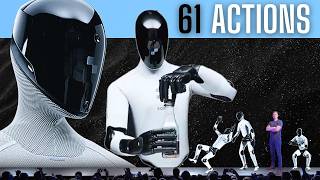

Figure 03 — Frequently Asked Questions
Can you buy Figure 03 now?
Not through public retail. Figure is producing robots and has announced selected commercial deployments and agreements, but there is no public order page, consumer preorder, standard enterprise package, or published home delivery date.
How much does Figure 03 cost?
Figure has not published a list price, monthly robot-service fee, enterprise unit price, lease, or verified $20,000 consumer offer. Current enterprise arrangements are custom and their commercial terms are not public.
What are the Figure 03 specifications?
Figure lists a height of 5 feet 8 inches, weight of 61 kg, payload of 20 kg, runtime of five hours, maximum speed of 1.2 m/s, electric drive, a 2.3 kWh battery, and 2 kW wireless charging. Task-specific payload, runtime, and speed should still be verified for the intended workflow.
What is Helix 02?
Helix 02 is Figure's vision-language-action system for whole-body autonomy. Its hierarchy connects semantic reasoning, a visuomotor policy using onboard sensors, and a learned whole-body controller for balance, contact, locomotion, and manipulation. Figure says it runs onboard and controls the robot directly from pixels and sensor data.
Is Figure 03 working at BMW?
Figure 03 arrived at BMW Group Plant Spartanburg in June 2026 and was demonstrated performing a logistics sequencing workflow. Figure 02 previously completed an 11-month deployment there, with Figure reporting more than 1,250 runtime hours and 90,000 parts loaded. The older Figure 02 results should not be presented as Figure 03 performance data.
How many Figure 03 robots have been produced?
Figure reported in April 2026 that BotQ had delivered more than 350 third-generation robots and demonstrated a one-robot-per-hour production cycle. That build-cycle demonstration is not the same as a continuously sustained hourly shipment rate or customer deployment count.
Can Figure 03 work in a home?
Figure has demonstrated household tasks and designed Figure 03 with soft goods, foam, wireless charging, improved audio, and battery protections. It has not announced public home sales, a consumer safety case, service coverage, pricing, privacy controls, or a delivery schedule.
Does Figure 03 have a developer SDK?
Figure has not announced a public SDK, API, simulator, research edition, or secondary-development program for Figure 03. Organizations needing programmable research hardware should verify software access before assuming Helix or the robot can be modified.
Sources & References
Try Figure 03
Visit the official website to get started with Figure 03 today.
Visit Figure 03 →