Apollo Has Entered Its Data Era
Apptronik's strongest story is no longer a single humanoid demo. It is the learning system around Apollo 2, and the unanswered question is when that system becomes a commercial fleet.
By WhatAI Editorial Team ·
Apollo is no longer one robot
The cleanest way to understand Apptronik in August 2026 is to stop treating Apollo as a single, finished machine. Apollo is now a sequence of hardware generations wrapped in a larger learning system. The original robot introduced the industrial concept. Apollo 2 is collecting the experience. Apollo 3 is supposed to turn that experience into a commercial fleet.
That distinction matters because the old language around humanoids encouraged a wonderfully simple picture: a human-shaped machine arrives at a factory, watches a worker, learns the task, and gets on with the shift. Apptronik's current story is more grounded and more interesting. It involves teleoperation, repeated task practice, physical data infrastructure, customer workflows, safety choices, hardware configurations, AI training, and the slow accumulation of operational evidence.
Apollo 2 is the present tense
On June 30, Apptronik unveiled Apollo 2 as the current version of its humanoid platform. The company described it as a data-collection and training machine, not the broadly available commercial endpoint. Apollo 2 comes in bipedal and wheeled-base forms and has already been working for more than a year, according to Apptronik.
The machines operate inside Robot Park, the company's expanded training facility in Austin, and at selected customer and partner sites. Their work spans logistics, manufacturing, retail, and other customer-driven activities. Some execution is autonomous. Some is teleoperated. Both modes create data that Apptronik and Google DeepMind can use to improve Gemini Robotics models.
This is an important correction to the way Apollo is often discussed. The robot is active in real environments, but activity is not the same thing as a generally available product, and task data is not the same thing as unattended production. Apollo 2 is a bridge between prototypes and the fleet Apptronik wants to sell next.
Apollo 3 carries the commercial promise
Apptronik says everything learned through Apollo 2 is feeding Apollo 3, which it calls its next-generation commercial product. That sentence should sit near the top of every 2026 evaluation. It tells buyers what is real today and what is still ahead.
It also introduces a healthy procurement question: what exactly is being evaluated? A demonstration on original Apollo hardware, a data-collection exercise on Apollo 2, and an expected Apollo 3 deployment are not interchangeable. They may differ in locomotion, hands, sensors, compute, software, safety functions, battery systems, service procedures, and performance.
A buyer should insist that every proposal names the hardware generation, base, end effector, software build, autonomy mode, remote-support model, and included safety functions. Humanoid robotics is moving too quickly for the product name alone to be a sufficient configuration.
The original specifications still need a label
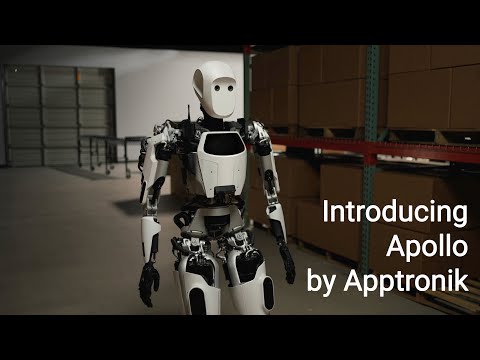
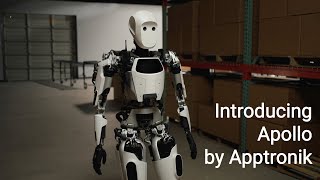
The first Apollo was introduced at roughly 5 feet 8 inches and 160 pounds, with the ability to lift 55 pounds. Apptronik also described a hot-swappable battery with four hours of runtime. Those numbers made the robot legible: human scale, meaningful box-handling capacity, and a battery design intended to avoid long plug-in pauses.
They remain useful facts, but they belong to the original design. Apptronik has not published a complete Apollo 2 specification sheet that confirms every number carries forward unchanged. It has published even less detail about Apollo 3. A careful page should therefore resist the temptation to blend three generations into one permanent specification table.
This is not pedantry. A payload rating without reach, pose, speed, duty cycle, grip geometry, and safety constraints can mislead. Four hours of nominal runtime does not reveal productive cycles per charge, swap labor, charger capacity, thermal limits, or battery degradation. A useful procurement conversation begins where the headline number ends.
Robot Park is the most revealing product
Apptronik's nearly 90,000-square-foot Robot Park may prove more consequential than any single stage demonstration. It is a physical data factory where fleets repeat customer tasks, collect demonstrations, test autonomy, and expose hardware and software to the untidy edges of industrial work.
The company says related data-collection workflows are also operating at Google DeepMind and customer locations including Mercedes-Benz and GXO. That creates a potentially valuable loop: observe a real task, capture teleoperated and autonomous experience, train the model, test the new behavior, and repeat across hardware in multiple environments.
This is what embodied AI needs. Internet-scale language models can learn from text that already exists. A robot model needs grounded examples of force, motion, object contact, failure, recovery, and variation. Somebody must create that physical experience, label it well, and decide which mistakes are safe enough to learn from.
Robot Park does not solve the commercial case by itself. It does, however, show that Apptronik understands the bottleneck. The race is not simply to build a graceful body. It is to build a reliable system for turning human work into robot capability.
Teleoperation is work, not a footnote
Apptronik explicitly says Apollo 2 data comes from a combination of teleoperation and autonomous execution. That is not an embarrassment. Teleoperation is one of the practical ways to demonstrate tasks, handle rare exceptions, collect high-quality trajectories, and keep early systems productive while autonomy improves.
The problem begins when viewers cannot tell which mode produced the result. A video of a robot completing a task may show an autonomous policy, a human operator, a scripted sequence, or a blend of all three. Each can be technically valuable, but they answer different commercial questions.
For buyers, operator burden belongs on the same dashboard as robot throughput. Measure teleoperation minutes, interventions, resets, remote-support calls, teaching time, recovery duration, and the number of robots one person can supervise. If those figures are missing, the labor model is missing too.
Gemini Robotics is a path, not a magic layer
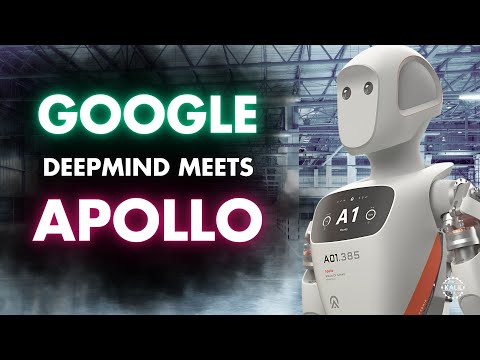
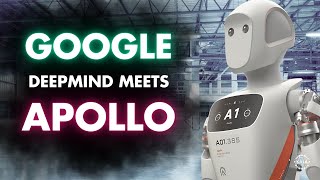
The Google DeepMind partnership gives Apptronik one of the strongest AI relationships in the humanoid field. Apollo 2 supplies a physical platform and a stream of task data. Gemini Robotics supplies models intended to reason and act in the physical world. Together, the companies are trying to create a learning loop that improves across deployments.
That is strategically meaningful, but it should not be translated into a claim that Apollo can already do any task after a conversation. General-purpose robotics remains a demanding integration problem. Perception must survive glare, occlusion, clutter, and damaged packaging. Manipulation must handle uncertain contact. Planning must respect people, equipment, and cycle times. Recovery must work when the world refuses to match the training distribution.
The appropriate test is still the delivered task on the delivered software build. Ask what the robot can do autonomously, how often it asks for help, what happens after a failed grasp, and how a new behavior is validated before it reaches the floor. A prestigious model partner improves the development path. It does not eliminate acceptance testing.
The wheeled base deserves more attention
Humanoid coverage tends to fixate on walking because walking looks like the future. Apptronik's modular approach offers a quieter and often more practical option: put the upper body on a wheeled base.
The company says the wheeled Apollo 2 is designed to conform with existing safety standards for industrial mobile robots. It can collect manipulation and workflow data while avoiding some of the balance, fall, energy, and recovery challenges of legs. In a flat, structured warehouse or factory, that may be the more rational machine.
The bipedal configuration still matters when the environment genuinely demands feet, human-like access, or data about legged operation. But legs should earn their place in the business case. If wheels cover the route, meet the workstation, and improve uptime, the less cinematic configuration may produce the better deployment.
A modular robot should permit that choice. It should not turn modularity into a slogan. Buyers need to know how the configurations differ in task reach, speed, charging, safety certification, service, calibration, spares, and software support.
Mercedes-Benz provides a concrete task map
Apptronik's Mercedes-Benz agreement remains one of Apollo's most specific industrial references. The announced work explored bringing parts to production workers, delivering assembly kits, inspecting components, and moving totes of kitted parts later in the manufacturing process.
These are sensible early tasks. They combine mobility and manipulation without asking the robot to perform the most dexterous step in vehicle assembly. They are also easy to underestimate. A tote route includes people, carts, timing windows, narrow clearances, variable load placement, traffic rules, and recovery when the destination is blocked.
The value of the Mercedes-Benz relationship is not that it proves every Apollo deployment will work. It gives Apptronik exposure to a serious production environment and a family of tasks that can be measured. The next useful disclosures would be productive hours, intervention frequency, throughput, item damage, safety stops, and the portion of each workflow completed without human rescue.
GXO tests the warehouse thesis
GXO's early proof of concept focused on labor-intensive distribution-center work. The announced program began with lab evaluation intended to fine-tune the system before deployment to a United States distribution center once ready.
That wording is worth preserving. It describes a development progression, not a finished multi-site rollout. Warehouse automation lives or dies on throughput, uptime, exception handling, and the economics of peak demand. A general-purpose body is valuable only if it can handle enough of the variation without turning every exception into a remote-support ticket.
GXO also gives Apptronik a demanding comparison set. Distribution centers already use conveyors, autonomous mobile robots, robotic arms, sortation, goods-to-person systems, and highly tuned software. Apollo does not compete with an empty floor. It must win a task that established automation cannot handle as flexibly or economically.
Jabil may be the most important partner
Jabil is both manufacturing partner and prospective user. The companies announced plans for Jabil to build Apollo robots and integrate them into selected Jabil operations, including production lines involved in making Apollo itself. Proposed tasks include inspection, sorting, kitting, lineside delivery, fixture placement, and simple sub-assembly.
This arrangement can create an unusually useful feedback loop. Manufacturing exposes design weaknesses quickly. A difficult cable route, slow calibration step, fragile connector, inconsistent actuator, or awkward service procedure becomes visible when the manufacturer must repeat it at scale. Deploying robots inside that environment can also reveal which tasks are stable enough for automation and which still demand human judgment.
Jabil brings global production capability, but capability is not the same as output. Apptronik has not published Apollo production volume, yield, delivery cadence, field reliability, service capacity, or unit economics. The partnership strengthens the path to scale. It does not prove scale has already arrived.
The funding buys time to solve hard problems
In February 2026, Apptronik said its Series A had grown beyond $935 million, bringing total capital raised close to $1 billion. The company said the new capital would support production, deployment, customer use cases, training facilities, and data collection.
That is a formidable war chest for a hardware company facing expensive iteration. Humanoids require more than an AI team. They require actuators, batteries, hands, sensors, compute, manufacturing tooling, supply-chain depth, safety engineering, field service, customer integration, and a place to collect physical experience.
Funding is still an input. The outcome buyers need is a supportable machine with predictable behavior and believable economics. The larger the financing announcement, the more important it becomes to keep product evidence separate from corporate momentum.
Safety is a system property
Apptronik has long emphasized human-centered design, force control, visible communication, and operation around people. Apollo's face and chest displays were designed to make status and intent easier to read. Apollo 2's wheeled configuration is positioned around established industrial mobile-robot standards, while the bipedal configuration is being refined for safety and reliability through real-world operation.
These are thoughtful ingredients. None is a universal safety certificate. A robot carrying a box can pinch, collide, drop a load, block an aisle, lose localization, or fall. The risk changes with speed, reach, payload, end effector, floor condition, traffic, software mode, and the worker's task.
A serious deployment needs a task-specific risk assessment, validated protective functions, safe stopping behavior, emergency procedures, change control, incident reporting, worker training, and clear ownership. Friendly styling may help people interpret a machine. It cannot carry the assurance argument on its own.
Price remains private
Apptronik does not publish an Apollo list price, a standard subscription, or a complete commercial package. It also has not published public Apollo 3 ordering, delivery, warranty, support, or service terms. The old habit of quoting an aspirational car-like future price as if it were today's procurement number should end.
The relevant number is total cost per successful unit of work. That includes the robot, end effectors, integration, mapping, workflow changes, safety engineering, charging, spare batteries, networks, supervision, teleoperation, maintenance, software, support, downtime, and whatever fallback process remains necessary.
Custom pricing is normal at this stage. Hidden economics are still a limit. A pilot should therefore include a path to a real commercial quote and a model for cost at the expected fleet size. Otherwise, the evaluation may prove technical possibility without answering whether the process should be deployed.
Workers belong inside the experiment
Apptronik frames Apollo as a way to take physically demanding, repetitive, or hazardous work from people. That goal is most credible when workers participate in task selection, hazard review, training, exception design, and evaluation. The people doing the job understand its invisible variation. They know which tote sticks, which aisle clogs, which label peels, and which recovery shortcut creates tomorrow's injury.
A human-centered robot program should measure more than cycle time. It should ask whether ergonomic exposure falls, whether new monitoring work appears, whether the robot's behavior is legible, whether stoppages create stress, and whether employees have a safe way to report problems.
The best early use case may not replace a job. It may remove the worst movement inside a job, create a safer handoff, or keep a line supplied without asking a person to walk the same route hundreds of times. That can be meaningful automation even before broad autonomy arrives.
The evidence buyers should request
Apollo's next chapter will be decided by operational data. Buyers should ask for successful task cycles per hour, autonomous share, teleoperation minutes, human interventions, mean time between stoppages, mean recovery time, battery runtime under load, swap and charge burden, damaged-item rate, safety stops, maintenance hours, and performance across full shifts.
They should also ask which failures are excluded from the metric. A robot that completes 98 percent of grasps can still be a poor system if the remaining 2 percent block the aisle and demand a specialist. A beautiful average can conceal a costly tail.
Evidence should be generation-specific and configuration-specific. Original Apollo numbers should not stand in for Apollo 2. Apollo 2 training should not stand in for Apollo 3 product performance. A wheeled result should not be presented as a bipedal result. Teleoperated success should not be labeled autonomous.
The WhatAI view
Apptronik has assembled one of the more credible industrial ecosystems in humanoid robotics. Mercedes-Benz supplies manufacturing use cases. GXO supplies warehouse reality. Jabil supplies production discipline. Google DeepMind supplies a major embodied AI partnership. NVIDIA contributes simulation and robot-learning infrastructure. Robot Park gives the company a place to turn those relationships into repeatable data.
The most encouraging part of the 2026 story is also the least theatrical: Apollo 2 is doing the work required to make a future machine useful. Apptronik is collecting demonstrations, comparing mobility configurations, testing customer tasks, and building the feedback loop that a commercial fleet will need.
The limit is equally clear. Apollo 3 is still forthcoming. Public pricing is absent. Standard ordering and delivery are absent. Detailed field metrics are absent. Apptronik has a strong path to commercialization, but a path is not a finished market.
For an enterprise with the right task, budget, data discipline, and tolerance for co-development, Apollo is worth a serious conversation. For a buyer seeking a finished catalog product with transparent economics and proven unattended shifts, the honest answer is to watch Apollo 3 and ask for the numbers. The next breakthrough will not be another graceful video. It will be a boring report from a real facility showing that the robot kept working when nobody was watching the demo.
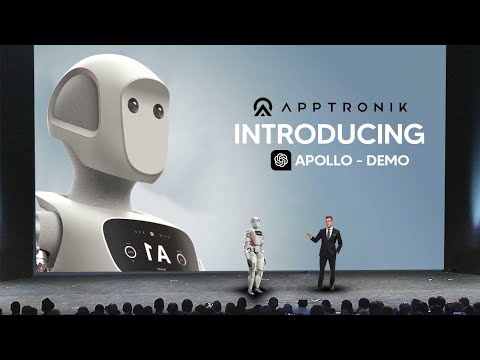
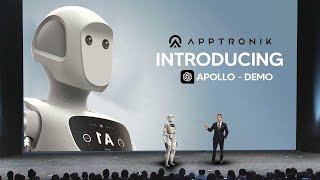
Apptronik Apollo is an industrial humanoid robotics platform aimed at manufacturing, logistics, and warehousing. Apollo 2 is the current data-collection and training generation, while Apptronik describes Apollo 3 as the forthcoming commercial fleet.
Apollo Features, Partnerships, Availability, and Price
Apollo combines human-scale hardware, modular wheeled and bipedal configurations, teleoperation, autonomous execution, and embodied AI research. Apptronik has announced work with Google DeepMind, Mercedes-Benz, GXO, Jabil, and NVIDIA, but it has not published a list price or general ordering process.
Discuss Apptronik Apollo
Share firsthand Apollo evaluations, task data, safety observations, integration requirements, and deployment economics. Identify the hardware generation, configuration, site, task, supervision level, and measurement period so readers can distinguish a demonstration from sustained production use.
About Apptronik Apollo
Apptronik Apollo is a modular humanoid robotics platform for manufacturing, logistics, warehousing, and related industrial work. The original Apollo was introduced at 5 feet 8 inches, 160 pounds, with a 55-pound payload and four-hour swappable battery. In June 2026, Apptronik unveiled Apollo 2 as its current data-collection and training platform in bipedal and wheeled-base configurations. Apollo 2 fleets operate at Apptronik's Robot Park and selected partner sites, generating teleoperated and autonomous task data for Gemini Robotics research. Apptronik says this work will inform Apollo 3, its forthcoming commercial fleet. Public list pricing, standard ordering, production volume, and broad availability have not been announced.
Use Cases
Key Features
- ✓ Human-scale form designed for existing industrial spaces
- ✓ Bipedal and wheeled-base Apollo 2 configurations
- ✓ Modular platform for different mobility requirements
- ✓ Teleoperation and autonomous execution for data collection
- ✓ Real-world training across manufacturing and logistics tasks
- ✓ Gemini Robotics research partnership with Google DeepMind
- ✓ Fleet-level data collection through Robot Park locations
- ✓ Original Apollo rated for a 55-pound payload
- ✓ Four-hour hot-swappable battery on original Apollo
- ✓ Force-control architecture designed for work near people
- ✓ Visual status cues for human-readable communication
- ✓ Task targets include sorting, kitting, inspection, and delivery
- ✓ Jabil partnership for manufacturing scale and validation
- ✓ NVIDIA simulation and robot-learning collaboration
- ✓ Forthcoming Apollo 3 commercial fleet
Pricing
Enterprise Evaluation
Custom
- • Direct engagement with Apptronik
- • Task and facility assessment
- • No public standard package
Partner Deployment
Custom
- • Selected customer and partner sites
- • Workflow validation and data collection
- • Commercial terms not disclosed
Apollo 3 Fleet
Not announced
- • Forthcoming commercial product
- • Public ordering not yet available
- • Release timing and price undisclosed
Pricing varies by plan and region — see current pricing.
Plan features change — last updated: 2026-08-16.
Details
Tags
Apptronik Apollo Community Discussions
Explore community discussions. Ask and answer questions on Apptronik Apollo to grow and learn together.


Apptronik Apollo Showcase
Apptronik Apollo — Frequently Asked Questions
What is Apptronik Apollo?
Apollo is Apptronik's modular humanoid robotics platform for work in human-designed industrial environments. Its initial focus is manufacturing, warehousing, logistics, and retail operations rather than consumer home use.
What is Apollo 2?
Apollo 2 is the current version of the platform announced in June 2026. Apptronik describes it as a data-collection and training robot available in bipedal and wheeled-base configurations, with fleets active at Robot Park and selected customer and partner sites.
Is Apollo 2 the commercial product?
Not in the broad, off-the-shelf sense. Apptronik calls Apollo 2 a training platform and says its data and operating experience are powering Apollo 3, which it describes as the upcoming commercial fleet. Public Apollo 3 release timing and ordering details remain undisclosed.
How much can Apollo carry?
The original Apollo announced in 2023 was rated to lift 55 pounds, or about 25 kilograms. Apptronik has not published a complete Apollo 2 specification sheet, so buyers should not assume every original specification transfers unchanged to Apollo 2 or Apollo 3.
How long does Apollo's battery last?
The original Apollo used hot-swappable batteries rated for four hours each. Apptronik has not publicly provided a complete Apollo 2 battery specification, so runtime, swap time, charger requirements, battery inventory, and duty cycle should be verified for the exact configuration.
Where is Apollo being tested?
Apptronik says Apollo 2 fleets operate at its nearly 90,000-square-foot Robot Park in Austin and at partner locations including Google DeepMind, Mercedes-Benz, and GXO. Jabil is also a manufacturing and validation partner. Site-level fleet counts and production performance metrics are not public.
What does Google DeepMind contribute?
Apptronik and Google DeepMind are working on embodied AI using Gemini Robotics. Apollo 2 generates real-world data through teleoperation and autonomous execution, which is used to train and refine models intended for future deployment. This does not mean every Apollo task is fully autonomous today.
Can Apollo work safely without fencing?
Apptronik presents Apollo as human-centered and uses force control, visual communication, and configuration-specific safety approaches. The wheeled Apollo 2 is designed to align with existing industrial mobile-robot standards. A buyer still needs a site-specific risk assessment, validated safety functions, safe operating procedures, and applicable regulatory review.
How much does Apptronik Apollo cost?
Apptronik does not publish a list price, subscription rate, or standard total-cost model. Enterprise customers need to contact the company and evaluate hardware, integration, training, supervision, charging, maintenance, support, and facility costs together.
Can any business buy Apollo now?
There is no public self-service order page or standard availability schedule. Current access is best understood as direct enterprise engagement, selected pilots, research work, and strategic partnerships while Apptronik develops the forthcoming Apollo 3 commercial fleet.
Sources & References
- Apptronik official website and Apollo overview ↗
- Apollo 2 and Robot Park announcement ↗
- Original Apollo launch and specifications ↗
- Mercedes-Benz commercial agreement ↗
- GXO proof-of-concept announcement ↗
- Jabil manufacturing collaboration ↗
- Google DeepMind partnership ↗
- 2026 Series A extension announcement ↗
Try Apptronik Apollo
Visit the official website to get started with Apptronik Apollo today.
Visit Apptronik Apollo →