Crypto risk notice
Digital assets and crypto software involve significant risk. Prices and token values are volatile, and you can lose everything you put in. This page covers Bittensor (TAO) for information only; it is not investment advice, an endorsement, or an offer to buy or sell any asset. Always do your own research before making financial decisions.
Bittensor Is Becoming a Market of AI Markets
Dynamic TAO changes the risk, not just rewards
By WhatAI Editorial ·
Bittensor now makes more sense as a market of AI markets than as one decentralised machine-learning network. Its subnets produce different digital commodities, including inference, compute, storage, prediction, data, and evaluation. Each subnet defines what miners must produce, how validators test that work, and how rewards are distributed.
That distinction is not cosmetic. A user does not access a single Bittensor intelligence layer with one consistent quality standard. A miner does not simply attach a GPU and receive predictable income. A validator does not merely confirm blockchain transactions. Every subnet is its own competitive economy, with its own task, scoring method, operators, demand, security assumptions, and market risk.
By 2026, Bittensor has also become financially more complex. Dynamic TAO gives each subnet an alpha token and a TAO-alpha liquidity pool. Staking into a subnet swaps TAO for its alpha; unstaking swaps alpha back to TAO. This makes subnet selection a capital-weighted signal, but it also introduces price impact, slippage, liquidity risk, and exposure to a market that can move independently of the quality of the underlying AI service.
The result is one of the most ambitious incentive systems in decentralised AI. It is also a protocol that punishes vague understanding.
Bittensor is a coordination layer, not one AI product
The Bittensor chain coordinates identities, registrations, stake, weights, emissions, and subnet economics. The useful AI work generally happens through subnet software and off-chain services operated by miners and validators. A subnet owner designs the incentive mechanism. Miners produce responses or resources. Validators query, test, rank, and score those miners. Yuma Consensus aggregates validator weights and helps determine how subnet emissions are distributed.
This structure lets the network support very different commodities without pretending that one benchmark can value them all. A text-generation subnet can score response quality and latency. A compute subnet can verify completed workloads. A prediction subnet can settle accuracy later. A data subnet can test freshness, coverage, or uniqueness. The incentive mechanism can be designed around the product.
That freedom is Bittensor's greatest strength and one of its central risks. A subnet is only as credible as its task definition, evaluation system, validator diversity, resistance to collusion, and evidence of external usefulness. If validators reward a proxy that is easy to game, miners will optimise the proxy. The blockchain can distribute rewards exactly as instructed while the subnet produces little value for anyone outside its own emissions loop.
The phrase "proof of intelligence" therefore needs care. Bittensor does not provide one universal proof that an output is intelligent, truthful, safe, or commercially valuable. It provides an incentive architecture in which subnet-specific validators express stake-weighted judgements about miner performance. That can create powerful competition, but the measurement problem has moved into each subnet.
Dynamic TAO changed the economic meaning of participation
The current staking system is often described too casually. On a dynamic subnet, adding stake is a market trade. TAO enters the subnet's weighted pool and the staker receives alpha associated with a chosen hotkey. Removing stake sells that alpha back into the pool. A position therefore changes with the subnet alpha price, pool liquidity, swap fees, the validator's performance, and wider TAO market conditions.
The official documentation is explicit: staking is not a deposit. Large trades move the execution price. Other transactions can move it before settlement. Thin pools can make an apparently valuable position difficult to exit at the displayed spot value. Quote tools can estimate the result, and limit variants can fail instead of accepting an unfavourable price, but the market risk remains.
This is more than a technical footnote. Under the older mental model, a person might think they were delegating TAO to a validator and earning a variable yield. Under Dynamic TAO, they are selecting a subnet economy, exchanging into its alpha, and then backing a validator inside that subnet. Rewards do not erase a loss in alpha value, fees, slippage, or TAO price.
Subnet emission is also shaped by market signals. The chain mints TAO, allocates emission across subnets, and injects liquidity into their pools. At each subnet epoch, accumulated alpha is divided among the subnet owner, miners, validators, and stakers through the incentive process. The current official emissions documentation explains the detailed issuance, halving, pool, and buyback mechanics, which are more nuanced than the older shorthand that TAO simply flows to the best AI model.
For builders, Dynamic TAO creates a mechanism for capital to express which subnet markets appear valuable. For participants, it creates another surface for speculation and manipulation. Market price can reflect genuine expected demand, but it can also reflect narrative, concentrated ownership, shallow liquidity, or short-term flows. Product quality and token performance are connected imperfectly.
Mining means competing under someone else's measurement system
A Bittensor miner provides the commodity a subnet requests. That may require GPUs, CPUs, bandwidth, storage, data licences, model access, engineering labour, or a distinctive algorithm. It may also require a fast public endpoint and reliable operations. The word "mining" should not suggest passive proof-of-work hashing or guaranteed rewards for connecting hardware.
Before registering, a miner must understand the subnet repository, protocol, scoring code, hardware assumptions, expected latency, query distribution, and current competitive field. Registration normally involves a subnet-specific TAO burn. That cost changes with demand and configured limits, is recycled by the protocol rather than returned to the registrant, and does not guarantee the miner will keep a slot. Subnets have limited UID capacity; after an immunity period, low-ranked participants can be pruned.
The rational miner models revenue after every cost: registration, hardware, cloud or colocation, electricity, bandwidth, model or data access, monitoring, engineering time, and token conversion. Emissions can fall if competitors improve, validators change scoring, the subnet adjusts its incentive mechanism, or the subnet loses its share of network attention. A configuration that earns today may be uncompetitive after one software release.
The best opportunities are usually not the subnets with the simplest installation guide. They are the ones where a team has a defensible advantage in the exact commodity being measured. That advantage might be a better model, lower inference cost, proprietary data rights, geographic infrastructure, a superior verification technique, or continuous operational discipline.
Validation is an AI business, not a checkbox
Bittensor validators evaluate miners and publish weights. Within a subnet, Yuma Consensus uses stake-weighted validator assessments to derive ranks, trust, incentive, and dividends. Validators that agree with the emerging consensus can earn, while miners receive rewards according to the evaluated utility they provide.
Running a validator is therefore very different from validating blocks on a conventional proof-of-stake chain. The validator must implement or operate the subnet's evaluation logic, query miners, prevent gaming, maintain uptime, set weights correctly, and keep pace with changes in miner behaviour. A weak evaluator can reward copied outputs, benchmark leakage, sybil behaviour, or cheap shortcuts that look good under a narrow test.
A validator also needs enough stake weight to obtain and retain a permit. The official guide notes that the chain minimum is far below the practical competitive threshold and that serious validation commonly requires substantial TAO-equivalent backing. Delegators assess the validator's identity, performance, subnet coverage, and take, while the validator must build trust and often an API business around its position.
Consensus does not automatically create ground truth. If a majority of stake-weighted evaluators share the same blind spot, agreement can reinforce it. Good subnet design uses hidden tests, adversarial examples, delayed outcomes, diverse data, anti-copying controls, and measurable demand outside emissions. The validation process is the product quality system.
Subnet ownership is closer to launching a marketplace
Creating a subnet is not a normal software deployment. The network applies a dynamic registration lock cost that rises after registrations and decays toward a governance-set floor. Official documentation currently identifies a default minimum lock cost of 1,000 TAO, while emphasising that the live price is only known at execution and should be queried before submission. Registration is also rate-limited network-wide.
That capital requirement sits beside the real operating burden. A subnet owner must define a commodity, design miner and validator protocols, publish code, recruit both sides of the market, resist exploits, maintain infrastructure, update incentives, and demonstrate why an external customer would pay for the output. A subnet with a clever reward game but no user demand can circulate emissions without creating a durable business.
The owner also receives a share of alpha emission, which can fund development but creates governance and incentive questions. Prospective participants should inspect team allocations, controlling keys, upgrade authority, validator concentration, disclosed conflicts, and how the owner responds when an exploit appears. "Permissionless network" does not mean every individual subnet begins decentralised.
For most AI startups, launching a subnet should come after proving the commodity and its evaluation method, not before. A centralised prototype can reveal whether customers care about the result. Bittensor becomes valuable when open competition and programmable incentives improve supply, quality, resilience, or price enough to justify the added economy.
The developer experience is becoming more agent-ready
Bittensor's 2026 documentation reflects a practical shift toward machine-readable interaction. The unified Bittensor 11 package combines the Python SDK and btcli command line, replacing older split packages and substantially changing the API. Reads and state-changing intents have generated references, structured schemas, machine-readable catalogues, and dry-run planning tools.
That matters for both human operators and AI agents. An agent can discover supported reads and transactions, preview a proposed mutation, interpret semantic error codes, and submit a constrained operation through one tool surface. Documentation is available through llms.txt, a full corpus, and raw Markdown pages, reducing the need to scrape rendered documentation.
This does not make unrestricted agent operation safe. Wallet mutations can register nodes, move stake, change keys, set weights, or transact through subnet pools. An AI agent should use a restricted policy layer with explicit spend caps, approved netuids and hotkeys, maximum slippage, dry-run requirements, and human confirmation for irreversible or high-value actions. Coldkeys should remain isolated from internet-facing miner and validator services.
Existing operators also face migration risk. Bittensor 11 is not simply a renamed SDK. Older classes and commands have changed, and the official migration guide warns that semantic differences can alter behaviour. Scripts should be migrated mechanically against current mappings, pinned deliberately, previewed, and tested on non-production wallets before replacing automation.
What an application developer actually gets
Bittensor can be valuable even if a team never mines, validates, stakes, or launches a subnet. Application developers can consume the commodity produced by an existing subnet, usually through a validator or gateway that exposes an API. This may offer alternative inference, specialised data, prediction, search, compute, or other services sourced from a competitive network.
But there is no universal Bittensor API that guarantees uniform service levels across every subnet. Access methods, pricing, authentication, latency, output formats, licences, privacy, retention, safety filters, and uptime differ. Some validator APIs may be commercial services built around network access. The subnet protocol and the customer-facing product are separate layers.
Evaluation should therefore resemble a vendor and model assessment. Test output quality on your own data. Measure tail latency and failure rates. Ask whether prompts or datasets are visible to miners or validators. Confirm commercial usage rights. Understand whether requests are replicated, logged, cached, or routed to several providers. Compare total price and reliability with a central API, not only the ideological appeal of decentralisation.
For sensitive workloads, the architecture may be unsuitable unless a subnet provides credible privacy controls. Open competition often requires participants to inspect or process inputs. Encryption, trusted execution, secure aggregation, or verifiable computation may improve particular designs, but they are subnet-specific features, not automatic properties of Bittensor.
How to evaluate a Bittensor subnet
Start with the commodity. Describe what the subnet produces in one sentence that an external buyer would understand. Then identify the measurable unit: a response, GPU-second, prediction, dataset item, storage proof, model update, or another deliverable. If the output and customer are vague, token mechanics will not repair the business.
Next, inspect the incentive mechanism. Read the miner and validator code. Determine how scores are generated, how tests stay unpredictable, how copied or collusive behaviour is detected, and which party can change the rules. Look for a clear relationship between the metric being rewarded and the customer value being claimed.
Then inspect the market. Review active miners, permit-holding validators, stake concentration, alpha liquidity, emission share, registration burn, owner behaviour, software activity, and external usage. Do not treat a high alpha price or emission share as proof of technical quality. Do not treat a strong benchmark as proof of commercial demand.
Finally, run a small experiment. An API customer should compare a representative workload against alternatives. A miner should estimate costs and operate without assuming rewards. A prospective validator should run evaluation logic and assess the real stake requirement. A staker should quote entry and exit, model slippage, and accept that the position can lose value. A subnet team should prove users and validation before committing the live registration lock.
The WhatAI verdict
Bittensor is one of the most serious attempts to use crypto incentives to organise open markets for AI and other digital commodities. Subnets let specialists define distinct products and evaluation systems. Miners compete to produce value. Validators turn subjective assessment into weights. Dynamic TAO lets capital influence which subnet economies attract emissions.
That architecture can uncover useful suppliers and reward work that would struggle to monetise through a central platform. It can also reward proxy gaming, concentrated validation, speculative alpha flows, and products whose only customer is the emission mechanism. The protocol guarantees an incentive process, not useful intelligence.
Bittensor is best approached role by role. Developers should judge subnet outputs like an external service. Miners should model a competitive operating business. Validators should treat evaluation as the core product. Subnet owners should prove the commodity and market before launching an economy. Stakers should understand that they are swapping into volatile subnet alpha, not placing TAO in a simple savings account.
For technically strong teams with a measurable AI commodity and a genuine reason to coordinate open suppliers, Bittensor can be unusually powerful. For non-technical users looking for an easy AI tool or predictable yield, it is the wrong abstraction. The opportunity is real, but only after the subnet's measurement system, customer demand, and economic risks survive scrutiny.
Bittensor is an open network of specialised subnet markets rather than one shared AI model. Miners produce digital commodities, validators score their work, subnet owners define incentives, and the chain distributes rewards through Yuma Consensus and Dynamic TAO economics.
Dynamic TAO, Alpha Tokens, and Subnet Roles
Each dynamic subnet has an alpha token traded against TAO in a liquidity pool. Staking swaps TAO into alpha, so fees, liquidity, price impact, slippage, validator performance, and token volatility affect results. Mining and validation also require subnet-specific technical and operating expertise.
Costs, Risks, and Best-Fit Participants
Bittensor fits technical teams with a measurable digital commodity, evaluation advantage, or need for open provider competition. It is less suitable for non-technical users seeking a simple AI application or predictable passive returns. Every subnet must be evaluated independently.
About Bittensor (TAO)
Bittensor is an open blockchain network where independent subnets produce digital commodities such as AI inference, compute, storage, data, and predictions. Subnet owners define tasks and incentive mechanisms, miners produce the requested work, validators evaluate miners, and stakers back validators. Yuma Consensus turns subnet-specific validator weights into participant rewards. Under Dynamic TAO, each non-root subnet has an alpha token and TAO-alpha liquidity pool, so staking involves a market swap rather than a simple deposit. The unified Bittensor 11 Python SDK and btcli provide chain reads, transaction planning, execution, and machine-readable tooling.
Use Cases
Key Features
- ✓ Independent subnets for specialised digital commodities
- ✓ Miner competition under subnet-defined incentive mechanisms
- ✓ Validator scoring and Yuma Consensus reward allocation
- ✓ Dynamic TAO with per-subnet alpha tokens and pools
- ✓ Root TAO staking and subnet-specific alpha positions
- ✓ Unified Bittensor 11 Python SDK and btcli
- ✓ Machine-readable transaction, query, and error catalogues
- ✓ Dry-run planning for supported chain mutations
- ✓ Hotkey and coldkey separation for operational security
- ✓ Subnet APIs for inference, compute, data, and other services
- ✓ EVM-facing precompiles for selected chain operations
Pricing
Network access
No subscription
- • Public chain reads and open-source tooling
- • Subnet API access may be priced separately
- • Transactions require network fees
Miner registration
Dynamic TAO burn
- • Varies by subnet demand and hyperparameters
- • Burn is not refunded after deregistration
- • Hardware and operations are separate
Validator participation
Stake and operations
- • Competitive permit requires sufficient stake weight
- • Evaluation infrastructure and engineering required
- • Validator take and results vary
Subnet registration
Dynamic TAO lock
- • Live cost must be queried before execution
- • Default network floor is governance-set
- • Subnet development and operations are separate
Subnet staking
TAO-alpha market swap
- • Pool fees, price impact, and slippage apply
- • Position value changes with alpha and TAO markets
- • Not a fixed-rate savings product
Pricing varies by plan and region — see current pricing.
Plan features change — last updated: 2026-08-25.
Details
Tags
Bittensor (TAO) Community Discussions
Explore community discussions. Ask and answer questions on Bittensor (TAO) to grow and learn together.


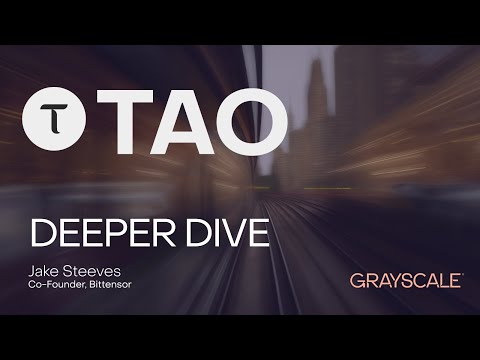

Bittensor (TAO) Showcase



Bittensor (TAO) — Frequently Asked Questions
What is Bittensor?
Bittensor is a blockchain network of independent subnets that produce digital commodities such as AI inference, compute, storage, data, and predictions. The chain coordinates registrations, stake, validator weights, and emissions.
What is a Bittensor subnet?
A subnet is a specialised market with its own task, miner protocol, validator evaluation process, incentive mechanism, owner, participants, and alpha token. Quality and access methods vary between subnets.
What do Bittensor miners do?
Miners produce the commodity requested by a subnet and compete for validator scores. They may operate models, GPUs, data pipelines, storage, predictions, or other services. Connecting hardware alone does not guarantee rewards.
What do Bittensor validators do?
Subnet validators query and test miners, publish weights, and help determine reward distribution through Yuma Consensus. They need robust evaluation logic, reliable operations, and enough stake weight to retain a validator permit.
What is Dynamic TAO?
Dynamic TAO gives each non-root subnet an alpha token and TAO-alpha liquidity pool. Staking into a subnet swaps TAO for alpha, while unstaking swaps alpha back. This introduces market, liquidity, fee, and slippage risk.
Is staking on Bittensor a deposit?
Not on a dynamic subnet. Official documentation describes it as a pool swap. The amount received on exit can differ from the position's displayed spot value because of fees, price impact, slippage, and market movement.
How much does Bittensor cost?
There is no single price. Costs can include transaction fees, dynamic miner registration burns, stake, hardware, cloud infrastructure, data or model access, and a dynamic TAO lock to register a subnet.
Can applications use Bittensor without mining?
Yes. Developers can consume a subnet's commodity through validator or gateway APIs and use the SDK for chain data and operations. API terms, quality, privacy, latency, and pricing are subnet-specific.
Is Bittensor profitable?
No profit is guaranteed. Results depend on technical performance, competition, emissions, registration and operating costs, validator or miner ranking, alpha liquidity, and TAO and alpha token prices. This profile is not financial advice.
Sources & References
- Bittensor official website ↗
- Bittensor documentation and SDK ↗
- Bittensor network roles and subnets ↗
- Bittensor staking and alpha pools ↗
- Bittensor TAO and alpha emissions ↗
- Bittensor Yuma Consensus ↗
- Bittensor miner registration burn ↗
- Bittensor validator guide ↗
- Bittensor subnet creation guide ↗
- Bittensor 11 migration guide ↗
- Bittensor whitepaper ↗
Try Bittensor (TAO)
Visit the official website to get started with Bittensor (TAO) today.
Visit Bittensor (TAO) →