Crypto risk notice
Digital assets and crypto software involve significant risk. Prices and token values are volatile, and you can lose everything you put in. This page covers Pionex for information only; it is not investment advice, an endorsement, or an offer to buy or sell any asset. Always do your own research before making financial decisions.
Pionex Bots Are Free, but Trading Is Not
Automation removes effort, not market risk
By WhatAI Editorial ·
The bots are free, but the trading is not
Pionex has one of the clearest pitches in automated crypto trading. Instead of paying for bot software and connecting it to a separate exchange with API keys, users trade on an exchange where the automation is already built in. Pionex says its bots do not carry a separate subscription or activation fee. The user deposits funds, selects a strategy, sets parameters and pays the trading and product costs generated by the activity.
That is genuinely simpler than assembling a third-party stack. It is not free trading, and it is not passive income.
The current Pionex fee page lists a standard spot trading fee of 0.05 percent. Its current futures material lists 0.02 percent for maker orders and 0.05 percent for taker orders, with funding handled separately on perpetual products. Withdrawals can carry network fees. Slippage, spread and price impact are economic costs even when they are not platform charges. A bot that makes many small trades can accumulate costs faster than a manual trader expects.
The important question is therefore not whether the bot has a monthly price. It is whether a clearly defined strategy still makes sense after fees, execution, market movement, custody risk and the possibility that the chosen asset falls sharply.
Automation is not intelligence
Pionex is often described as an AI trading platform, but most of its best-known bots are easier to understand as rule-based execution systems. A Grid Bot places buys and sells at predefined levels. A DCA or Martingale Bot adds to a position according to configured deviations and seeks to exit at a target. A Rebalancing Bot adjusts holdings toward selected portfolio weights. Smart Trade automates entries, take-profit and stop-loss conditions.
Pionex also provides AI-assisted strategy suggestions, copy-strategy options and PionexGPT material for turning an idea into TradingView Pine Script. These features can lower the barrier to configuration. They do not give the system reliable knowledge of what the market will do next.
That distinction matters because the word AI can encourage users to transfer judgment to the interface. A suggested range is still based on historical or recent data. A copied strategy still reflects someone else's assumptions. Generated code can contain logical errors, look-ahead bias or settings that only worked in one sample. The user remains responsible for the market thesis, capital allocation, leverage, exit and maximum acceptable loss.
Pionex's own current educational material is unusually direct on this point. Its 2026 strategy finder says there is no risk-free beginner bot. It labels common non-leveraged choices such as Spot Grid, DCA and Rebalancing as moderate risk and says bots do not predict the market or guarantee profit.
The integrated exchange is the real advantage
The strongest product benefit is execution inside the exchange. There is no need to grant a third-party bot permission to place orders through an external API. The strategy can run in Pionex's cloud while the user is offline, and the platform handles the connection between the bot, order book and account balance.
This removes one technical failure point, but it concentrates other risks. Funds used by the bot remain on a custodial exchange. A user depends on Pionex for account access, order execution, withdrawals, asset support, risk controls and service availability. A delisting can cancel orders or stop bots, and Pionex notices show that affected positions may be released or sold according to the applicable process.
The convenience should be assessed alongside self-custody preferences. Someone who does not want trading capital held on an exchange is not a natural fit for an exchange-native bot. Someone who accepts custodial exposure should still use strong authentication, withdrawal protections, unique credentials and a separate long-term wallet for assets that do not need to remain available for trading.
The integrated model also means Pionex is not a neutral layer across several exchanges. Third-party platforms such as 3Commas, Cryptohopper and Bitsgap can be better suited to users who want one automation interface connected to different venues. Pionex is simpler when the user is comfortable trading on Pionex itself.
Grid trading works only inside its assumptions
The Spot Grid Bot divides a user-selected price range into levels. It places buy orders below the current price and sell orders above it, attempting to collect small differences as price moves repeatedly through the range. This can fit a liquid market that oscillates without developing a sustained trend.
The bot does not create profit from movement alone. If price rises above the range, the strategy can stop completing new grid cycles and may hold more quote currency than a simple buy-and-hold position. If price falls below the range, the bot can be left holding an asset that continues to decline. Grid profits shown as completed trades can coexist with a large unrealized loss on the inventory.
Grid count changes the trade-off. More grids create smaller spacing and potentially more fills, but each completed difference is smaller and fees consume a larger share. Fewer grids create wider spacing and fewer trades. The sensible number depends on volatility, tick size, minimum order requirements, capital and the pair's actual liquidity.
A user should define the reason for the range before starting. Historical highs and lows can help describe prior behavior, but they do not create a boundary the market must respect. Write down what would invalidate the range, when the bot will be stopped and what happens to the held asset when it closes. Do not widen a broken range automatically just to avoid recognizing a loss.
DCA is not always scheduled investing
The label DCA can be confusing. Many investors use dollar-cost averaging to mean buying a fixed amount on a fixed schedule, regardless of short-term price. Pionex's DCA Bot is also described as a Martingale-style bot. It can place an initial order, add safety orders as price falls, lower the average entry and seek to close the combined position at a take-profit condition.
That is a different risk profile. The strategy requires enough reserved capital to fund the planned safety orders. Position size can grow while the market moves against the user. If the asset continues falling, the bot can produce a larger concentrated loss rather than making the position safe.
Before using it, calculate the complete order ladder. Add the initial order and every safety order. Identify the final average entry, capital committed at each stage and drawdown if all orders fill and price keeps falling. A user who only looks at the first order is not evaluating the real strategy.
Futures turn automation into leverage
Pionex also offers Futures Grid, Futures DCA, Signal Bot and other derivative automation. These can open long or short positions and use leverage. They add funding, margin and liquidation risk to every weakness already present in a bot strategy.
Leverage does not simply increase a good strategy's return. It reduces the adverse move needed to damage or liquidate the position. A bot can execute its rules perfectly and still lose the entire allocated margin because the market does not follow the assumed path. Stop-loss orders can help define exits, but they are not guaranteed to fill at the requested price during gaps, extreme volatility or impaired liquidity.
Funding on perpetual contracts is exchanged periodically between long and short participants. Depending on the rate and direction, it can be paid or received. A strategy that runs for weeks can accumulate meaningful funding costs. Backtests that omit funding, fees, spread and liquidation mechanics can look far better than live results.
Beginners drawn to Pionex by the simple interface should begin by understanding a non-leveraged spot strategy. Futures should not be treated as the next difficulty level in a tutorial. They are a different risk category.
Signal Bot adds flexibility and dependency
Pionex's current Signal Bot connects TradingView alerts to futures execution through a webhook. Users can build or import a TradingView strategy, configure the alert, connect it to a Pionex bot and monitor signal logs. Pionex also documents a Signal OpenAPI route for programs that send signals directly.
This closes part of the customization gap with external bot platforms. It also creates a longer chain of possible failure: strategy logic, Pine Script behavior, TradingView data, alert configuration, webhook delivery, Pionex reception, order sizing and market execution. A duplicated, delayed or malformed signal can place an unwanted trade.
Every strategy should be tested with minimal exposure and logs at both ends. Verify symbol mapping, direction, order size, pyramiding, close logic and behavior after a restart. Protect webhook details and API credentials. Generated Pine Script should be reviewed as code, not trusted because an AI produced it.
How to measure the real cost
The current standard spot fee is simple enough to state but easy to underestimate. A grid cycle normally includes a buy fill and a sell fill, so both sides incur fees. If the gross spacing between levels is small, fees and spread can absorb much of the apparent grid profit. VIP rates, promotions and product-specific schedules may differ, so the account preview remains the final check.
Create a prospective log before funding a bot. Record every fill, fee, spread estimate, funding payment, withdrawal charge and realized result. Track the mark-to-market value of inventory, not only the platform's grid-profit figure. Compare the outcome with simply holding the same asset and with holding cash or a stable-value quote asset over the same period.
Risk should be measured at the portfolio level. Several bots on correlated coins can look diversified while all depending on the same crypto-market direction. Count common exposure, stablecoin concentration and total capital held on Pionex. Define a maximum exchange balance and a maximum loss across all bots, not only per strategy.
Availability and rules depend on the user
Pionex requires users to follow identity-verification and regional rules. Its support centre publishes a list of countries and regions where phone or KYC services are unsupported, and individual products can have additional limits. Asset listings, leverage, fiat rails, cards and derivatives can differ by jurisdiction and account.
Check eligibility before depositing. Confirm the exact Pionex entity serving the account, the products available in the user's country, verification level, deposit network, withdrawal network and current limits. Sending an asset on the wrong network can cause permanent loss. A platform being accessible in a browser does not mean every product is legally or operationally available to every visitor.
Tax treatment also varies. A bot may create hundreds or thousands of taxable disposals or reportable transactions. Export trade history regularly and confirm whether the records contain the timestamps, pairs, quantities, fees and values needed by the relevant tax authority. Automation can increase recordkeeping faster than it increases returns.
A safer evaluation workflow
Start by selecting one liquid spot pair and one strategy you can explain without using the words AI or passive. Write down why it fits the expected market behavior, what would prove the thesis wrong and the maximum amount that can be lost without affecting essential finances.
Calculate the full capital commitment, including every grid allocation or DCA safety order. Estimate fees for the expected number of fills. Choose an exit for the upper boundary, lower boundary, time limit and platform event such as a delisting or withdrawal suspension.
Use the smallest practical amount for an initial live test only if trading is legal, appropriate and within your risk tolerance. Monitor the bot rather than assuming cloud execution makes it maintenance-free. Review fills, inventory, total equity, fees and whether the original market regime still exists.
Stop the test according to the written rules, not because a social feed becomes optimistic or frightening. Reconcile the result with the transaction history and a simple benchmark. If the strategy cannot be explained after the test, adding more capital or leverage will not improve it.
The WhatAI view
Pionex is a strong example of useful automation being marketed with language that can invite the wrong expectation. The platform genuinely lowers the technical barrier to grid, DCA, rebalancing and signal-based execution. Built-in bots remove a separate software subscription and external exchange API setup. For a disciplined user who understands the strategy and accepts custodial exchange risk, that convenience is meaningful.
The bots do not make crypto predictable. Grid can accumulate a falling asset. Martingale-style DCA can grow exposure during a decline. Futures can liquidate an otherwise recoverable idea. Signal automation can execute flawed code faster than a human could. Frequent trades can turn a low percentage fee into a substantial total cost.
Pionex is best approached as an exchange with rule-based automation, not an AI that knows when to buy or sell. Begin with one non-leveraged strategy, calculate the whole downside, keep independent records and maintain a clear exit. The monthly bot fee may be zero. The financial, operational and custodial risks are not.
Pionex combines a custodial crypto exchange with built-in Grid, DCA, Rebalancing, Smart Trade, futures and signal-based bots. The automation has no separate subscription fee, but trades still incur fees and can expose users to market, leverage, liquidation, platform and custody risks.
How Pionex Bots Work in 2026
Users fund a Pionex account, choose a bot, configure the pair, capital and strategy parameters, then let the platform execute rules in the cloud. AI-assisted suggestions and copy strategies can help with setup, but they do not predict the market. The standard published spot fee is 0.05 percent per fill, while futures costs and funding follow separate rules.
Are Free Pionex Bots Worth the Risk?
Pionex can be useful for traders who understand one strategy, accept exchange custody and want simpler automation without external API setup. Start with a non-leveraged spot strategy, calculate the full capital and fee exposure, define an exit and monitor total account equity rather than headline bot profit.
About Pionex
Pionex is a custodial cryptocurrency exchange with built-in automation for grid trading, DCA or Martingale strategies, portfolio rebalancing, smart orders, futures and external TradingView signals. Its bots do not require a separate monthly subscription, but every execution can still incur trading fees, spread, slippage, funding and other product costs. Many strategies are rule-based, with AI-assisted suggestions and copy options helping users choose parameters rather than predicting markets. Pionex reduces setup friction but does not remove market, leverage, liquidation, custody, platform, regional or tax risk.
Use Cases
Key Features
- ✓ Built-in cloud trading bots with no separate subscription
- ✓ Spot Grid and Infinity Grid automation
- ✓ DCA or Martingale Bot with safety-order controls
- ✓ Rebalancing Bot for selected portfolio weights
- ✓ Smart Trade with take-profit and stop-loss settings
- ✓ Futures Grid and Futures DCA automation
- ✓ Signal Bot for TradingView webhook execution
- ✓ AI-assisted strategy suggestions and copy strategies
- ✓ PionexGPT strategy-code workflow
- ✓ Web and mobile exchange access
Pricing
Built-in Bots
No separate subscription fee
- • Bot activation included with the exchange
- • Normal trading and product costs still apply
- • Minimum investment varies by strategy and pair
Standard Spot Trading
0.05% per fill
- • Published standard spot rate
- • Both bot and manual fills can incur fees
- • VIP or product-specific rates may differ
Futures Trading
0.02% maker; 0.05% taker
- • Perpetual funding is separate
- • Leverage and liquidation risk apply
- • Rates and eligibility can vary by product and region
Other Costs
Variable
- • Withdrawal and blockchain network fees
- • Spread, slippage and price impact
- • TradingView subscription may be needed for webhook alerts
Pricing varies by plan and region — see current pricing.
Plan features change — last updated: 2026-08-25.
Details
Tags
Pionex Community Discussions
Explore community discussions. Ask and answer questions on Pionex to grow and learn together.


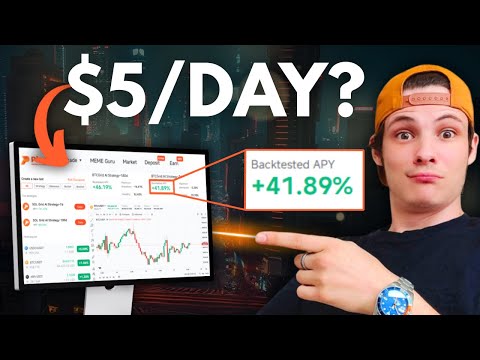

Pionex Showcase



Pionex — Frequently Asked Questions
What is Pionex?
Pionex is a custodial cryptocurrency exchange with built-in trading bots for grid, DCA, rebalancing, smart orders, futures and external signals.
Are Pionex bots free?
Pionex does not charge a separate subscription or activation fee for its built-in bots. Trading fees, funding, spread, slippage, withdrawals and product-specific costs can still apply.
What are the Pionex trading fees?
The current published standard spot fee is 0.05 percent per fill. Current futures material lists 0.02 percent maker and 0.05 percent taker fees, with funding separate. Verify the account preview because rates can vary.
Are Pionex bots powered by AI?
Pionex provides AI-assisted parameter suggestions, copy strategies and PionexGPT workflows, but many core bots execute user-defined rules. AI does not make the strategy predictive or guarantee profit.
Can a Pionex Grid Bot lose money?
Yes. A falling market can leave the bot holding a depreciating asset, while a breakout above the range can cause underperformance. Fees can also consume small grid profits.
Is the DCA Bot the same as scheduled investing?
Not necessarily. Pionex also calls it a Martingale Bot: it can add safety orders as price falls and seek to exit the combined position at a target. This can concentrate losses during a sustained decline.
How does Pionex Signal Bot work?
Signal Bot receives TradingView webhook alerts or compatible external signals and executes futures orders according to the configured strategy. The signal, sizing and execution chain must be tested carefully.
Is Pionex available everywhere?
No assumption should be made. KYC, phone support, assets, fiat access, leverage and derivatives can vary by country, account and product. Check current eligibility before depositing.
Is Pionex safe?
Pionex removes third-party bot API setup but remains a custodial exchange. Users face account, platform, withdrawal, asset and market risks and should use strong security while limiting funds held for trading.
Sources & References
- Pionex official exchange and trading-bot overview ↗
- Pionex official spot trading fee schedule ↗
- Pionex official Grid Bot guide and risk explanation ↗
- Pionex official DCA and Grid Bot comparison ↗
- Pionex official Signal Bot documentation ↗
- Pionex official Trading Bot Finder and risk guide ↗
- Pionex official unsupported country and KYC notice ↗
- Pionex official trading and investment disclaimer ↗
Try Pionex
Visit the official website to get started with Pionex today.
Visit Pionex →