Crypto risk notice
Digital assets and crypto software involve significant risk. Prices and token values are volatile, and you can lose everything you put in. This page covers Internet Computer (ICP) for information only; it is not investment advice, an endorsement, or an offer to buy or sell any asset. Always do your own research before making financial decisions.
ICP Wants to Make AI Software Sovereign
The canister model is the real differentiator
By WhatAI Editorial ·
The Internet Computer is more than cloud marketing
Internet Computer has always made one of the boldest claims in crypto infrastructure: software should be able to run directly on a public network without depending on a conventional cloud stack. That idea is easy to reduce to the phrase "AWS on blockchain," but the comparison is both useful and misleading.
It is useful because Internet Computer can host far more than token logic. Its canister smart contracts can hold application state, execute backend code, serve certified web assets, call external HTTPS services, schedule work, authenticate users, and interact with other blockchains. A team can build an application whose core logic and data are governed by canister code rather than a private server account.
It is misleading because Internet Computer is not a drop-in replacement for every service in AWS, Google Cloud, or Azure. Its programming model, resource limits, upgrade mechanics, network economics, and frontend delivery constraints are different. Some workloads fit beautifully. Others become slower, more expensive, or more awkward when forced fully on-chain.
The 2026 opportunity is not to repeat the broadest decentralised-cloud slogan. It is to ask a sharper question: which parts of an application gain enough from sovereign execution, tamper-evident state, persistent smart contracts, cross-chain control, or on-network AI to justify a different architecture?
Canisters are the real product
The most important concept in Internet Computer is the canister. A canister combines WebAssembly code with persistent state and a message-based interface. It behaves more like a stateful service than a small transaction script. Canisters can call one another, receive requests from users, run timers, make HTTPS outcalls, and expose typed interfaces through Candid.
This model gives developers unusual scope. Backend logic and data can live together. A canister can serve an application frontend, process authenticated actions, maintain records, and call another canister without a separate database cluster or API server. Successful message execution commits state changes, while failed execution does not. Stable memory can preserve large amounts of state across upgrades, although code and data migration still demand care.
Motoko was designed for this environment, while Rust provides the other primary path for production canisters. The wider ecosystem includes JavaScript and TypeScript tools, but teams should distinguish official support from community frameworks and assess maintenance risk accordingly. Developers coming from Node, serverless functions, or EVM contracts need time to learn asynchronous canister calls, cycles, principals, upgrade compatibility, certified responses, and the boundaries between query and update calls.
The architecture also changes who pays. Internet Computer uses a reverse gas model: canisters consume cycles for computation, storage, bandwidth, and certain management or integration calls. End users usually do not buy a token or approve a gas payment before every interaction. For consumer software, that can produce a much more familiar experience. For operators, it means the application must remain funded and protected against abuse.
Predictable infrastructure pricing, with operational catches
Cycles are a resource unit rather than a freely traded token. The protocol fixes one trillion cycles at one XDR, the International Monetary Fund's Special Drawing Right. Developers obtain cycles by converting ICP at the network exchange rate or through services that handle the conversion. This design separates application resource budgeting from the market price of ICP more effectively than a gas model whose unit price floats directly with a token.
The resulting cost is usage based, not free. Canisters pay for instructions, messages, storage, bandwidth, snapshots, HTTP outcalls, threshold signatures, and other operations. Rates can vary with subnet size and the operation being performed. The official cycle-cost reference is the right source for estimates, and its calculator is more useful than a single marketing number.
This creates two disciplines that conventional Web3 teams sometimes underestimate. First, a canister can run out of cycles. Operators need monitoring, top-up automation, freezing thresholds, and alerts before production services stop accepting work. Second, the reverse gas model exposes the application to resource-exhaustion attacks. If anonymous users can trigger costly update calls, AI inference, outcalls, or cross-chain requests, the operator pays. Rate limits, authentication, quotas, deposits, caching, and request validation belong in the initial architecture.
Cycles make costs more predictable, but they do not make cost management automatic. A low-traffic application may be inexpensive to run, while a storage-heavy service, public API, media platform, or AI workload can accumulate meaningful expense. Teams should benchmark real messages and memory growth rather than multiplying an advertised transaction price by user count.
Sovereign software is a spectrum
Internet Computer is strongest when the application benefits from removing a private backend administrator or cloud account from the trust model. A community service can place its rules and state in governed canisters. A treasury can use threshold cryptography instead of storing a signing key on one server. A public registry can return certified data that clients can verify. An autonomous service can use timers rather than an external cron provider.
Yet most serious applications still touch systems outside the protocol. Email delivery, payments, proprietary datasets, analytics, mobile notifications, large media, and specialised AI models often require external services. HTTPS outcalls let canisters make replicated requests to web APIs, but that does not decentralise the external endpoint. If every replica receives a misleading answer from the same central API, consensus only confirms agreement on that answer.
Frontend hosting has similar nuance. Asset canisters can serve certified static files directly from Internet Computer, which is valuable for tamper-evident delivery. The official frontend guide also notes that asset canisters do not run server-side JavaScript and do not provide dynamic server routing. Static-site generation and client-side rendering fit; traditional server-side rendering requires a different arrangement. Large media can become costly and individual uploads require chunking.
For that reason, sovereignty should be designed component by component. A product can place identity, permissions, critical state, and governance on Internet Computer while using external systems for replaceable or high-volume services. The goal is not architectural purity. It is to ensure that no avoidable central dependency can silently rewrite the product's most important rules or data.
Chain Fusion makes canisters useful beyond ICP
Chain Fusion extends the canister model to other networks. Internet Computer provides threshold signature capabilities and chain-specific integrations that let canisters control accounts and assets on Bitcoin, Ethereum and EVM networks, Solana, and other compatible systems. The private signing material is distributed across subnet nodes rather than reconstructed in one place.
This opens practical designs: a multichain wallet with an ICP-hosted frontend and backend, a treasury that coordinates Bitcoin and EVM accounts, a scheduled service that watches an Ethereum contract and triggers an action, or a lending application that accepts assets from another chain. Bitcoin integration, EVM RPC services, Solana RPC services, HTTPS outcalls, and threshold ECDSA or Schnorr signing form different parts of that stack.
The security benefit is significant, but "trustless" still needs qualification. A canister developer must construct the destination transaction correctly, interpret external-chain state, manage fees, protect authorization logic, handle retries, and monitor finality. RPC services and outcalls can have disagreement or availability problems. Threshold signing prevents one server from holding the key; it does not prevent authorised canister logic from signing a bad transaction.
Chain-key tokens such as ckBTC and ckETH add another model. Minter canisters hold or control underlying assets using chain-key cryptography and issue corresponding tokens on ICP. They are designed differently from a bridge run by a conventional multisig, but users still need to understand the minter, ledger, redemption, liquidity, and cross-chain failure assumptions. Native chain control and chain-key tokens are related features, not interchangeable descriptions.
AI on ICP is becoming concrete
The AI case for Internet Computer is stronger when separated into three distinct layers.
The first layer is AI-assisted development. Coding agents can read ICP documentation, use dedicated project skills, generate Motoko or Rust, and work with the protocol's command-line tools. Internet Computer's newer "self-writing cloud" language builds on the idea that agents can create and update applications while canister memory acts as the persistent data layer. This may lower the barrier to building sovereign software, but generated code still needs tests, security review, and controlled deployment authority.
The second layer is AI inference available to canisters. The official application-canister reference now lists an LLM canister that supports text generation, chat completions, and agent workflows without requiring each application to bring an external API key. This is materially more specific than saying ICP is merely suitable for AI. It gives canister code a network service it can call as part of an application flow.
The third layer is smaller inference that can execute directly in WebAssembly canisters. This can be useful when the model and workload fit the available memory, instruction, latency, and cycle constraints. It does not mean every modern frontier model can be placed inside an ordinary canister. GPU-heavy training and large-model inference remain different infrastructure problems. Teams should identify where the model actually runs, which service controls it, what data is exposed, how results are priced, and what happens if that service changes.
These distinctions matter because "on-chain AI" can describe very different trust models. A deterministic model fully executed and replicated by canisters is not the same as a canister calling a shared LLM service, and neither is the same as a canister calling an external commercial API through HTTPS. All three may be useful. They provide different guarantees.
AI also magnifies the reverse-gas risk. If an unauthenticated prompt triggers expensive inference, the canister owner pays. If an agent can call Chain Fusion methods, a hallucination can become a signed transaction. Production systems need per-user quotas, tool allowlists, value limits, simulations, approval thresholds, prompt-injection defences, and immutable audit records. Sovereign execution makes the agent harder for one provider to censor or alter; it does not make the agent wise.
Identity and governance complete the stack
Internet Identity gives applications a native authentication option built around passkeys or supported OpenID accounts. It issues a different principal for each application origin, which helps prevent basic cross-app correlation. Temporary delegation keys let a browser session call canisters without repeatedly invoking the user's master authentication method.
This can make an ICP application feel like ordinary software instead of a wallet-first crypto product. It also creates implementation responsibilities. Developers need to verify callers in the backend, choose sensible delegation lifetimes, handle alternative origins and custom domains correctly, and protect recovery and attribute flows. Authentication proves control of an identity; it does not decide what that identity may do.
At the protocol level, ICP holders can lock tokens in neurons and participate in Network Nervous System governance. Applications can also adopt Service Nervous System governance patterns. These systems can place upgrades and parameters under token-based collective control, but governance is not a substitute for secure code or informed decision-making. Concentrated voting power, low participation, proposal complexity, and automated following can all affect outcomes.
Staking is also a financial activity, not part of ordinary hosting pricing. Dissolve delays, voting rewards, token volatility, liquidity constraints, and governance choices should be assessed separately from the technical decision to deploy a canister. A development team may need ICP to mint cycles without making token speculation part of its product thesis.
Where Internet Computer fits best
Internet Computer is a strong candidate for applications whose backend sovereignty is a product requirement rather than a decorative claim. Good fits include governed social platforms, public registries, tamper-evident business services, multichain wallets, autonomous protocol services, crypto treasuries, and AI agents that need persistent state and tightly controlled execution.
It is also attractive when user-paid gas would damage onboarding. Because the canister pays, a customer can sign in with Internet Identity and use the product without first acquiring ICP. That advantage is clearest in consumer and enterprise applications where blockchain mechanics should stay behind the interface.
It is a weaker fit for teams that need conventional server-side rendering, huge media storage, unrestricted GPU compute, mature EVM composability, or a large pool of developers already fluent in the stack. It may also be unnecessary when a trusted company is allowed to control the backend and can meet the product's requirements more simply with standard cloud infrastructure.
Comparisons should follow the workload. Against NEAR, ICP offers a more integrated model for stateful full-stack canisters and direct web delivery, while NEAR's current strength lies in chain abstraction, intent markets, and private AI services. Against Ethereum and its Layer 2 networks, ICP reduces reliance on off-chain backends but has a smaller ecosystem and a less familiar programming model. Against decentralised compute markets, ICP is less about renting a generic machine and more about running replicated, protocol-managed services.
A practical evaluation plan
Begin with one canister and one critical workflow. Use a local replica and test environment before mainnet. Model the Candid interface, authentication, state transitions, cycle consumption, and upgrade path. Add observability before adding users.
Next, calculate resource exposure. Measure update calls, queries, memory growth, outbound requests, and any AI or threshold-signature operations. Set a freezing threshold and automated top-ups, then simulate abuse. An application that is cheap during a friendly test can become expensive when a public endpoint is scripted.
For web delivery, decide whether static generation or client-side rendering is acceptable. Test certified assets, custom domains, routing, search-engine requirements, and recovery if a frontend upgrade fails. Do not discover after launch that a required server-rendered route does not fit the asset-canister model.
For Chain Fusion, support one destination chain first. Document key derivation, RPC sources, transaction construction, fee funding, signing authorization, replay protection, confirmation logic, and emergency suspension. For AI, record the exact inference path and independently validate outputs before they can change state or move value.
Finally, rehearse upgrades and controller recovery. Take snapshots where appropriate, test schema migration, preserve stable state, review controller permissions, and decide whether control will remain with a team, move to a multisig, or be governed. Sovereignty is meaningful only when the control path is understandable and durable.
The WhatAI verdict
Internet Computer is one of the few blockchain platforms that genuinely changes the shape of the application, not just the settlement layer beneath it. Canisters can combine code, state, web delivery, identity, timers, external calls, cross-chain signing, and AI services in a protocol-managed environment. The reverse gas model can remove crypto friction for users, while cycles provide a relatively stable way to budget network resources.
Its weakness is the mirror image of that ambition. The canister model asks teams to learn a new architecture, fund and defend application resources, plan upgrades carefully, and accept constraints that conventional cloud developers do not expect. AI and Chain Fusion add powerful capabilities, but also widen the blast radius of incorrect code or excessive permissions.
ICP deserves serious evaluation when verifiable application state, reduced cloud dependence, autonomous execution, or multichain control is central to the product. It should not be chosen because "everything on-chain" sounds purer. The best implementation places the parts that need protocol-level trust in canisters, keeps replaceable dependencies replaceable, and makes every expensive or irreversible action observable and constrained.
Internet Computer is a sovereign application platform where WebAssembly canisters can combine backend code, persistent state, certified web delivery, authentication, scheduled work, and cross-chain signing. Its reverse gas model lets the application pay with cycles instead of requiring every user to hold a token.
Canisters, Chain Fusion, and On-Chain AI
ICP canisters can serve applications, call HTTPS services, interact with Bitcoin, EVM networks, and Solana through Chain Fusion components, and access network AI inference. The model reduces dependence on conventional cloud backends but introduces canister-specific limits, cycle management, upgrade planning, and security responsibilities.
Costs, Limits, and Best-Fit Projects
Mainnet infrastructure is usage based. One trillion cycles equals one XDR, while actual spending depends on compute, storage, bandwidth, subnet size, outcalls, signatures, and AI operations. ICP fits products that genuinely benefit from sovereign state or autonomous execution more than ordinary apps seeking the simplest hosting option.
About Internet Computer (ICP)
Internet Computer is a blockchain-based sovereign application platform built around stateful WebAssembly canisters. Canisters can hold data, execute backend logic, serve certified web assets, schedule tasks, call external HTTPS services, authenticate users, and use threshold signatures to interact with other blockchains. The platform uses a reverse gas model in which applications pay for compute, storage, and bandwidth with cycles instead of charging each end user. Its current AI stack includes AI-assisted development, an LLM canister for network-hosted inference, and support for smaller inference workloads that fit canister resource limits.
Use Cases
Key Features
- ✓ Stateful WebAssembly canister smart contracts
- ✓ Backend logic, persistent state, and web assets on one network
- ✓ Reverse gas model with application-funded cycles
- ✓ Cycles pegged at one trillion cycles per XDR
- ✓ Internet Identity with passkeys and per-app principals
- ✓ Certified HTTP responses and static asset hosting
- ✓ HTTPS outcalls to external APIs and services
- ✓ Timers for autonomous scheduled canister execution
- ✓ Chain Fusion with threshold ECDSA and Schnorr signatures
- ✓ Native integrations for Bitcoin, EVM networks, and Solana
- ✓ Network LLM canister and canister-based AI inference
- ✓ NNS and SNS governance infrastructure
Pricing
Protocol access
No subscription
- • Open network and developer documentation
- • Local and test-network development
- • Mainnet canisters require cycles
Cycles
1T cycles = 1 XDR
- • Protocol-pegged resource unit
- • Minted by converting ICP
- • XDR to local-currency value fluctuates
Canister resources
Usage based
- • Compute, memory, storage, messages, and bandwidth
- • Rates depend on operation and subnet size
- • Use the official calculator for estimates
External integrations
Operation dependent
- • HTTPS outcalls and RPC services consume cycles
- • Threshold signatures have separate costs
- • Destination-chain transaction fees may also apply
Governance staking
Optional ICP commitment
- • Not required for ordinary application use
- • Locking ICP in neurons affects liquidity
- • Rewards and token value are variable
Pricing varies by plan and region — see current pricing.
Plan features change — last updated: 2026-08-25.
Details
Tags
Internet Computer (ICP) Community Discussions
Explore community discussions. Ask and answer questions on Internet Computer (ICP) to grow and learn together.


Internet Computer (ICP) Showcase

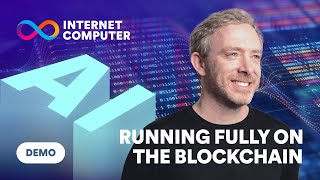
Internet Computer (ICP) — Frequently Asked Questions
What is Internet Computer used for?
Internet Computer runs stateful canister smart contracts that can provide application backends, persistent data, certified web assets, scheduled work, authentication, cross-chain control, and selected AI inference without a conventional private server.
Is Internet Computer a replacement for AWS?
It can replace important backend, database, automation, and static-hosting components for suitable applications, but it is not a drop-in replacement for every cloud service. Server-side rendering, large media, GPUs, and specialised managed services may need other infrastructure.
How does ICP pricing work?
Canisters pay for compute, storage, messages, bandwidth, and integrations using cycles. The protocol fixes one trillion cycles at one XDR. Actual cost depends on the operation, resource usage, and subnet size.
Do end users pay gas on ICP?
Usually no. ICP uses a reverse gas model in which the canister operator funds application resources. This improves onboarding but requires monitoring, top-ups, rate limits, and protection against attacks that deliberately consume cycles.
Can Internet Computer run AI models?
ICP supports a network LLM canister and canister-based inference for workloads that fit resource limits. Teams must verify where a model runs, its cost and latency, and whether execution is replicated on-chain or provided through another network service.
What is Chain Fusion?
Chain Fusion is ICP's set of threshold-signing and chain-integration capabilities for interacting with networks such as Bitcoin, Ethereum and EVM chains, and Solana. It reduces reliance on centrally held private keys but does not remove transaction, RPC, or application risk.
Which languages can build canisters?
Motoko and Rust are the primary canister languages. WebAssembly allows other languages and community frameworks, while JavaScript and TypeScript SDKs are commonly used for clients and application tooling.
What is Internet Identity?
Internet Identity is ICP's native authentication service. Users can sign in with passkeys or supported OpenID providers, and each application origin receives a distinct principal to reduce cross-app tracking.
What is the ICP token used for?
ICP can be converted into cycles, locked in governance neurons, and used within the network economy. Staking and token ownership are financial decisions separate from the technical choice to deploy an application.
Sources & References
- Internet Computer official website ↗
- ICP canister concepts ↗
- ICP cycles documentation ↗
- ICP cycle cost reference ↗
- ICP Chain Fusion documentation ↗
- ICP application and LLM canisters ↗
- ICP HTTPS outcalls guide ↗
- Internet Identity integration guide ↗
- ICP asset canister guide ↗
- ICP network economics and governance ↗
Try Internet Computer (ICP)
Visit the official website to get started with Internet Computer (ICP) today.
Visit Internet Computer (ICP) →