Symbotic Reaches 77 Deployments and Expands Its Warehouse Intelligence Layer
Fiscal Q3 results show 77 systems in deployment as the ARMS acquisition broadens Symbotic's warehouse software ambitions.
By WhatAI Editorial Team ·
Symbotic's latest quarter gives buyers a clearer signal than another polished robotics demo: the company says it now has 77 systems in deployment, while its newly acquired ARMS Innovations software points toward a broader role in coordinating the entire warehouse. The two developments belong together. One shows that Symbotic is scaling physical installations across customer sites. The other shows that its ambition is moving beyond robot execution toward a real-time operational layer for people, equipment, maintenance, and workflows.
On August 5, Symbotic [reported fiscal third-quarter 2026 results](https://ir.symbotic.com/news-releases/news-release-details/symbotic-reports-third-quarter-fiscal-year-2026-results) for the period ended June 27. Revenue reached $721 million, up 22% from the same quarter a year earlier. Net income was $55 million, compared with a $21 million net loss in the prior-year quarter, and adjusted EBITDA was $95 million. Management also guided to $760 million to $780 million of revenue and $100 million to $105 million of adjusted EBITDA for fiscal Q4. Those are company-reported financial measures, not evidence that every deployment meets every customer's target, but they do indicate a business operating well beyond the experimental stage.
The most useful operational figure in the release is the 77 systems in deployment. For prospective customers, that number matters because enterprise warehouse automation has a different risk profile from buying a standalone robot or subscribing to software. Every site involves physical construction, system integration, item and order data, safety controls, testing, operational cutover, and post-launch support. A larger deployment base suggests more repeated experience with those steps, although buyers should still ask how many comparable facilities are live, ramping, being installed, or still in design.
### From automation system to warehouse operating layer
The strategic shift became more explicit on July 2, when Symbotic [announced its acquisition of ARMS Innovations](https://ir.symbotic.com/news-releases/news-release-details/symbotic-announces-acquisition-arms-innovations-advancing-new). ARMS is a UK software company focused on real-time operational intelligence in complex automated warehouses. Symbotic said the technology is intended to unify automated systems and human workflows, diagnose disruptions, match tasks with the right people or machines, predict maintenance needs, and help command centers coordinate facilities.
That is broader than moving cases through an automated storage and retrieval system. It is also broader than a conventional dashboard that reports equipment status after the fact. Symbotic describes the target category as Warehouse Operations Optimization, with the combined software acting as an operational nervous system across a facility. The language is ambitious and the integration is still a forward-looking product direction, so buyers should not assume every described ARMS capability is already generally available in every Symbotic deployment. The right diligence question is which functions are live today, which are being integrated, and which depend on future product work.
Even with that caveat, the direction makes sense. Highly automated buildings create a coordination problem that is different from the one they replace. Fewer manual touches do not eliminate operational work. They change it. Teams must supervise fleets, manage exceptions, respond to equipment faults, coordinate technicians, keep parts available, protect data interfaces, and recover quickly from disruptions. A software layer that connects maintenance, labor skills, robot state, work queues, and production priorities could improve uptime if it is well integrated and usable under pressure.
For technology leaders, this means Symbotic should now be evaluated in two layers. The first is the physical flow of goods: inbound presentation, case identification, storage, retrieval, sequencing, pallet building, wrapping, and shipping preparation. The second is operational control: visibility, alerts, diagnosis, task assignment, maintenance, exception resolution, and network-level governance. Buyers should request a capability map that separates the current base system, optional modules, ARMS-derived functions, and roadmap items.
### The core system remains a full case-handling platform
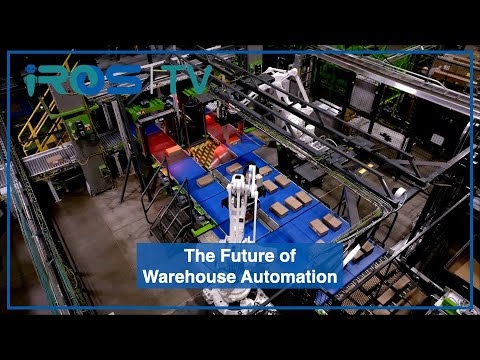
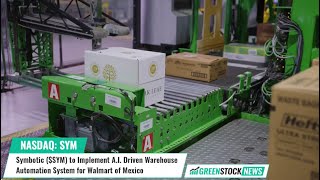
Symbotic's [distribution solution](https://www.symbotic.com/solutions/distribution-solution/) is designed to automate inventory from pallet intake through outbound pallet preparation. At inbound cells, robotic arms remove slip sheets and singulate cases. The system orients and scans the cases, identifies damage, and sends accepted inventory into automated storage. Symbotic also describes a floor-loaded inbound cell for goods that arrive directly in a trailer rather than on pallets.
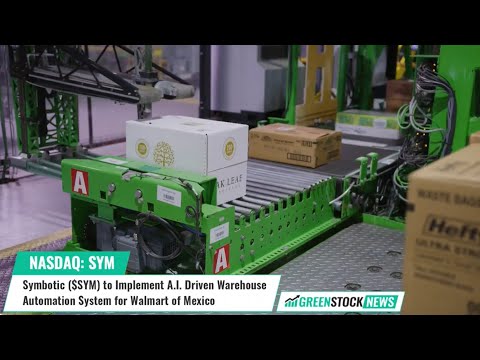
Inside storage, SymBots move cases through a secured ASRS and sequence retrieval priorities. A practical differentiator is native-case handling: the main system can store and move products in their shipping cartons or other packaging rather than transferring every item into a standardized tote. Symbotic publishes supported ranges from 1 to 60 pounds and from small cartons to cases as large as 36 by 24 by 16.2 inches, depending on robot type and system design. Those ranges are useful for initial screening, but they do not replace package testing. Film wrap, exposed handles, weak corrugate, liquids, glass, unstable contents, and damaged inbound cartons can behave differently even when their dimensions fit.
Outbound, the system scans and labels inventory before robotic arms build a mixed-SKU pallet. Symbotic says its pallet-building logic considers weight, shape, crushability, center of gravity, chemical rules, and where products will be needed at the destination. This is where the business case can extend beyond warehouse labor. A stable pallet that is taller, uses trailer cube well, and groups products around a store's replenishment path can reduce handling and travel after delivery. To capture that value, however, destination layouts and business rules must stay accurate. Poor master data can turn a technically valid pallet into an operational nuisance.
Symbotic also publishes performance claims including 99.99% or better order accuracy, up to nine times throughput improvement, 30% to 60% greater storage density, and 60% to 80% warehouse labor cost reduction. These figures can frame a discovery conversation, but they should not be copied directly into an investment case. Buyers need a baseline, a definition for each metric, an agreed measurement window, and site-specific assumptions. Accuracy might refer to picks, cases, orders, or shipments. Throughput might be average, sustained peak, or a modeled comparison. Labor savings might exclude retained maintenance, controls, exception, and supervisory roles.
### SymMicro and BreakPack widen the workload
The main Symbotic distribution system is centered on case handling, but not every order is a full case. BreakPack is designed to add less-than-case quantities to a case-picking facility. Items can be sorted into totes for partial-case fulfillment while the larger system continues handling full cases. For wholesalers serving smaller stores or customers with mixed order quantities, that can reduce the need for an entirely separate automation island. The economics still need separate modeling because each-pick work introduces different replenishment, workstation, tote, and labor requirements.
[SymMicro](https://www.symbotic.com/solutions/symmicro/) addresses each-pick and micro-fulfillment more directly. It stores loose goods in totes and presents them to ergonomic pick stations, where an operator can work on multiple orders. Symbotic positions it for back-of-store use as well as larger facilities and says it can support ambient, refrigerated, and frozen zones. That expands the portfolio from regional distribution into local omnichannel fulfillment, but it also creates a different implementation problem. Store operations, customer pickup, staging, substitution rules, cold-chain handoffs, and upstream replenishment all affect the result.
A buyer considering both the distribution solution and SymMicro should map the complete inventory path. The key question is not whether both systems are automated. It is where ownership and accuracy transfer from supplier receipt to regional storage, store replenishment, local tote inventory, picking, staging, and customer handoff. Duplicate safety stock or delayed reconciliation can absorb much of the value if the two layers are not planned together.
### What 77 deployments should change in due diligence
The Q3 update strengthens Symbotic's scale story, but it should also raise the standard of proof. A mature buyer should ask for references that resemble its own operation, not just marquee brand names. Relevant similarities include case dimensions, packaging quality, SKU velocity, temperature zones, daily and peak volume, order complexity, pallet rules, labor market, building type, and required uptime. A grocery wholesaler retrofitting a live facility has different risks from a greenfield general-merchandise site.
The contract should translate the design into measurable acceptance criteria. Test cases should include damaged inbound goods, unreadable labels, duplicate scans, robot or cell outages, peak-order waves, inventory reconciliation, awkward carton mixes, pallet stability, fire alarms, network interruptions, and restart after a controlled shutdown. It should also define who owns each interface and what happens when an upstream WMS sends incomplete or late data.
Deployment status needs precise language as well. The company reported 77 systems in deployment, but buyers should distinguish design, construction, installation, commissioning, ramp, and steady-state operation. Ask how long comparable systems spent in each phase, what throughput curve they followed after go-live, how many defects or exceptions remained manual, and what staffing model was required during ramp. Those answers are more useful than one aggregate deployment count.
Symbotic's March agreement with Associated Wholesale Grocers offers a concrete example of project scale. The companies said AWG plans to automate about 114,000 square feet of its Gulf Coast support center, with construction preparation expected in early 2027 and go-live anticipated in the fourth quarter of 2027. The proposed system is expected to handle nearly 19 million cases annually. That timeline illustrates why governance, construction readiness, and operational transition matter as much as robot specifications.
### The decision for warehouse leaders
Symbotic is strongest when the problem is large enough to justify redesigning the flow of a facility. It is not simply an alternative to hiring more pickers, and it is not directly comparable to a small fleet of collaborative mobile robots. Its value proposition combines dense storage, rapid case movement, precise sequencing, automated pallet building, inventory visibility, and downstream handling gains. That breadth can create a more compelling return, but it also concentrates more processes into one tightly coupled system.
The ARMS acquisition could make that coupling easier to operate by connecting machines, technicians, tasks, and maintenance into a single real-time layer. It could also increase platform dependency if data access, interfaces, and recovery procedures are not contractually clear. Buyers should address export rights, event histories, role-based access, integration methods, cybersecurity responsibilities, support response, spare parts, and the ability to run safely when a service is degraded.
For teams building a shortlist in 2026, the best next step is a structured feasibility study using real operating data. Start with twelve months of inbound and outbound volume, SKU dimensions and weights, packaging exceptions, order lines, pallet rules, peak profiles, labor by task, damage, space constraints, utility capacity, WMS interfaces, and planned network changes. Then compare Symbotic's proposed future state with targeted alternatives, including point automation and process changes, on the same baseline.
The latest financial results and deployment count make Symbotic easier to treat as a scaled enterprise platform. The ARMS acquisition makes its future scope more expansive. Neither removes the need for detailed validation. The practical question is whether an integrated, high-density, software-orchestrated operating model fits the facility, network, and change capacity better than a smaller set of independent automation projects. If the answer is yes, Symbotic now presents a broader and more mature proposition than it did a year ago.
Symbotic is a turnkey warehouse automation platform for large distribution operations. It combines robotic intake, high-density storage, autonomous case-moving robots, AI-driven orchestration, and robotic pallet building in one integrated system.
How Symbotic Automates Distribution Centers
The core distribution solution manages cases from inbound processing through storage, retrieval, sequencing, labeling, wrapping, and shipment preparation. BreakPack adds partial-case workflows, while SymMicro applies tote-based automation to each-pick and micro-fulfillment operations.
Who Should Evaluate Symbotic?
Symbotic is best evaluated as a facility and operating-model transformation. Buyers should validate package fit, peak throughput, WMS integration, building constraints, acceptance tests, safety, recovery procedures, implementation phasing, and total cost before committing.
About Symbotic
Symbotic provides end-to-end warehouse automation for large distribution operations. Its turnkey system combines robotic inbound cells, high-density automated storage and retrieval, autonomous SymBots, AI-driven orchestration, case sequencing, and robotic pallet building. The company also offers BreakPack for partial-case fulfillment and SymMicro for store-level or micro-fulfillment workflows. Projects are designed with Symbotic, installed into new or existing facilities, integrated with warehouse systems, tested against operational targets, and supported after go-live.
Use Cases
Key Features
- ✓ End-to-end distribution center automation
- ✓ Robotic pallet depalletizing and case intake
- ✓ Native-case automated storage and retrieval
- ✓ Autonomous SymBot inventory movement
- ✓ AI-driven routing and inventory orchestration
- ✓ Mixed-SKU smart pallet building
- ✓ Damage scanning and exception handling
- ✓ BreakPack partial-case fulfillment
- ✓ SymMicro tote-based micro-fulfillment
- ✓ Robotic wrapping and shipping preparation
- ✓ Real-time inventory visibility
- ✓ 24/7 tele-operation support
Pricing
Distribution Solution
Custom quote
- • Site-specific end-to-end automation design
- • Robotics, storage, software, and integration
- • Installation, testing, and go-live support
SymMicro
Custom quote
- • Tote-based each-pick automation
- • Back-of-store or micro-fulfillment deployment
- • Ambient, refrigerated, and frozen support
Expansion and Support
Custom quote
- • Capacity and capability expansion
- • Software maintenance and support
- • Operational services and optimization
Pricing varies by plan and region — see current pricing.
Plan features change — last updated: 2026-08-16.
Details
Tags
Symbotic Community Discussions
Explore community discussions. Ask and answer questions on Symbotic to grow and learn together.


Symbotic Showcase

Symbotic — Frequently Asked Questions
What does Symbotic automate?
Its distribution solution can automate the flow from pallet intake and case singulation through high-density storage, retrieval, sequencing, labeling, wrapping, and mixed-SKU pallet building. BreakPack adds partial-case fulfillment, while SymMicro addresses each-pick and micro-fulfillment operations.
Does Symbotic work with native cases?
Yes. The main distribution system is designed to handle goods in their shipping cases rather than requiring every item to be transferred into a tote. Symbotic publishes supported case size and weight ranges, but a real project still requires SKU and packaging qualification.
Can Symbotic be installed in an existing warehouse?
Yes, Symbotic markets its system for both new facilities and existing buildings. Retrofit feasibility depends on clear height, floor and structural conditions, utilities, fire protection, receiving and shipping flows, and the space available for phased installation.
How much does Symbotic cost?
Symbotic does not publish a standard price list. Pricing is custom and depends on facility scope, throughput, storage, interfaces, construction, deployment services, support, and commercial terms. Buyers need a site-specific proposal and total-cost model.
What software does Symbotic include?
The system uses AI-driven software to coordinate robots, inventory, storage placement, retrieval priorities, and order flow. Symbotic's July 2026 acquisition of ARMS Innovations is intended to extend that layer toward warehouse-wide operational intelligence across automated equipment and human workflows.
Is Symbotic suitable for micro-fulfillment?
SymMicro is Symbotic's tote-based micro-fulfillment system for each-pick and low-unit-of-measure work. It can support back-of-store or larger facilities and is designed for ambient, refrigerated, and frozen zones.
Sources & References
Try Symbotic
Visit the official website to get started with Symbotic today.
Visit Symbotic →