Tesla Optimus Is Entering Production, but It Is Not Entering the Market Yet
Tesla is building robot production lines and an internal training Academy. That is meaningful progress, but there is still no public price, order route, final specification, safety case, or customer-ready deployment package.
By WhatAI Editorial Team ·
Optimus is entering production, but not the market
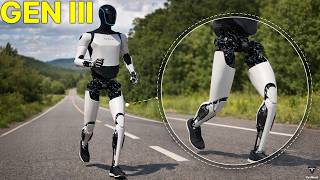
Tesla Optimus has reached a more consequential stage than another polished demonstration. In its July 2026 quarterly update, Tesla said it had decommissioned the Model S and Model X lines at Fremont and was installing first-generation production lines for Optimus. It also listed Optimus construction in California and Texas, with production anticipated in 2026. Factories, equipment, and supply chains are harder commitments than a stage presentation. They show that Tesla intends to learn how to build humanoids repeatedly, not merely assemble a few prototypes.
The next sentence in Tesla's update matters even more. The initial builds are intended for the company's Optimus Academy, where they will collect training data and support further functionality development. These are internal development robots. Tesla has not announced a customer order page, an enterprise pilot application, a commercial price, a delivery schedule, a warranty, or a final specification. Optimus may be entering a production phase, but it has not entered a public market.
That distinction is the foundation of an honest assessment. A production line can prove that a company is serious about manufacturing. It cannot prove that the robot is ready for a customer's factory, that its software can manage unscripted work, or that the economics survive outside a controlled internal program. Tesla is building the machinery needed to answer those questions. It has not answered them yet.
The Academy matters more than the assembly line
The name Optimus Academy could sound like a training school for customers. Tesla's description points to something more fundamental: a place where initial robots generate data and help the company develop functionality. That makes the Academy part laboratory, part fleet operation, and part data engine. It is where Tesla can put multiple robots through repeated tasks, observe failure, collect demonstrations, refine models, and feed lessons back into hardware and software.
This may be the most strategically important part of the Optimus program. Humanoid robotics is not short of clever prototypes. It is short of diverse, high-quality physical interaction data and systems that can turn that data into dependable behavior. Cars gave Tesla a vast stream of real-world driving information. Humanoids do not arrive with an existing fleet or a naturally occurring dataset. Tesla has to manufacture the robots, create the tasks, operate the fleet, instrument the work, label the outcomes, and build the feedback loop itself.
An internal Academy also gives Tesla control over the environment. Floors can be standardized. Objects can be selected. Workers can be trained. Cameras and logs can be installed. New policies can be tested under supervision. Broken hardware can go directly back to engineering. That control is valuable for learning, but it introduces an evidence problem for outsiders. A behavior that works inside the Academy may depend on conditions a customer does not share. Until Tesla publishes the operating envelope, intervention rate, recovery behavior, uptime, and long-duration task results, internal progress should remain internal evidence.
Tesla is trying to industrialize learning
Tesla describes Optimus as a general-purpose bipedal autonomous robot for unsafe, repetitive, or boring tasks. The ambition is broader than automating one station. It is to create a physical platform that can learn many jobs through software and data, while the hardware is manufactured at a scale that reduces cost. The company's recruitment pages make the engineering scope visible: balance, navigation, perception, interaction, controls, reinforcement learning, imitation learning, manipulation, tactile sensing, and mechanical design all have to become one system.
The appeal of this approach is obvious. Traditional factory automation can be extraordinarily effective, but it often relies on fixed equipment, dedicated workcells, precise inputs, and engineering for a narrow task. A humanoid can use spaces, tools, shelves, handles, and workflows originally shaped around people. If the same body can learn several tasks, the cost of automation might move from rebuilding the environment toward training the machine.
The difficult word is if. Generality creates a long tail of exceptions. A bag flexes. A cable catches. A carton arrives damaged. A person walks through the work area. Lighting changes. A tool is returned to the wrong place. A gripper touches an object at a slightly different angle. A useful robot must detect the difference, select a safe response, recover when possible, and stop when it cannot. These are not edge cases around the work. In physical environments, they are the work.
The hand remains the hard problem
Tesla's earlier updates placed particular emphasis on its latest hand design, and current hiring continues around dexterity and tactile sensing. That focus is sensible. Legs make the robot visually humanoid, but hands determine how much of a human workplace it can actually use. Handles, connectors, cloth, tools, packaging, switches, bins, and irregular objects demand more than a secure power grasp. They demand controlled contact and an understanding of what the object is doing while it is being touched.
A dexterous hand also concentrates risk. More joints create more points of wear and failure. Delicate components meet impact, dust, oil, sharp edges, and repeated contact. Small errors can damage a part, drop an object, or pinch a person. A hand that looks human in a demonstration is not necessarily durable, maintainable, or economical over thousands of cycles. Buyers will eventually need figures for grasp success, force control, tactile coverage, repeatability, repair time, component life, and performance across the actual object set.
Tesla has a manufacturing reason to solve this differently from a robotics lab. It cannot rely on an exquisite hand that is too expensive or fragile to build at volume. The company needs dexterity that can be produced, calibrated, repaired, and improved across many units. That is why a mass-manufacturable hand may be more important than a single spectacular manipulation video. The best demo shows peak ability. A production hand must show useful ability after repetition, variation, wear, and imperfect contact.
Factory work will come before home help
The public imagination quickly puts Optimus in the home: carrying groceries, cleaning, cooking, or helping an older person. Tesla itself presents a long-term general-purpose vision, but the company's own factories are the logical first proving ground. Tesla controls the buildings, tasks, equipment, data, networks, maintenance teams, and safety processes. It can choose repetitive work, constrain the environment, and keep engineers close to the machines.
A home is a harsher autonomy test than it appears. Every house is different. Children, pets, stairs, clutter, wet floors, glass, food, private conversations, and valuable objects create a dense mix of safety and privacy problems. The robot would need to operate around people who are not trained colleagues. Support would have to reach thousands of locations. A failure that is manageable inside a factory cell can become unacceptable beside a sleeping family.
This does not make a home robot impossible. It makes the path sequential. First prove reliable work in controlled spaces. Then broaden the objects, layouts, and people. Build service capacity. Establish safety and privacy controls. Learn what happens after months of use. Household assistance should be treated as a destination in Tesla's story, not evidence about the product available today.
A production line is not commercial availability
Manufacturing language can create a false sense that a purchase is imminent. Construction means buildings, equipment, or tooling are being installed. Initial production can mean engineering units. A production line can spend months discovering yield problems, part variation, calibration bottlenecks, and design changes. Internal deployment can begin long before a company is ready to support an outside customer.
Tesla's Q2 2026 disclosure is unusually helpful because it identifies the intended destination of the first builds. They go to Optimus Academy. That gives the market a clean sequence to watch. The next meaningful milestones are validated line output, the number of usable internal robots, tasks performed, intervention and failure data, design stability, external pilots, customer terms, service capability, and deliveries. Jumping directly from factory construction to mass-market availability erases the hardest stages.
Tesla previously described an eventual planned capacity of one million robots per year. That is a manufacturing ambition, not installed capacity or a forecast that should be entered as completed output. The company itself warns in its manufacturing disclosures that installed capacity is not the same as current production rate and that ramps depend on equipment, components, factory work, regulation, and other constraints. Optimus deserves the same disciplined reading.
Pricing is still a story, not an offer
The old Optimus conversation has been anchored by projected prices in the tens of thousands of dollars. Those numbers are memorable because they place a humanoid near the cost of a car rather than an industrial automation project. They are not current commercial pricing. Tesla has not published a configuration, list price, deposit, lease, service contract, warranty, delivery charge, or total-cost model that a buyer can accept.
This is not a technicality. A price without a specification says very little. Does it include the hand, onboard compute, charging hardware, software rights, safety equipment, training, installation, spare parts, service, or updates? Is the robot sold, leased, or operated as a service? Can the customer change the software? Who owns the data created during work? What uptime is promised? Who pays when a fall damages the robot or the surrounding equipment?
Until Tesla answers those questions, WhatAI treats Optimus pricing as unannounced. Earlier targets can be recorded as company ambition, but they should not become a fake pricing tier. For a potential buyer, the honest budget line is not twenty or thirty thousand dollars. It is unknown hardware cost plus unknown integration, safety, service, downtime, facilities, and operating cost.
Safety is the missing public specification
Any humanoid capable of useful factory work carries enough mass and force to hurt someone. It can fall, collide, trap fingers, drop objects, or move unexpectedly after a sensor, model, network, power, or control failure. General-purpose behavior expands the risk because the robot may enter new situations rather than repeat one fenced motion. Safety cannot be inferred from smooth demonstrations or from the intention to perform dangerous work instead of people.
A commercial package will need more than emergency-stop hardware. Buyers need an operating envelope, safe-speed and force behavior, stop performance, fall strategy, access controls, supervision requirements, risk assessment, incident procedures, software change control, cybersecurity, and validation against the target task. They need to understand what the learned system does when confidence is low and how updates are tested before they change physical behavior.
Training data creates a second safety layer. If workers demonstrate tasks or work alongside instrumented robots, the program may capture images, audio, movement, mistakes, and productivity information. Consent, access, retention, labeling quality, security, and performance management need governance. A data flywheel can improve the robot while quietly changing the workplace. Trust will depend on making that trade visible.
Tesla's advantage is vertical integration
Tesla has several advantages that are difficult for a robotics startup to reproduce. It designs electronics, batteries, motors, software, AI systems, manufacturing equipment, and factories. It has internal work environments where robots can be tested. It can build training compute at a scale normally associated with foundation-model companies, and its Q2 update says Cortex 2 supports both vehicle and humanoid autonomy development. It can redesign the robot and the line together.
This matters because humanoid performance is a system problem. A better model cannot rescue unreliable actuators. Excellent hardware cannot compensate for weak perception. A capable robot can still fail commercially if production yield, service, parts, or software deployment are poor. Tesla's ability to move across these layers gives it a credible route from prototype to repeatable machine.
Vertical integration is not magic. It also concentrates assumptions. Lessons from driving do not transfer automatically to manipulation. A car operates mainly on roads, while hands create complex contact in three dimensions. Factory scale can amplify a flawed design as quickly as a good one. The value of Tesla's integration will be proven when the parts form a reliable operating system, not simply when each internal team exists.
Tesla's disadvantage is evidence
Optimus remains difficult to evaluate because the public evidence is selective. Tesla has shown movement and manipulation, announced manufacturing work, and described its development direction. It has not published a stable commercial data sheet, independent safety assessment, task-level benchmark suite, intervention rate, mean time between failures, maintenance burden, or customer case study. There is no external developer program through which researchers can test the platform.
The absence is understandable for a product under development, but it changes how the page should be written. Optimus should not receive a star rating as though reviewers have used a shipping product. It should not have invented subscription tiers. Its strongest features are program capabilities and strategic assets, not verified customer benefits. Its limitations are not complaints from users. They are the unanswered questions between an internal robot and a supported commercial system.
Evidence should improve as production begins. Tesla can publish the number of internal units, task categories, cumulative operating hours, successful cycles, intervention rates, safety events, recovery behavior, hardware revisions, and maintenance. It can show unedited long-duration work, describe where teleoperation remains necessary, and let external partners report results. None of this requires revealing proprietary models. It requires measuring the product by the work it claims to transform.
Buyers should compare deployment models
Optimus is often compared with Figure 03, Boston Dynamics Atlas, 1X NEO, Unitree G1, and Apptronik Apollo as if they occupy the same shelf. They do not. Some humanoids are sold as research hardware. Some are available through enterprise relationships. Some are tightly held development programs. Some prioritize industrial work, others home environments, and others developer access. The correct comparison begins with how an organization can actually obtain, integrate, and support the robot.
A research lab may prefer an orderable platform with an SDK, even if its autonomy is less ambitious. A manufacturer may accept a closed system if the vendor takes responsibility for a defined outcome. A home user needs service, privacy controls, consumer safety, and pricing that do not yet exist for most humanoids. A company choosing a pilot needs contractual performance and exit conditions, not only the most impressive video.
For Optimus, the current decision is mostly whether to monitor, partner if invited, or pursue an available alternative. Potential buyers should define one task now, establish the evidence and safety gates, and compare every vendor against them. That turns waiting into useful preparation. It also prevents Tesla's production narrative from becoming a placeholder for requirements that have never been met.
The WhatAI verdict
Tesla has moved Optimus into a more credible industrial chapter. Installing production lines and assigning initial robots to a dedicated training Academy are meaningful steps toward the fleet, data, and manufacturing loop a general-purpose humanoid needs. Tesla's vertical integration, internal factories, AI compute, and willingness to design for scale make Optimus one of the most important programs in physical AI.
It is still a program, not a product a customer can buy. There is no public price, order process, commercial configuration, delivery date, SDK, warranty, service package, safety case, or external deployment evidence. The first builds are for Tesla's own development. Any page that presents a twenty-thousand-dollar factory robot today is describing a future possibility as a current offer.
The sensible view sits between dismissal and belief. Optimus is no longer merely a prototype story, because Tesla is committing factories and compute to it. It is not yet a market-ready robot, because production intent has not become customer evidence. Watch the Academy, the line output, the task data, and the first external deployments. That is where the promise will either become a product or remain an extraordinary manufacturing experiment.
Tesla Optimus is a general-purpose humanoid robot program under active development. Tesla is installing first-generation production lines in Fremont and Texas, but the initial builds are designated for its internal Optimus Academy, where the company plans to collect training data and develop additional functionality.
Can You Buy Tesla Optimus in 2026?
No public purchasing route exists as of August 2026. Tesla has not released a list price, customer specification, delivery schedule, warranty, support package, developer SDK, or enterprise pilot application. Public price targets and future production ambitions should not be treated as current commercial terms.
What Is Tesla Building Toward?
Tesla describes Optimus as a bipedal autonomous humanoid intended for unsafe, repetitive, or boring tasks. Its current work spans locomotion, balance, navigation, perception, learned manipulation, dexterous hands, training-data collection, AI compute, and manufacturing. The first credible deployment environment is Tesla's own factories and training operation, not the consumer home.
About Tesla Optimus
Tesla Optimus is an in-development general-purpose humanoid robot program intended to perform unsafe, repetitive, or boring physical tasks. Tesla is building software for balance, navigation, perception, interaction, locomotion, and manipulation while developing a mass-manufacturable body and hand. As of August 2026, Optimus is not commercially available. Tesla's Q2 2026 update says first-generation production lines are being installed in Fremont and Texas, with initial builds intended for the internal Optimus Academy to collect training data and develop functionality. Tesla has not published a customer price, order process, final commercial specification, warranty, support plan, or deployment terms.
Use Cases
Key Features
- ✓ General-purpose bipedal humanoid design goal
- ✓ Software work across balance, navigation, perception, and interaction
- ✓ Learned manipulation and locomotion development
- ✓ Reinforcement-learning and imitation-learning research
- ✓ High-dexterity hand designed for mass manufacture
- ✓ Internal training-data collection through Optimus Academy
- ✓ First-generation production lines under installation in Fremont and Texas
- ✓ Cortex 2 compute supporting humanoid autonomy development
- ✓ Tesla-designed mechanical, electrical, controls, and AI stack
- ✓ Initial focus on Tesla's own controlled operating environments
- ✓ No public customer configuration or developer SDK announced
- ✓ No public commercial price or ordering process announced
Pricing
Current availability
Not for sale
- • No public order process
- • Initial builds reserved for Tesla development
- • No customer delivery date
Enterprise access
Not announced
- • No public pilot program
- • No published support terms
- • No verified customer pricing
Future pricing
Not announced
- • Earlier price targets are not offers
- • Final configuration is unpublished
- • Ownership model remains unknown
Pricing varies by plan and region — see current pricing.
Plan features change — last updated: 2026-08-16.
Details
Tags
Tesla Optimus Community Discussions
Explore community discussions. Ask and answer questions on Tesla Optimus to grow and learn together.
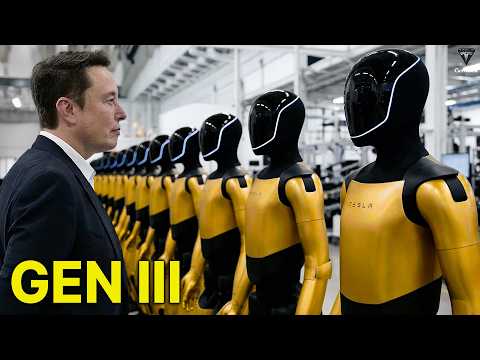
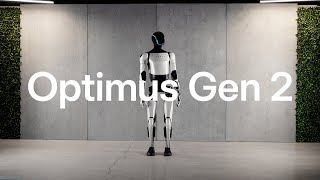
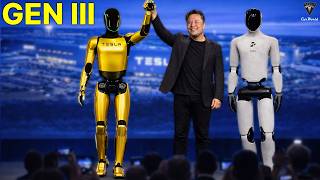
Tesla Optimus Showcase
Tesla Optimus — Frequently Asked Questions
Can you buy Tesla Optimus now?
No. As of August 2026, Tesla has no public order page, customer sales program, enterprise pilot application, published delivery date, or verified commercial price for Optimus.
Is Tesla Optimus in production?
Tesla says first-generation production lines are being installed in Fremont and Texas, with production anticipated in 2026. Its Q2 update says the initial builds will be used in the internal Optimus Academy for training-data collection and further functionality development. This is not the same as customer production or commercial delivery.
How much will Tesla Optimus cost?
Tesla has not published a commercial list price or binding customer quote. Public comments about future target costs are ambitions, not current offers, and should not be entered into a procurement budget as verified pricing.
What will Tesla Optimus be used for?
Tesla describes the goal as a general-purpose bipedal robot for unsafe, repetitive, or boring tasks. Near-term work is centered on internal data collection, functionality development, manipulation, locomotion, and controlled factory use. Household assistance remains a future ambition rather than a released service.
Does Tesla publish complete Optimus specifications?
No current customer-ready specification is available. Tesla has not published a complete final data sheet covering dimensions, mass, degrees of freedom, payload by posture, battery runtime by task, environmental limits, safety ratings, reliability, service intervals, or commercial configuration.
Does Optimus have a developer SDK?
Tesla has not announced a public Optimus SDK, developer program, simulation package, API, or secondary-development policy. Teams needing an accessible research platform should compare robots with documented developer access rather than assume Optimus will be open.
What is the Optimus Academy?
Tesla describes Optimus Academy as the destination for its initial builds, where robots will be used for training-data collection and further functionality development. Public details about its scale, tasks, data process, and external access remain limited.
Is Tesla Optimus ready to work safely around people?
Tesla has not published the commercial safety case, certifications, operating envelope, risk controls, or independent validation needed to answer that broadly. Demonstrations and internal trials should not be treated as proof of safe unsupervised operation in public or customer environments.
Sources & References
Try Tesla Optimus
Visit the official website to get started with Tesla Optimus today.
Visit Tesla Optimus →