Digit Finally Has the Boring Numbers Humanoids Need
More than 100,000 totes moved is worth more than a viral demo. The harder question is whether Agility can carry that proof into Digit v5 and work safely beyond the workcell.
By WhatAI Editorial Team ·
Digit has crossed a useful line
Humanoid robots have spent years looking busy. They have carried boxes under studio lights, folded laundry in edited videos, walked across stages, and invited an extraordinary amount of speculation about jobs they may one day perform. Agility Robotics now has something rarer: a genuinely boring production number.
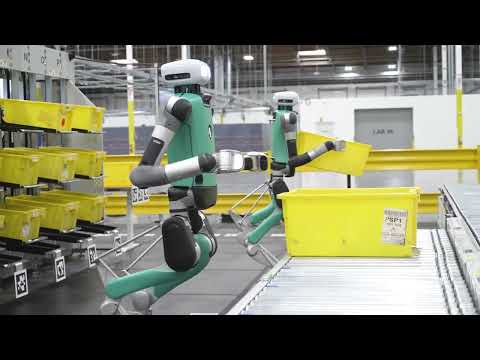
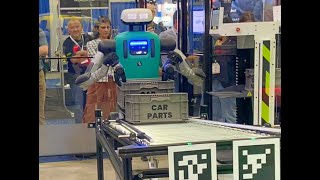
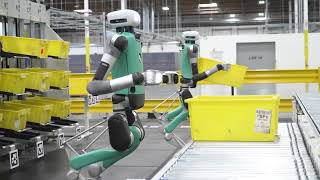
Digit has moved more than 100,000 totes at GXO's Flowery Branch facility. A tote is not glamorous. Moving one from an autonomous mobile robot to a conveyor does not look like general intelligence. Yet the milestone matters precisely because it is repetitive, measurable, and connected to a live commercial workflow. That is what industrial automation is supposed to be.
This does not make Digit a universal worker. It does make the conversation more serious. Agility can point to revenue-generating deployment, repeated cycles, a multi-year customer agreement, integration with existing automation, and a fleet platform that reports operational performance. The robot has begun to leave the demo economy.
One hundred thousand totes is not a magic number
The milestone deserves attention without becoming mythology. A tote count does not reveal the number of robots, total shifts, intervention rate, average cycle time, workcell availability, maintenance burden, energy use, or cost per move. Agility says the achievement demonstrates sustained performance. Buyers still need the denominator.
Was a human required after every hundred cycles or every ten thousand? How much of the workcell was redesigned? How frequently did an AMR arrive late, a tote shift, or the placement point become blocked? What happened when Digit could not complete the grasp? How many remote or on-site support hours kept the system productive?
Those questions do not diminish the result. They are the questions that turn a marketing milestone into a transferable operating case. One hundred thousand movements prove that the system can persist. The next level of evidence explains how it persisted and at what cost.
GXO is the case study that matters
GXO and Agility moved from a proof of concept into a multi-year Robots-as-a-Service agreement in 2024. Digit works at a SPANX fulfillment operation, handling the repetitive transfer between autonomous mobile robots and conveyors. Arc orchestrates the workflow and ties the humanoid into the surrounding automation.
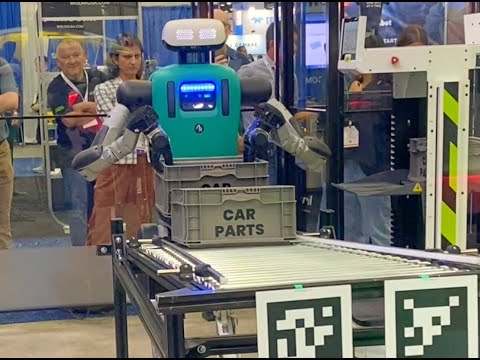
This is a well-chosen first job. AMRs are excellent at transporting goods over distance, but they often need help at the handoff. Fixed arms can manipulate objects efficiently, but the facility must present those objects in a controlled geometry. Digit occupies the gap: it moves to the arriving AMR, takes the tote, turns, walks, and places it onto a conveyor designed around people.
The robot is not replacing the AMR. It is making an existing automated system more complete. That is a more plausible industrial role than the idea of a humanoid independently taking over an entire warehouse. The most valuable generality may be the ability to connect several specialized machines without rebuilding the building around each connection.
Commercial now has a real meaning
The word deployed has become dangerously elastic in humanoid robotics. It can mean a research robot visited a customer for a week, a pilot is planned, a machine performed a supervised demonstration, or a fleet is operating under a paid multi-year agreement. Those are not the same achievement.
Digit has one of the clearer commercial claims in the category. Agility says it has active deployments with GXO, Schaeffler, Toyota Motor Manufacturing Canada, and Mercado Libre. The company reports deployment commitments across nine customer facilities and more than 65,000 operating hours. GXO's agreement is explicitly RaaS and revenue-generating. Toyota signed a commercial RaaS agreement after a pilot. Mercado Libre announced a commercial deployment beginning in San Antonio.
These are company-reported figures and announcements, not a full independent operating dataset. Even so, they put Digit in a different evidentiary class from machines that exist primarily in laboratory footage or internal factory trials. Commercial does not mean mature. It does mean someone outside the robot company has agreed to put the system into a real operation under commercial terms.
Toyota and Mercado Libre widen the proof
Toyota Motor Manufacturing Canada signed its agreement in February 2026 after evaluating Digit in a pilot. The planned work covers manufacturing, supply chain, and logistics operations, with a focus on extremely repetitive and physically taxing tasks. That is strategically useful because automotive production introduces a different operating rhythm, safety culture, and integration environment from ecommerce fulfillment.
Mercado Libre adds another commerce network and a path into Latin American facilities. The first announced location is in San Antonio, Texas, with potential expansion into the company's regional warehouse network. The language remains appropriately staged: deploy at one facility, test useful workflows, then explore other sites and use cases.
Schaeffler gives Digit a global manufacturing relationship, while Amazon's earlier testing helped shape the product and safety approach. Together these names create an impressive customer map. The responsible reading is not that Digit has already scaled across every network. It is that Agility has access to demanding environments where it can prove whether the same platform travels from one workflow to another.
Amazon should be described more carefully
The old Digit record casually grouped Amazon with active commercial deployments. The public evidence is more specific. Amazon announced testing at its robotics research and development facility, initially around tote recycling, and it is an investor and strategic partner. Agility later cited lessons from work at Amazon when describing its industrial safety development.
That relationship matters. It should not be upgraded into a large production rollout without current evidence. GXO, Schaeffler, Toyota, and Mercado Libre have clearer recent commercial status in Agility's own 2026 disclosures.
This distinction is exactly why tool pages need dates and nouns. Testing is testing. A pilot is a pilot. An agreement is an agreement. A deployment is a deployment. A facility commitment is not necessarily an operating fleet. Accurate language makes the genuine progress more credible.
The robot is smaller than the myth
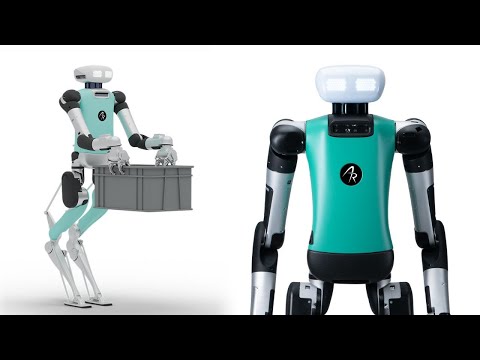
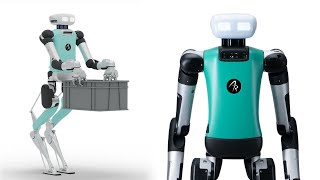
Digit stands about 5 feet 9 inches and weighs roughly 140 pounds. Its current public product page lists a 35-pound carrying capacity and four-hour battery life. It has interchangeable end effectors, autonomous charging, dynamic balance, and a set of industrial safety components that has expanded through real deployment experience.
Thirty-five pounds is useful for common totes and containers, but it is not a universal lifting specification. A robot may safely carry one weight close to its body and far less at full reach. Grasp geometry, object rigidity, center of mass, walking speed, turning, floor condition, duty cycle, and safe stopping all shape the usable envelope.
This is where the humanoid image can mislead. Digit has arms and legs, but it is not a mechanical person with a human job description. It is an industrial system with a validated task envelope. Good deployment engineering makes that envelope explicit and chooses a workflow that stays inside it.
Four hours only matters if charging disappears
Agility says Digit can operate for up to four hours and dock autonomously at a charging station. That is a meaningful improvement over a robot that requires a technician to swap batteries, but nominal runtime is not productive runtime.
A continuous-shift claim depends on the ratio between work and charge, the number and location of docks, travel to the dock, queueing between robots, charger faults, temperature, battery health, payload, walking distance, and the ability to resume the workflow cleanly. If a robot works for four hours and spends the next four charging, the fleet plan looks very different from a system that takes frequent short charges during natural process gaps.
The right metric is completed units per shift at the promised service level. Charging should become an operational background process, not a surprise that appears after the pilot. Arc can help schedule and monitor that process, but the facility still needs electrical capacity, access rules, recovery procedures, and enough fleet redundancy to keep the workflow moving.
Arc is part of the product
Digit without Arc is an incomplete picture. Arc maps the facility, defines workflows, assigns tasks, monitors robot status, reports uptime and throughput, tracks incidents, connects support, and integrates with warehouse, execution, and manufacturing systems. It can also coordinate with AMRs from companies including MiR and Zebra Robotics.
That software is what turns several walking machines into an automation system. It decides when work begins, where a container should go, how the robot interacts with another machine, and what an operator sees when something fails. Agility's deployment process connects each robot to the customer's network, creates the work-area map, defines pickup and placement locations, and brings the workflow under Arc control.
Arc also introduces ordinary enterprise obligations. Cloud connectivity needs security review. Roles and permissions need ownership. APIs need versioning and testing. Metrics need definitions. Outage behavior needs a plan. Data retention, remote access, incident logs, software updates, and support escalation all belong in the procurement scope.
The robot attracts the camera. The fleet software carries much of the operational responsibility.
Workcells are an honest limitation
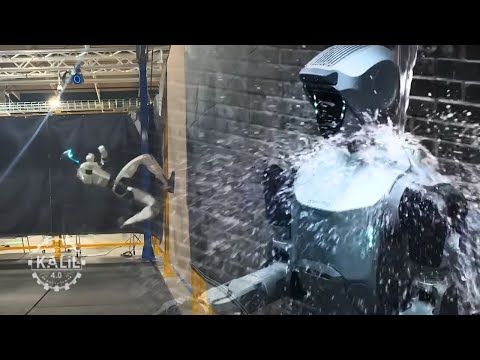
Current Digit deployments operate in controlled or segregated work areas. Agility's own 2026 material is unusually direct about this. During an on-site proof of concept, the workflow is cordoned off. The company says that today humanoids and people still need separation, and that moving beyond this barrier is a central goal for Digit v5.
That honesty helps. A fenced or segregated cell is not a failure if the workflow produces value. Traditional industrial automation has generated enormous productivity inside protected work areas. The problem comes when footage or phrases such as works alongside people make the separation invisible.
A current-generation Digit may operate in a facility full of people while still being separated during motion. It may hand work into a shared process without sharing the same dynamic space. Buyers need the actual safety concept, not the emotional impression created by a humanoid body.
Agility says Digit workcells have passed field inspections from OSHA-recognized Nationally Recognized Test Laboratories. That is a substantial deployment milestone. The company also stresses that the inspection is site-specific. It proves a repeatable path to a compliant workcell, not blanket permission to place the robot anywhere.
Digit v5 is really a safety story
Agility is preparing Digit v5 as its next commercial generation. The headline feature is not a more expressive face or a more acrobatic walk. It is cooperative safety: the ability to operate in dynamic industrial spaces with people at a safe distance without relying on fixed barriers.
The company describes a safety architecture that includes onboard safe human detection, NVIDIA IGX Thor, work with NVIDIA Halos, functional-safety components, and continued standards development. Agility is also involved in efforts around emerging standards for dynamically stable industrial mobile robots.
This is one of the hardest problems in the category. A stationary robot arm can stop and stay still. A biped must remain balanced, manage momentum, account for a possible fall, protect a carried object, and respond safely if perception or its main controller fails. Cooperative operation depends on detection range, stopping distance, speed, payload, approach direction, floor friction, occlusion, and the reliability of the entire safety chain.
Digit v5 should therefore be evaluated as a new generation, not as a cosmetic upgrade. Current deployment data strengthens confidence in Agility's engineering process, but the new safety concept still needs generation-specific validation in the task and facility where it will be used.
RoboFab is capacity, not output
Agility built RoboFab in Salem, Oregon, as a dedicated humanoid manufacturing facility designed to support up to 10,000 robots annually. It has also opened a 60,000-square-foot Fremont site focused on physical AI development and field operations. The company says about 75 percent of Digit parts are sourced within the United States.
These investments make Agility's scale story more credible. It owns a facility, has developed a supply chain, and is preparing a product intended for repeat manufacturing. The designed capacity figure still needs the right label. A factory capable of supporting 10,000 units is not a report that 10,000 units are currently leaving the line.
The same discipline applies to orders. Agility says it has secured more than $300 million of multi-year Digit v5 orders, subject to contractual milestones, with a pipeline of more than 30 customers. That is meaningful demand. It is not the same as delivered robots, recognized revenue, or accepted production systems.
The proposed public listing could supply substantial capital for the ramp, but the transaction remains subject to approvals and closing conditions. For the product buyer, manufacturing yield, delivery cadence, spare-parts availability, service coverage, and field reliability will matter more than factory capacity or transaction headlines.
RaaS changes the procurement conversation
Agility offers an ongoing Robots-as-a-Service path after its Customer Acceleration Program. Toyota and GXO have publicly described RaaS agreements. The model can bundle the robot, Arc, software updates, maintenance, technical support, and monitoring into an operating expense rather than a large equipment purchase.
That can make sense for fast-changing hardware. The provider remains responsible for keeping the system useful, and the customer avoids owning a machine that may be superseded by a new generation. It can also align payment with deployment scale and performance.
RaaS does not make the robot cheap by definition. Agility publishes no standard subscription rate, and the familiar claim that Digit costs about $250,000 is not a current official price. A contract must explain minimum term, included operating hours, service levels, availability guarantees, software, support, replacement units, damage, early termination, upgrades, data rights, and what happens when a workflow fails to meet its target.
The relevant comparison is total cost per successful unit moved, not robot price divided by months.
The hidden cost is the workflow
Digit is designed to enter human-scale buildings without a complete structural redesign. That does not mean deployment is infrastructure-free. Agility's own process describes mapping, Wi-Fi and cybersecurity work, Arc connection, workflow definition, cordoned pilots, integration with other automation, customer training, change management, and on-site engineering adjustments.
Containers may need consistent grasp surfaces. Conveyors may need predictable presentation. AMRs need reliable arrival and handoff signals. Charging docks need space and power. The workcell needs protective design and controlled access. Operators need to know what to do after a failed grasp, a network loss, or a robot stop.
The best business case includes those costs from the beginning. A humanoid may reduce hard structural changes compared with fixed automation, yet still require careful process engineering. Flexibility is not the absence of integration. It is the ability to reuse the same platform across more than one well-engineered task.
Workers see the exceptions first
The people who already perform the work know where the neat process map is wrong. They know which tote bows under load, which label catches the light, which aisle fills with packaging, which conveyor jams after lunch, and which handoff depends on a shouted warning that never entered the official procedure.
Those details belong in the Digit evaluation. Workers should help select the task, identify hazards, design recovery, review the robot's signals, and judge whether the new workflow actually reduces strain. They should know whether the purpose is ergonomic improvement, labor-gap coverage, throughput, or a combination.
A robot can remove repetitive lifting while creating new monitoring, troubleshooting, and queue-clearing work. That may still be a good trade, but it needs to be measured. Human-centered automation should improve the whole job, not merely transfer the awkward parts to somebody standing beside the workcell.
What buyers should ask to see
Start with the operational numbers: completed units per hour, uptime, mean time between incidents, intervention frequency, mean recovery time, failed grasps, item damage, safety stops, charging time, maintenance hours, remote-support use, and operator-to-robot ratio. Ask for distributions and worst shifts, not only averages.
Then ask what is included. Does uptime exclude scheduled charging? Does an intervention count when an operator clears the conveyor rather than touches the robot? Are aborted cycles removed from throughput? Does a recovered failure count as success? How many days were omitted because the workcell was unavailable?
Finally, make the evidence generation-specific. Current Digit data should not automatically stand in for Digit v5. The safety architecture, end effector, compute, autonomy software, charging, and service process may change. A buyer can value Agility's accumulated experience while still requiring the delivered generation to pass its own acceptance test.
The WhatAI view
Digit is the strongest answer to a simple question: has a humanoid performed enough paid, repetitive work to deserve an industrial conversation? More than 100,000 tote moves at GXO, commercial RaaS agreements, site safety inspections, Arc integration, and expansion across manufacturing and logistics make the answer yes.
That answer should not be stretched into a claim that general-purpose humanoid labor has arrived. Digit's current success is narrow by design. The objects are known. The routes are mapped. The work areas are controlled. The workflows are integrated and supported. Generality lives in the possibility that the same platform can learn the next bounded task, not in the ability to perform every human job today.
Agility's next test is ambitious. It must launch Digit v5, validate cooperative safety, convert contracted demand into working fleets, scale manufacturing and service, and preserve the reliability earned inside segregated workcells. The company has more operational evidence than most rivals and a credible software, safety, and production stack. It also has a new generation carrying promises that current hardware has not yet fulfilled.
For a large operator with the right container flow, enough volume, and an appetite for measured deployment, Digit has earned a place on the shortlist. For everyone else, the best signal is not how human the robot looks. It is whether Agility keeps publishing the boring numbers. In industrial automation, boring is what belief looks like after the cameras leave.
Agility Robotics Digit is a bipedal industrial robot for repetitive material movement in logistics, distribution, and manufacturing. Digit works with the Arc fleet platform and is commercially deployed through custom enterprise and Robots-as-a-Service agreements.
Digit Features, Deployments, Price, Safety, and Limits
Digit carries up to 35 pounds, runs for up to four hours, docks autonomously for charging, and coordinates with AMRs and enterprise systems through Arc. Agility reports more than 100,000 totes moved at GXO, while the next-generation Digit v5 is being prepared for commercial launch.
Discuss Agility Robotics Digit
Share firsthand Digit deployment data, safety observations, Arc integration experience, intervention rates, throughput, support requirements, and commercial terms. Identify the Digit generation, task, facility, workcell design, autonomy mode, and measurement period so readers can compare evidence accurately.
About Agility Robotics Digit
Agility Robotics Digit is a commercially deployed bipedal mobile manipulation robot for repetitive material handling in manufacturing, logistics, and distribution facilities. The current public specification lists a 35-pound carrying capacity and four-hour battery life, with autonomous docking for charging. Digit works with Agility Arc, a cloud platform for mapping facilities, assigning workflows, monitoring fleets, and integrating with AMRs and enterprise systems. Agility reports more than 100,000 totes moved at GXO, more than 65,000 operating hours across deployment commitments at nine customer facilities, and active deployments with GXO, Schaeffler, Toyota Motor Manufacturing Canada, and Mercado Libre. Current deployments use controlled or segregated work areas. The forthcoming Digit v5 is designed for cooperative safety around people. Pricing is custom through enterprise programs and Robots-as-a-Service.
Use Cases
Key Features
- ✓ Bipedal mobility for human-designed industrial spaces
- ✓ 35-pound carrying capacity
- ✓ Four-hour battery life
- ✓ Autonomous docking onto a charging station
- ✓ Interchangeable end effectors
- ✓ Autonomous tote handling and material movement
- ✓ Dynamic balance while walking with payloads
- ✓ Safety PLC and on-robot emergency stop
- ✓ Category 1 stop and FSoE safety communication
- ✓ Arc cloud fleet management platform
- ✓ Facility mapping and workflow definition
- ✓ Live uptime, throughput, incident, and status metrics
- ✓ WMS, WES, MES, PLC, and webhook integration
- ✓ AMR coordination with MiR and Zebra Robotics
- ✓ Remote monitoring, support, and maintenance
- ✓ Physical AI training with simulation and demonstration
- ✓ Digit v5 cooperative-safety roadmap
Pricing
Customer Acceleration
Custom
- • Workflow assessment and solution setup
- • On-site proof of concept
- • Ninety days of operational data
Robotics as a Service
Custom subscription
- • Digit robot deployment
- • Arc fleet software
- • Maintenance, updates, and support
Digit v5 Fleet
Custom; launch pending
- • Next-generation commercial hardware
- • Designed for cooperative safety
- • Public standard price unavailable
Pricing varies by plan and region — see current pricing.
Plan features change — last updated: 2026-08-16.
Details
Tags
Agility Robotics Digit Community Discussions
Explore community discussions. Ask and answer questions on Agility Robotics Digit to grow and learn together.
Agility Robotics Digit Showcase

Agility Robotics Digit — Frequently Asked Questions
What is Agility Robotics Digit?
Digit is a bipedal mobile manipulation robot designed for repetitive physical work in manufacturing, warehousing, logistics, and distribution. It walks through human-designed facilities, carries and manipulates containers, and connects to other automation through Agility Arc.
Is Digit commercially deployed?
Yes. Agility has announced commercial deployments and agreements with GXO, Schaeffler, Toyota Motor Manufacturing Canada, and Mercado Libre. The company reports deployment commitments across nine customer facilities and more than 65,000 operating hours, although customer-level fleet counts and economics are not public.
What work does Digit do today?
Publicly demonstrated and deployed work centers on structured material handling: moving totes, unloading AMRs, placing containers on conveyors, stacking and unstacking, loading carts and racks, automated putwall work, and related manufacturing or logistics flows.
How much can Digit carry?
Agility's current public solution page lists a 35-pound carrying capacity. That figure does not describe every reach, speed, pose, grip, or duty cycle, so buyers should validate the exact payload envelope for their container and task.
How long does Digit's battery last?
Agility lists up to four hours of battery life and autonomous docking onto a charging station. Productive runtime depends on payload, walking distance, speed, charging strategy, idle time, environmental conditions, and the exact workflow.
What is Agility Arc?
Arc is the cloud platform used to deploy and manage Digit fleets. It supports facility mapping, workflow definition, task assignment, robot status, uptime and throughput metrics, alerts, troubleshooting, support, and integration with AMRs, WMS, WES, MES, PLCs, and webhooks.
Can Digit work safely beside people?
Current deployments rely on controlled or segregated work areas and site-specific safety processes. Agility says customer workcells have passed OSHA-recognized NRTL field inspections. The forthcoming Digit v5 is designed for cooperative safety, but that capability remains a product and validation milestone rather than a universal approval for any shared workspace.
What is Digit v5?
Digit v5 is Agility's forthcoming next-generation commercial robot. It is designed to support cooperatively safe operation around people and uses a new safety architecture that includes NVIDIA IGX Thor and NVIDIA Halos work. Public launch timing, full specifications, and standard delivery terms remain limited.
How much does Digit cost?
Agility does not publish a list price. Its deployment process supports custom enterprise evaluation and an ongoing Robots-as-a-Service model that can include robots, Arc, maintenance, software updates, and support. The frequently repeated $250,000 estimate is not an official current price.
Does Digit require a warehouse redesign?
Digit is designed for human-scale aisles and workstations, which can reduce structural retrofits. A real deployment still needs a mapped work area, network and security integration, charging, workflow definition, safety controls, container compatibility, commissioning, training, and operational support.
Sources & References
- Official Digit, Arc, and service overview ↗
- Digit 100,000-tote deployment milestone ↗
- GXO multi-year RaaS agreement ↗
- Toyota Canada commercial agreement ↗
- Mercado Libre commercial agreement ↗
- Agility Arc launch and capabilities ↗
- Digit battery, charging, safety, and integrations ↗
- Digit NRTL field inspection ↗
- Customer Acceleration deployment process ↗
- 2026 deployments, v5, orders, and RoboFab status ↗
Try Agility Robotics Digit
Visit the official website to get started with Agility Robotics Digit today.
Visit Agility Robotics Digit →