Electric Atlas Is Finally an Industrial Product. The Hard Part Is Proving the Shift
Boston Dynamics has published the specifications, started production, committed its first fleets, and built Atlas around service and integration. Buyers still need pricing, task evidence, and a validated operating case.
By WhatAI Editorial Team ·
Atlas finally has a product sheet
For most of its life, Atlas was a research machine famous for doing things a commercial robot would never be asked to do. It ran, jumped, danced, recovered from impacts, and turned whole-body control into a public spectacle. The electric Atlas introduced in 2024 moved the platform toward industry, but it still left a basic question unanswered: was Boston Dynamics building a product or another extraordinary laboratory?
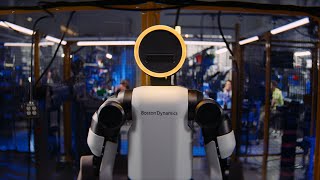
The 2026 Atlas answers that question more clearly than any humanoid announcement before it. Boston Dynamics has published a proper industrial specification. Atlas is 1.9 meters tall, weighs 90 kilograms, has 56 degrees of freedom, reaches 2.3 meters, lifts 50 kilograms momentarily and 30 kilograms repeatedly, carries an IP67 rating, operates from minus 20 to 40 degrees Celsius, and runs for a listed four hours. It can exchange its own battery in under three minutes. Its limbs are designed to be replaced in the field in under five minutes. Orbit connects the fleet to manufacturing and warehouse systems.
These details matter because they make Atlas discussable as equipment. Instant and sustained load are separated. Runtime and swap time are distinct. Ingress protection and temperature limits are stated. Serviceability is designed into the body. None of this proves that Atlas will deliver value in a particular factory, but it gives operators something more useful than a video: a starting envelope for engineering questions.
The product is not generally available
Boston Dynamics began production in 2026, and the company said all deployments for that year were committed. Fleets were scheduled for Hyundai's Robotics Metaplant Application Center and Google DeepMind. Additional customers were planned from 2027, while the Atlas product page invites qualified prospects to begin a direct conversation. This is an enterprise launch through selected relationships, not a public sales release.
The distinction becomes especially important inside Hyundai. RMAC is an application center where robotics work can be developed and validated. It is not the same milestone as robots performing vehicle-production tasks at Hyundai Motor Group Metaplant America. In July 2026, Hyundai said it plans to begin Atlas deployment at HMGMA in 2028 for parts sequencing, subject to technology validation, operational readiness, and business requirements. Component assembly may follow by 2030 if the earlier work succeeds.
That timeline does not diminish the 2026 fleet. It explains its purpose. The first commercial Atlas robots are part of the machinery needed to turn an industrial design into reliable applications. They will generate field data, expose service needs, train task behaviors, and let Hyundai and Boston Dynamics understand where humanoid mobility genuinely adds value. Buyers should read committed fleets as the beginning of productization, not proof that a mature installed base already exists.
Strength needs two numbers
The headline 110-pound lift is real, but it is the instant rating. Atlas is listed for a sustained 30-kilogram, or 66-pound, capacity. Boston Dynamics deserves credit for publishing both. Industrial work is mostly repetition, and repetition changes the problem. A robot may be able to raise a heavy object once while close to its body and still be unsuitable for moving it hundreds of times at full reach.
Load capacity depends on posture, reach, object shape, grasp, acceleration, floor contact, balance, duty cycle, and temperature. A compact refrigerator weighing 23 kilograms, which Hyundai cited in a July demonstration, is not equivalent to a loose part, a long panel, or a deformable bag with the same mass. The object can block cameras, shift in the hands, or change the robot's center of mass while it walks.
For buyers, the useful question is not whether Atlas can lift the item. It is whether Atlas can pick it from the real source, carry it through the real path, place it within the real tolerance, recover from variation, and repeat the cycle for the required hours without excessive intervention or wear. The 30-kilogram sustained figure is the first filter. The application test defines the true envelope.
The battery swap is the operational idea
Four hours sounds short beside an industrial shift. Atlas approaches that limit by changing the operating model instead of promising a giant battery. It can navigate to a station, exchange its own battery in under three minutes, and return to work. The station accepts standard 110-volt or 220-volt input, which may reduce facility changes. In principle, a robot can operate around the clock while batteries charge outside the body.
This is one of Atlas' most commercially thoughtful features. A manual swap ties uptime to a worker. Plug-in charging creates a long idle period. A larger onboard battery adds mass and may make every movement less efficient. Autonomous exchange allows a smaller working battery and treats energy as a fleet resource.
The system still needs validation. A three-minute mechanical swap does not include every trip to the station, queue, failed alignment, battery check, station fault, or post-swap verification. Continuous work requires enough charged batteries, enough station capacity, clear travel paths, predictable demand, and a recovery plan when the exchange does not complete. Battery health also becomes an operational inventory problem. The idea is strong because it exposes those variables to planning rather than hiding them behind an optimistic runtime.
Range of motion is not task dexterity
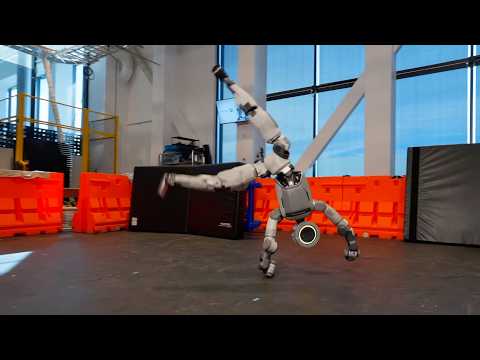
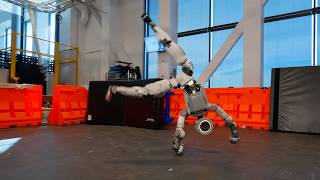
Atlas has 56 degrees of freedom and fully rotational joints. Its movements do not have to mimic the limitations of a human skeleton. The robot can rotate limbs and reposition its body in ways that help it work around equipment, maintain sight lines, or avoid an unnecessary turn. This is one reason Atlas demonstrations can look slightly uncanny: the form is human-scale, but the motion is designed for the machine.
That freedom can simplify an industrial cell. A worker may need to step around a cart because their joints have natural limits. Atlas may be able to reverse a joint and continue. A continuous range can create more options for reaching, carrying, and recovery. It can also create motion that nearby people do not intuitively predict. Human expectations are part of safety. A posture that is mechanically valid may still surprise someone sharing the space.
Dexterity is therefore more than joint count. Atlas must perceive the object, choose a stable contact, regulate force, coordinate both hands, maintain balance, respect nearby people, and detect when the task has departed from its expected state. Tactile sensing and a 360-degree camera view improve that foundation. The proof comes through task success, damage, intervention, recovery, and repeated operation, not through the maximum strangeness of a pose.
Orbit may matter more than the robot
A humanoid becomes useful when it joins the operating system of the facility. Boston Dynamics positions Orbit as that connection. Atlas work and fleet metrics can be linked with manufacturing execution systems, warehouse management systems, barcode scanners, RFID, and other systems of record. Operators can assign work, monitor robots, inspect performance, and coordinate fleet behavior. Orbit supports cloud, on-premises, and virtual-machine deployment, along with SSO and permission controls.
This sounds less exciting than 56 degrees of freedom, but it may decide whether Atlas survives enterprise procurement. A factory does not need a robot that knows how to carry a bin but cannot receive the next work order, confirm the correct part, report an exception, or fit inside access governance. Integration determines whether the robot becomes a reliable participant or another isolated automation island.
Orbit also creates the control point for replication. Boston Dynamics says a task learned by one Atlas can be distributed across the fleet. That promise is powerful only if configuration, hardware, environment, software version, and acceptance tests remain compatible. Fleet-wide learning must not become fleet-wide surprise. Enterprises will need staged rollout, task regression, safety revalidation, version records, rollback, and clear authority over updates.
Gemini is a partnership, not the current brain
Boston Dynamics and Google DeepMind announced a research partnership in January 2026. The goal is to combine Atlas' physical intelligence with Gemini Robotics foundation models so humanoids can learn more industrial tasks, understand worksite context, and scale behavior more efficiently. A new Atlas fleet was allocated to the joint effort. The partnership is strategically important. It joins one of the strongest whole-body robotics teams with a frontier AI laboratory focused on embodied models.
It should not be rewritten as Atlas already runs Gemini Robotics everywhere. The announcement described joint research and intended integration. It did not publish a completed commercial model, supported version, task benchmark, safety case, or rollout schedule for customer fleets. Boston Dynamics has an existing robot behavior stack, while Gemini may expand parts of learning, reasoning, perception, or generalization as the work develops.
This distinction protects the value of the partnership. Foundation models can help reduce the engineering cost of every new application, but physical work has consequences that language benchmarks do not capture. A model must respect force, contact, timing, tool state, balance, people, and facility rules. Research becomes product capability only after it is integrated, validated, versioned, supported, and shown to improve real work without unacceptable risk.
Hyundai gives Atlas a privileged proving ground
Most humanoid companies need to persuade a customer to tolerate an immature robot. Boston Dynamics is majority owned by Hyundai, whose manufacturing operations provide tasks, facilities, engineers, supply-chain expertise, and a reason to invest through the learning period. Hyundai Mobis is supplying Atlas actuators, while Hyundai is developing a broader robotics manufacturing and deployment strategy.
This relationship can shorten the distance between design and feedback. Atlas can be tested against real part sequencing, carts, containers, workstations, shift patterns, and industrial systems. Failures can reach the robot team quickly. Components can be redesigned with automotive production in mind. Boston Dynamics can also draw on its experience deploying more than two thousand Spot and Stretch robots, which gives it a service and customer-operations history few humanoid startups possess.
A close parent customer can also make evidence harder to interpret. Internal commitment is not the same as demand from unrelated companies. A task selected inside Hyundai may be well matched to the product. Support may be unusually deep. Economics can be viewed strategically rather than as a normal customer contract. Atlas will become easier to evaluate when additional enterprises publish sustained task outcomes under ordinary commercial terms.
A World Cup performance is not a factory shift
In July 2026, the production version of Atlas appeared live at a FIFA World Cup match. It entered the stadium, performed football-inspired celebrations, and delivered the ceremonial match ball. Hyundai described the event as the first public demonstration of the production version's real-world movement capabilities. Boston Dynamics used human reference and reinforcement learning in simulation to create the motion.
The performance matters. A global live event has no convenient reset. The robot had to move predictably, on time, in a new high-pressure setting, before a large crowd. It showed that the production body can translate demanding whole-body behavior out of the private lab. It also made Atlas visible as a finished-looking machine rather than an exposed engineering prototype.
It does not provide industrial uptime, cycle-time, load, intervention, or maintenance evidence. A short rehearsed event and a repeated factory application answer different questions. Boston Dynamics itself has argued that useful humanoids must move beyond flashy demonstrations. Atlas should be credited for the event it completed and evaluated through the work it is being sold to perform.
Fenceless is a design claim, not a universal permission
Boston Dynamics says Atlas uses onboard detection for people and vehicles, allowing fenceless guarding in which the robot pauses when someone enters a defined radius. Padding and reduced pinch geometry add further protection. This is the right direction for flexible material handling because a humanoid loses much of its advantage if every new task requires a permanent cage.
No product feature can declare an application safe by itself. Detection has range, latency, blind spots, lighting constraints, and failure modes. A person may approach while Atlas is carrying 30 kilograms. A vehicle may enter from behind an obstruction. A dropped load can travel beyond the robot's stopping radius. A recovery movement after a fault may differ from normal operation. Local regulations and the integrator's risk assessment still apply.
Fenceless deployment should therefore be treated as an application outcome. Validate detection from every relevant direction, with representative clothing, vehicles, occlusion, speeds, loads, networks, and faults. Measure stop distance and behavior after the area clears. Define emergency access and restart authority. Atlas may make a fence unnecessary for some workflows. The evidence and controls have to earn that conclusion.
Serviceability is Boston Dynamics' real edge
The most persuasive Atlas specification may be that a limb can be replaced in the field in under five minutes. That physical exchange will not always mean the robot returns to production five minutes after failure. Diagnosis, safe isolation, spare availability, calibration, software checks, and acceptance still take time. Yet the design intent matters. Boston Dynamics is treating maintenance as a property of the product rather than a problem for the first customer to discover.
IP67 protection allows the robot to be sprayed or wiped down. The broad temperature range expands where it can work. The number of unique motors and parts has been reduced. Components were designed around automotive supply chains. Onsite maintenance training and certification are planned. Orbit adds diagnostics and fleet oversight. These choices reflect lessons from shipping Spot and Stretch into facilities where downtime has a cost.
Humanoid startups often describe autonomy as the main barrier. Enterprises know that maintenance can be the barrier that kills the business case. A robot may achieve 98 percent task success and still fail economically if the remaining faults require specialist travel, long part lead times, or difficult calibration. Atlas has not yet published enough field data to prove its service model, but it has been designed by a company that understands why the model exists.
Pricing remains unknown
Atlas has no public list price. The widely repeated estimate of roughly 130,000 to 150,000 dollars is not an official Boston Dynamics offer. The company has discussed return on investment and expects many customers to see value within the first two years, but an ROI target is not a robot price. It includes task selection, utilization, avoided labor or injury, integration, support, uptime, and operating cost.
The commercial package may matter more than unit cost. Does the agreement include application engineering, Orbit, battery stations, batteries, training, onsite support, spare limbs, updates, travel, and warranty? Is Atlas bought, leased, or supplied through a service arrangement? Who owns task data and trained skills? What happens if the task never reaches acceptance? How are software changes approved?
A qualified buyer should budget unknown hardware plus the full program. Facilities, safety, IT, integration, worker consultation, supervision, batteries, spares, maintenance, insurance, downtime, support, and exit risk belong in the model. Atlas could cost more than a cheaper humanoid and produce better economics if it deploys faster and stays operational. Price transparency will still be necessary before anyone outside the first partners can test that proposition.
The WhatAI verdict
Electric Atlas is the most complete industrial product Boston Dynamics has ever built around its humanoid research. The specification is unusually concrete. The robot separates instant from sustained lift, states battery and swap performance, publishes environmental limits, includes tactile and panoramic sensing, connects to enterprise systems through Orbit, and treats field repair as a design requirement. Production has begun, and the first fleets have clear development partners.
The restraint belongs in the deployment story. All 2026 units were committed. General pricing is private. Hyundai's RMAC work is not the same as vehicle-production deployment, which Hyundai currently places from 2028, subject to validation. Gemini Robotics is an integration research partnership, not a completed brain in every robot. Fenceless guarding requires site evidence. A World Cup performance shows controlled mobility, not factory productivity.
Atlas deserves attention because the company is solving the unglamorous parts alongside the athletic ones: batteries, swapping, ingress protection, integration, service, parts, diagnostics, training, and support. Those systems are what turn impressive movement into an operating fleet. Boston Dynamics now has to publish what happens when they meet a real task over months.
For a qualified manufacturer with a heavy, flexible workflow and patience for an early-adopter partnership, Atlas may be one of the strongest humanoid conversations available. For everyone else, it remains a product to evaluate through evidence rather than a machine they can simply order. The robot has left the research era. The market is still being built around it.
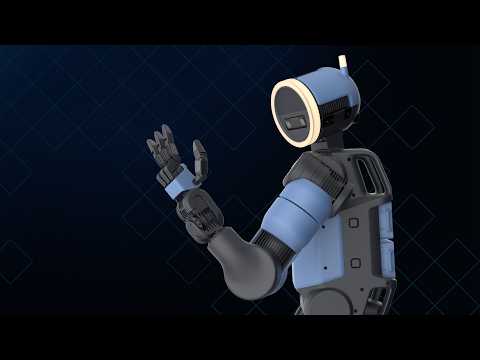
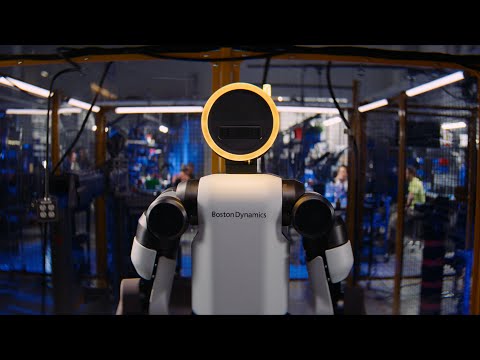
Electric Atlas is Boston Dynamics' production-version industrial humanoid. Its 56 degrees of freedom, continuous joint rotation, 30 kg sustained lift, 50 kg instant lift, 2.3 m reach, four-hour battery, autonomous battery swap, tactile sensing, 360-degree vision, and IP67 design target demanding factory and warehouse work.
Can Companies Buy Atlas in 2026?
Boston Dynamics began producing Atlas in 2026, but all deployments for the year were committed to Hyundai's Robotics Metaplant Application Center and Google DeepMind. The company is speaking with qualified prospects and selected early adopters for later expansion. There is no public list price, online order process, standard enterprise package, or fixed general-availability date.
What Makes Atlas Different?
Atlas combines unusually strong and mobile hardware with Boston Dynamics' industrial deployment experience, autonomous battery swapping, fast field service, and Orbit integration. A research partnership with Google DeepMind aims to add Gemini Robotics foundation models, but current commercial readiness should be judged through task-level field results, support, safety validation, and economics rather than the partnership alone.
About Boston Dynamics Electric Atlas
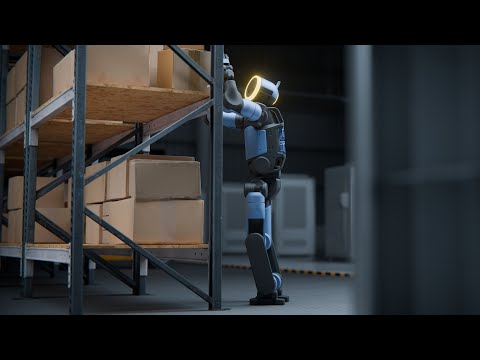
Boston Dynamics Electric Atlas is a production-version industrial humanoid designed for material handling, part sequencing, machine tending, order fulfillment, and other demanding factory or warehouse tasks. Atlas is 1.9 m tall, weighs 90 kg, has 56 degrees of freedom, reaches 2.3 m, lifts up to 50 kg momentarily and 30 kg repeatedly, and provides a listed four-hour battery life. It can autonomously exchange its battery in under three minutes, uses tactile sensing and a 360-degree camera view, carries an IP67 rating, and operates from -20 to 40 degrees Celsius. Orbit connects Atlas with MES, WMS, barcode, RFID, fleet, and workflow systems. Production began in 2026, with that year's fleets committed to Hyundai's Robotics Metaplant Application Center and Google DeepMind. Pricing is custom and undisclosed, while broader early-adopter availability remains limited.
Use Cases
Key Features
- ✓ Fully electric enterprise humanoid architecture
- ✓ 56 degrees of freedom with continuous joint rotation
- ✓ Instant weight capacity of 50 kg
- ✓ Sustained weight capacity of 30 kg
- ✓ Height of 1.9 m and reach of 2.3 m
- ✓ Robot weight of 90 kg
- ✓ Four-hour listed battery life
- ✓ Autonomous battery exchange in under three minutes
- ✓ Tactile sensing and 360-degree camera view
- ✓ IP67 protection rating
- ✓ Operating range from -20 to 40 degrees Celsius
- ✓ Autonomous, teleoperated, VR, and tablet control modes
- ✓ Human detection and fenceless-guarding design
- ✓ Orbit fleet management and workflow orchestration
- ✓ MES, WMS, barcode, and RFID integration
- ✓ Field-replaceable limbs in under five minutes
- ✓ Fleet-wide task replication
- ✓ Google DeepMind Gemini Robotics research partnership
Pricing
2026 committed fleets
Custom
- • Allocated to Hyundai RMAC and DeepMind
- • No general 2026 availability
- • Commercial terms undisclosed
Selected early adopters
Contact sales
- • Use-case qualification required
- • Application training and integration
- • Expansion planned after initial fleets
General availability
Not announced
- • No public list price
- • No standard order package
- • No fixed delivery schedule
Pricing varies by plan and region — see current pricing.
Plan features change — last updated: 2026-08-16.
Details
Tags
Boston Dynamics Electric Atlas Community Discussions
Explore community discussions. Ask and answer questions on Boston Dynamics Electric Atlas to grow and learn together.
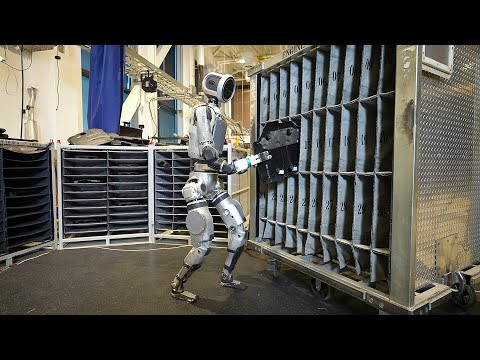
Boston Dynamics Electric Atlas Showcase
Boston Dynamics Electric Atlas — Frequently Asked Questions
Can you buy Boston Dynamics Atlas now?
Atlas is an enterprise product with selected access, not a public retail purchase. Boston Dynamics said all 2026 deployments were committed to Hyundai's RMAC and Google DeepMind. Qualified prospects can contact sales for later early-adopter opportunities.
How much does Electric Atlas cost?
Boston Dynamics has not published a list price, lease rate, robot-service fee, or standard package. Estimates such as $130,000 to $150,000 are not verified Boston Dynamics pricing and should not be used as commercial terms.
How much can Atlas lift?
Boston Dynamics lists an instant weight capacity of 50 kg and a sustained capacity of 30 kg. Buyers should validate the real task envelope because reach, posture, speed, object shape, grasp, repetition, and balance affect usable capacity.
How long does the Atlas battery last?
Boston Dynamics lists four hours during typical use. Atlas can navigate to a charging station and exchange its own battery in under three minutes. Continuous operation still depends on swap reliability, spare charged batteries, station capacity, task rhythm, and maintenance.
Does Atlas use Google Gemini Robotics?
Boston Dynamics and Google DeepMind announced joint research intended to integrate Gemini Robotics foundation models with Atlas. The partnership should not be described as proof that every current Atlas deployment already runs a completed Gemini-based autonomy stack.
What can Atlas do in a factory?
Boston Dynamics targets material handling, part sequencing, machine tending, and order fulfillment. Atlas can work autonomously, through teleoperation, or with VR and tablet controls, while Orbit links work and fleet data to MES, WMS, barcode, and RFID systems.
Can Atlas work without safety fencing?
Boston Dynamics says Atlas uses human and vehicle detection to support fenceless guarding, pausing when someone enters a defined radius. Whether a particular site can operate without physical fencing depends on its task, risk assessment, validation, local requirements, system configuration, and integrator approval.
When will Hyundai use Atlas in vehicle production?
Atlas fleets were scheduled for Hyundai's RMAC in 2026 for application development. Hyundai said in July 2026 that deployment at Hyundai Motor Group Metaplant America is planned to begin in 2028 with parts sequencing, subject to technology validation, operational readiness, and business requirements.
Sources & References
Try Boston Dynamics Electric Atlas
Visit the official website to get started with Boston Dynamics Electric Atlas today.
Visit Boston Dynamics Electric Atlas →