Locus Robotics Expands HelloFresh Chilled SKU Capacity Fivefold
HelloFresh grew chilled capacity with 39 Origin robots as Locus Array and Nexera broaden the path to autonomous fulfillment.
By WhatAI Editorial Team ·
Locus Robotics has pushed its established collaborative AMR platform into a demanding new operating environment: continuous chilled fulfillment. In a June 23 customer update, the company said a customized Locus Origin deployment helped HelloFresh expand temperature-controlled capacity from 100 SKUs to 500. The project began with 13 robots at the Factor brand in July 2025 and expanded within three months with 26 more, taking the disclosed fleet to 39 units.
The [HelloFresh deployment](https://locusrobotics.com/news/locus-robotics-hellofresh-temperature-control) is a stronger buying signal than a general claim that warehouse robots are flexible. Cold storage affects batteries, motors, charging, condensation, materials, sensors, worker clothing, and maintenance. Locus says it developed a heated motor enhancement and related charging modifications so Origin robots could remain and charge inside the chilled environment. That turns the story into a useful example of application engineering, not just fleet expansion.
Locus reported an average mission time of three minutes and 36 seconds from order induction to box drop-off during the initial Factor deployment. It also said the robots support about 12,000 square feet of chilled space across two high-speed meal-kit picking lines. These are company and customer-reported figures, so they should be interpreted within the specific process. They do not automatically predict mission time, throughput, or return in another facility with different travel, orders, temperatures, station balance, or integration.
### Why this cold-storage result matters
A refrigerated warehouse is not simply a normal building with a lower thermostat. Electrochemical performance can change in the cold, charging behaviour can become less predictable, lubricants and materials can respond differently, and condensation can appear when equipment crosses temperature zones. Workers may wear gloves and bulky personal protective equipment that affects touchscreen use, barcode handling, visibility, and movement. A practical automation design has to consider all of these interactions.
HelloFresh's operating model adds further pressure. Meal-kit fulfillment combines high variety, short shelf life, precise order content, temperature control, and time-sensitive outbound operations. Increasing the number of chilled SKUs fivefold can create more pick faces, routes, replenishment activity, and order combinations. The value of the robot fleet is therefore not just the number of containers it moves. It is whether the complete operation can offer more customer choice while preserving accuracy, speed, and cold-chain control.
The project also demonstrates a staged adoption pattern. HelloFresh initially considered a larger integrated automation design involving two other providers but began with a focused Locus proof of concept. Locus says much of the testing was completed virtually and final validation on the floor took only a few days. After the 13-robot pilot produced the required consistency, HelloFresh added 26 robots and planned support for another brand.
Warehouse teams should not copy the timeline without examining readiness. Rapid final validation is credible only when process mapping, item data, software configuration, network design, testing, safety, training, and hardware preparation have already been completed. The useful lesson is to isolate a valuable flow, define success, test it in the real temperature zone, and expand after the evidence is stable.
### Locus is now a three-robot platform
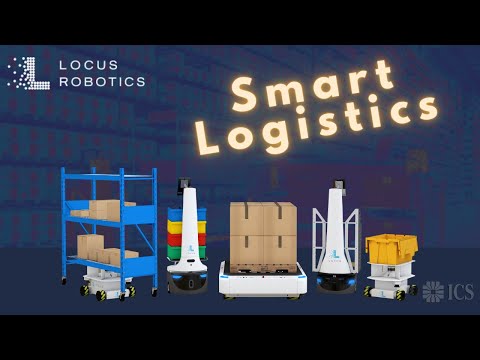
The source record previously framed Locus mainly as collaborative picking robots. That description is now incomplete. [LocusONE](https://locusrobotics.com/locusone) coordinates Locus Origin, Locus Vector, and Locus Array as one fleet across each and case picking, putaway, replenishment, autonomous fulfillment, parts-to-line routes, dunnage, milk runs, point-to-point transport, counting, and other tasks. Locus says the platform can support one thousand or more robots in facilities of one million square feet or more.
Locus Origin remains the familiar collaborative platform. It is configured with shelves, totes, bins, or shipping boxes and works with associates to reduce walking and direct picking or putaway. The current product page lists an 80-pound, or 36-kilogram, payload, 14 hours per charge, and a 50-minute full charge. Those specifications are useful for screening, but the real duty cycle depends on travel, payload, stops, temperature, opportunity charging, network, and the balance between robot and worker tasks.
[Locus Vector](https://locusrobotics.com/locusone/fleet/locus-vector-material-handling-robot) addresses heavier material movement. Locus lists a payload up to 600 pounds, or 272 kilograms, omnidirectional mobility, eight to ten hours per charge, and about 60 minutes for a full charge. The robot can support shelf or rack movement, case and each picking, putaway, parts-to-line work, dunnage, milk runs, and point-to-point moves. Buyers still need to qualify the full carried configuration, including rack strength, load stability, center of gravity, clearance, floors, slopes, turns, braking, and access to chargers.
[Locus Array](https://locusrobotics.com/locusone/fleet/locus-array) is the biggest strategic change. It is a mobile manipulation system designed to move directly to stationary inventory and perform fulfillment tasks within the aisle. Locus calls this Robots-to-Goods. Array combines autonomous navigation, AI vision, real-time decisions, and a robotic arm to pick, put away, induct, drop off, and slot items with minimal human intervention. Each robot manages six order totes in parallel, according to the product page.
This shifts Locus from a platform that mainly improves human productivity into one that also aims to automate the manipulation itself. It does not make Origin obsolete. Many warehouses will continue to need associates for items Array cannot grasp, tasks that require judgment, oversized goods, exceptions, and processes where collaborative automation has the better cost or flexibility. LocusONE is intended to pass work among different robot types so a mixed fleet can cover more of the operation.
### Nexera expands the Array grasping roadmap
On May 19, Locus [announced the acquisition of Nexera Robotics](https://locusrobotics.com/news/locus-robotics-nexera-robotics-acquisition), a Vancouver company focused on robotic grasping. The acquired end effector uses a soft membrane designed to envelop items rather than depending only on airtight suction. Locus says the technology is intended to handle a broader range of shapes, textures, materials, porosity, weights, deformable packages, textiles, perforated polybags, and irregular goods.
This addresses one of the central limits in autonomous item picking. A warehouse may contain millions of nominal SKUs, but robots experience them as physical objects with damaged edges, loose flaps, reflective film, soft fabric, holes, shifting contents, dust, inconsistent presentation, and clutter. A system can have excellent vision and navigation yet fail commercially if its gripper cannot acquire enough of the item population at the required speed and reliability.
Locus said Nexera's technology had been developed over five years and validated through thousands of hours and tens of millions of picks. It also said integration into Array would begin after the acquisition, with availability expected in the following months. Buyers must distinguish prior gripper validation from production performance on Array. Ask which end effector is included in the proposed unit, what software version it uses, when it became generally available, and what item and throughput evidence applies to that exact configuration.
The current Array page names the Nexera-derived technology NeuraGrasp and describes a broader SKU range than suction-only approaches. The right evaluation is a structured item trial. Use representative boxes, pouches, blister packs, polybags, fabric, mesh, porous items, curved products, deformed packaging, loose lids, small items, cluttered bins, low-stock pick faces, damaged goods, and common presentation errors. Record first-attempt success, cycle time, drops, damage, intervention, false recognition, and recovery.
### The choice is now P2G, R2G, or a coordinated mix
Locus's portfolio now spans two operating models. In person-to-goods workflows, Origin or Vector works with associates, removes travel, presents instructions, and moves completed work. In robots-to-goods workflows, Array travels to the inventory and performs the pick or putaway itself. A mixed model can route eligible items to Array and send exceptions or unsupported tasks to Origin, Vector, or a person.
This is different from a fixed goods-to-person system that moves inventory through dense storage and conveyors to stationary workstations. Fixed systems can offer high performance and storage density in stable, engineered conditions. Mobile approaches may require less structural change and can scale by adding robots, but they depend more heavily on aisle traffic, wireless coverage, racking presentation, charging, and fleet orchestration. There is no universally superior model. The right choice depends on building constraints, item profile, throughput, labor, service, capital, growth, and tolerance for change.
A buyer should model each candidate on the same baseline. Include inbound and outbound volume, order lines, units, SKU dimensions and materials, inventory distribution, travel, storage density, replenishment, congestion, exceptions, labor by task, accuracy, space, uptime, temperature, and peak demand. For a mixed Locus design, state which percentage of work each robot handles and what happens when an item, aisle, robot, station, network link, or upstream system is unavailable.
Locus publishes claims that robots can increase warehouse productivity by two to three times, that Origin improves productivity by more than two times, and that Array can reduce manual labor by up to 90 percent. These figures are vendor claims, not universal outcomes. Every contract should translate the proposed design into measurable site criteria. Define whether productivity is lines, units, cases, orders, or completed outbound work per labor hour. Preserve accuracy and service requirements so speed cannot hide additional errors or downstream labor.
### How to evaluate LocusONE as the operating layer
A mixed fleet is only as effective as its orchestration. LocusONE assigns work, coordinates traffic and charging, connects to the WMS, and integrates with other equipment such as sortation or packaging. Buyers should evaluate it as an operational system, not just a dashboard. The important questions are how quickly it responds to changing order priorities, whether it predicts congestion, how it reallocates tasks, how humans handle exceptions, and how performance is explained to supervisors.
Integration testing should cover item, location, inventory, order, task, priority, scan, pick, put, completion, cancellation, shortage, and exception events. Define which system owns each state, what latency is acceptable, how duplicate or missing messages are handled, and how inventory is reconciled. Test delayed WMS messages, poor Wi-Fi, full containers, blocked aisles, unavailable chargers, cancelled orders, failed scans, unreachable items, station outages, and safe recovery after a robot fault.
Cybersecurity and data governance belong in the same review. Confirm network segmentation, identity and access management, encryption, remote support, logging, vulnerability handling, incident response, update control, data retention, export rights, and recovery procedures. Locus has a public Trust Center, but buyers need the controls and contractual commitments that apply to their environment and region.
### The RaaS model removes price-list guessing
The original record contained estimated hardware and monthly prices from non-official sources. Those figures should not be used. Locus does not publish a standard price list and presents Origin, Vector, and Array through Robots-as-a-Service. The model shifts automation from a large upfront capital purchase to a subscription operating expense and includes service, support, and updates. Locus also promotes adding robots for seasonal peaks and returning capacity when demand falls.
RaaS can make a pilot easier to approve, but the total economics still need detailed modelling. Request implementation fees, site charges, robot subscriptions, software, integration, support hours, spare or replacement units, batteries, charging, travel, training, peak units, minimum fleet, minimum term, renewal, price escalation, relocation, damage, insurance, cybersecurity, data access, and exit obligations. Compare that full term with manual operations, other AMRs, fixed automation, and process redesign.
The HelloFresh update gives Locus a credible new proof point in temperature-controlled fulfillment. Array and the Nexera acquisition make its autonomous ambition much larger than collaborative picking. Together, they change the buyer's question. It is no longer simply whether Locus robots can reduce walking. It is which combination of collaborative and autonomous robots can complete the required work, in the real facility, at the required service level, under a commercial model that remains valuable as demand changes. The safest answer will come from disciplined baselines, item testing, integration trials, cold-environment validation, clear acceptance criteria, and phased scale.
Locus Robotics combines warehouse robots, orchestration software, applied AI, deployment services, and support through a Robots-as-a-Service model. Its portfolio now covers collaborative person-to-goods work, heavy material movement, and autonomous in-aisle fulfillment.
How LocusONE Coordinates Origin, Vector, and Array
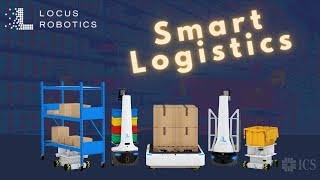
Locus Origin supports collaborative picking and putaway, Locus Vector handles heavier transport and routine routes, and Locus Array uses vision and robotic manipulation for autonomous picking, putaway, induction, drop-off, and slotting. LocusONE coordinates the mixed fleet and connects it to warehouse systems.
Who Should Evaluate Locus Robotics?
Locus is best assessed through workflow-specific pilots and a complete RaaS model. Buyers should validate SKU fit, safety, integration, peak throughput, human exceptions, robot utilization, cold conditions, service levels, subscription terms, and scale gates before wider rollout.
About Locus Robotics
Locus Robotics provides a Robots-as-a-Service warehouse automation platform built around LocusONE and three robot families. Locus Origin collaborates with associates on high-volume picking and putaway. Locus Vector supports heavier material movement, routine routes, case work, and point-to-point transport. Locus Array adds autonomous in-aisle picking, putaway, induction, drop-off, and slotting through vision, manipulation, and real-time decision-making. LocusONE coordinates mixed fleets, integrates with warehouse systems and other automation, and manages concurrent workflows across brownfield and greenfield facilities.
Use Cases
Key Features
- ✓ Unified LocusONE fleet orchestration
- ✓ Mixed Origin, Vector, and Array fleets
- ✓ Collaborative each picking and putaway
- ✓ Case picking and replenishment
- ✓ Point-to-point material transport
- ✓ Routine parts-to-line and milk runs
- ✓ Mezzanine and multi-level workflows
- ✓ Autonomous in-aisle item picking
- ✓ Autonomous induction and drop-off
- ✓ Real-time task assignment
- ✓ WMS and automation integration
- ✓ Robots-as-a-Service deployment
- ✓ Elastic peak fleet capacity
- ✓ Performance analytics and visibility
- ✓ Cold-storage hardware configuration
Pricing
Locus Origin RaaS
Custom quote
- • Collaborative picking and putaway
- • Configurable totes, bins, and boxes
- • Software, service, and updates
Locus Vector RaaS
Custom quote
- • Heavy material movement
- • Routine and point-to-point routes
- • Software, service, and updates
Locus Array RaaS
Custom quote
- • Autonomous in-aisle fulfillment
- • Vision and robotic manipulation
- • LocusONE mixed-fleet orchestration
Pricing varies by plan and region — see current pricing.
Plan features change — last updated: 2026-08-16.
Details
Tags
Locus Robotics Community Discussions
Explore community discussions. Ask and answer questions on Locus Robotics to grow and learn together.
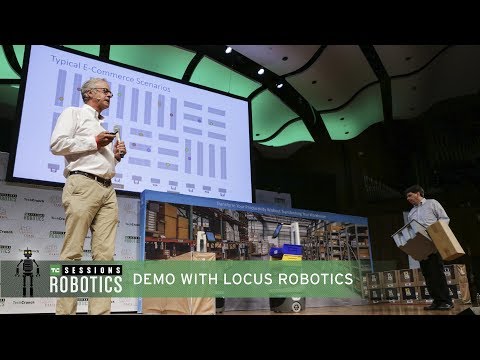
Locus Robotics Showcase
Locus Robotics — Frequently Asked Questions
What does Locus Robotics automate?
Locus supports each and case picking, putaway, replenishment, point-to-point transport, routine material routes, mezzanine workflows, counting, and autonomous fulfillment. The exact workflow depends on the robot model, software configuration, integrations, and site design.
What is the difference between Origin, Vector, and Array?
Origin is a collaborative robot for high-volume person-to-goods work. Vector is a compact, omnidirectional AMR for heavier loads and material movement. Array is a mobile manipulation robot intended to perform autonomous in-aisle fulfillment tasks such as picking and putaway.
What does LocusONE do?
LocusONE coordinates mixed robot fleets, assigns work, integrates with warehouse and automation systems, tracks performance, and manages concurrent workflows. Locus says the platform can support more than one thousand robots in facilities of one million square feet or more.
How much does Locus Robotics cost?
Locus does not publish standard prices. Its current model is Robots-as-a-Service, which shifts automation into a subscription operating expense and includes service, support, and updates. Buyers need a custom quote covering fleet, site, integration, deployment, peak capacity, and contract terms.
Can Locus robots work in cold storage?
Yes, Locus announced a customized Origin deployment for HelloFresh chilled fulfillment. The company developed heated motor and charging modifications for robots that remain and charge in cold conditions. Temperature range and current availability should be confirmed for each project.
Can Locus Array pick every SKU autonomously?
No autonomous gripper should be assumed to cover every item. Array is designed for broad SKU variability, and Locus acquired Nexera Robotics to expand its grasping capability, but buyers should test representative packaging, materials, shapes, weights, deformability, clutter, and failure cases.
Sources & References
Try Locus Robotics
Visit the official website to get started with Locus Robotics today.
Visit Locus Robotics →